
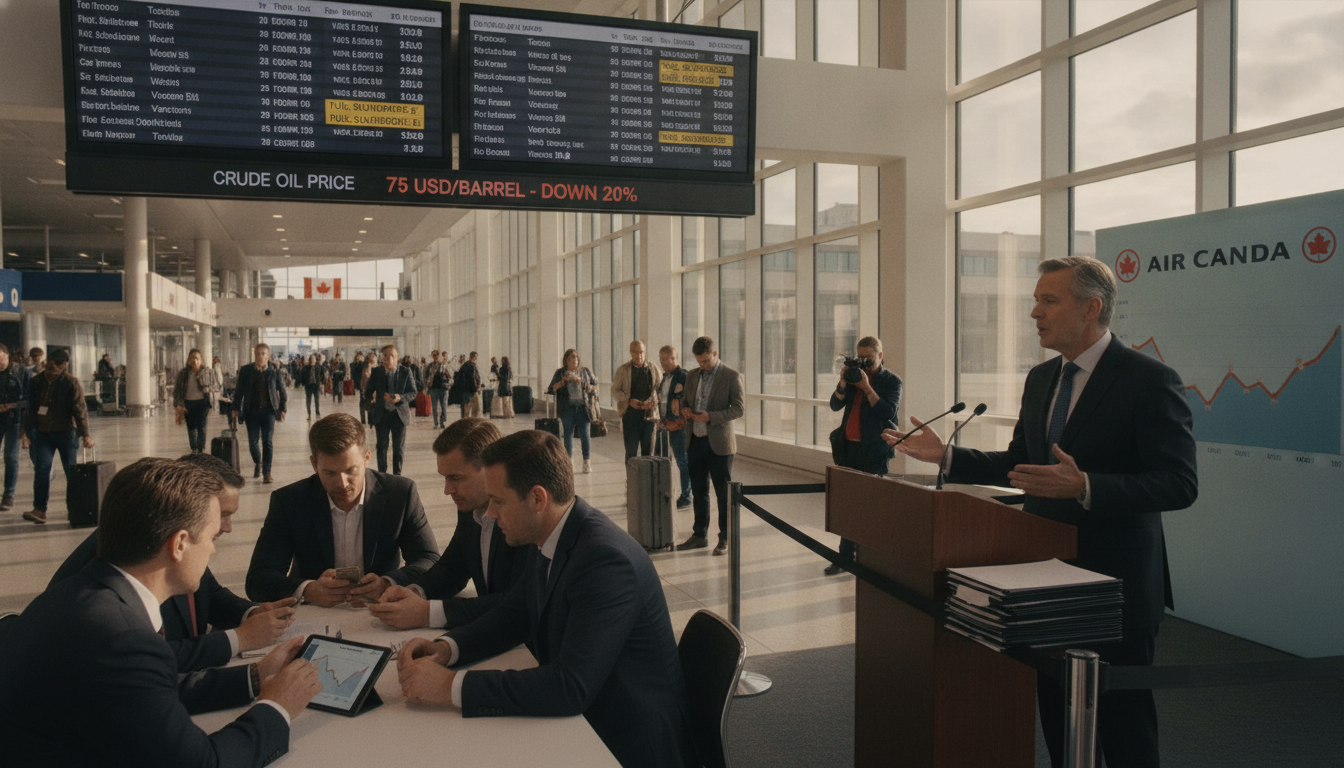
Canadian airlines keep fuel surcharges despite sharp jet fuel price drop
Canadian airlines continue to apply fuel surcharges despite a recent oil price drop; passengers face higher fares as carriers balance costs and demand.
Strong opening paragraph summarizing the news event.
Many major Canadian carriers are still adding fuel surcharges to tickets even after a sudden slide in oil and jet fuel prices, industry data and carrier notices show. The persistence of fuel surcharges is keeping fares elevated for domestic and international travelers while airlines cite the need to cover volatile operating costs. Analysts and university experts say lower wholesale fuel costs will influence fares, but not immediately or uniformly across carriers.
Fuel prices fell sharply while surcharges stayed in place
Global jet fuel and crude oil experienced a notable decline in recent days after easing tensions in the Middle East allowed oil to move more freely through the Strait of Hormuz. The International Air Transport Association reports jet fuel prices remain substantially higher than a year ago, a factor airlines cite when setting ticket surcharges. Despite the drop, many carriers have been slow to remove or fully rollback the extra levies, citing uncertain longer-term supply and refinery challenges.
How airlines have adjusted fees — carrier examples
Several Canadian airlines have made selective reductions rather than wholesale removals of surcharges. WestJet trimmed the fee applied to companion vouchers from $60 to $40 per trip while keeping other surcharges intact, describing the change as responsive to recent fuel movements. Porter Airlines said it never applied the surcharge to standard paid bookings and has cut the reward-ticket levy to $20 with the intent to remove it entirely if conditions permit.
Surcharges vary widely by route and ticket type
The dollar impact of surcharges changes significantly depending on itinerary and carrier, and the highest fees are on long-haul routes. For example, round-trip surcharges between Calgary and Toronto stand at about $90 with both Air Canada and WestJet, while transatlantic itineraries can carry surcharges exceeding several hundred dollars. Air Canada’s carrier surcharge and similar fees for other airlines are described as measures to partially offset volatile costs and peak-period premiums, and the exact amount can vary with the routing.
Analysts explain why fares don’t immediately fall
Market analysts say carriers face competing pressures: the need to stay price-competitive versus the reality of elevated operating costs such as fuel, maintenance and air traffic fees. “Airlines obviously want to have the lowest fares that they can just to compete,” said Chris Murray of ATB Cormark Capital Markets, adding that they also must ensure costs are covered. Murray noted that as fuel prices decline, carriers are likely to pass on savings, but he stopped short of predicting a precise timetable for widespread fare reductions.
Academic view: higher prices may persist while demand is strong
Aviation scholars emphasize that higher fares often stick when demand remains robust, even if input costs fall. John Gradek of McGill University pointed out that airlines are less inclined to lower prices if seats continue to sell at current levels, and that downward adjustments can be sporadic. Gradek also cautioned that the reopening of key shipping lanes does not eliminate uncertainty, since some Middle East refineries may need months or more to return to full capacity after wartime damage.
What passengers are paying and what to watch next
For many travelers the surcharges add a meaningful amount to the final ticket price, particularly on transatlantic routes where levies can total several hundred dollars. Low-cost carriers such as Flair apply separate surcharges — for instance, around $40 on certain Calgary–Toronto rounds — and say they will adjust prices as fuel costs change. Observers suggest passengers monitor wholesale fuel indices and carrier announcements, since any sustained drop in jet fuel combined with competitive pressure would likely prompt broader surcharge reductions.
Longer-term changes to ticket prices will depend on refinery repairs, geopolitical developments affecting supply routes, and how quickly wholesale jet fuel prices stabilize. Airlines may choose a cautious, phased approach to lowering surcharges to avoid repeated upward adjustments if volatility returns. For now, Canadian travelers planning summer and international trips should expect surcharges to remain a feature of ticket pricing and compare total costs across carriers when booking.
