
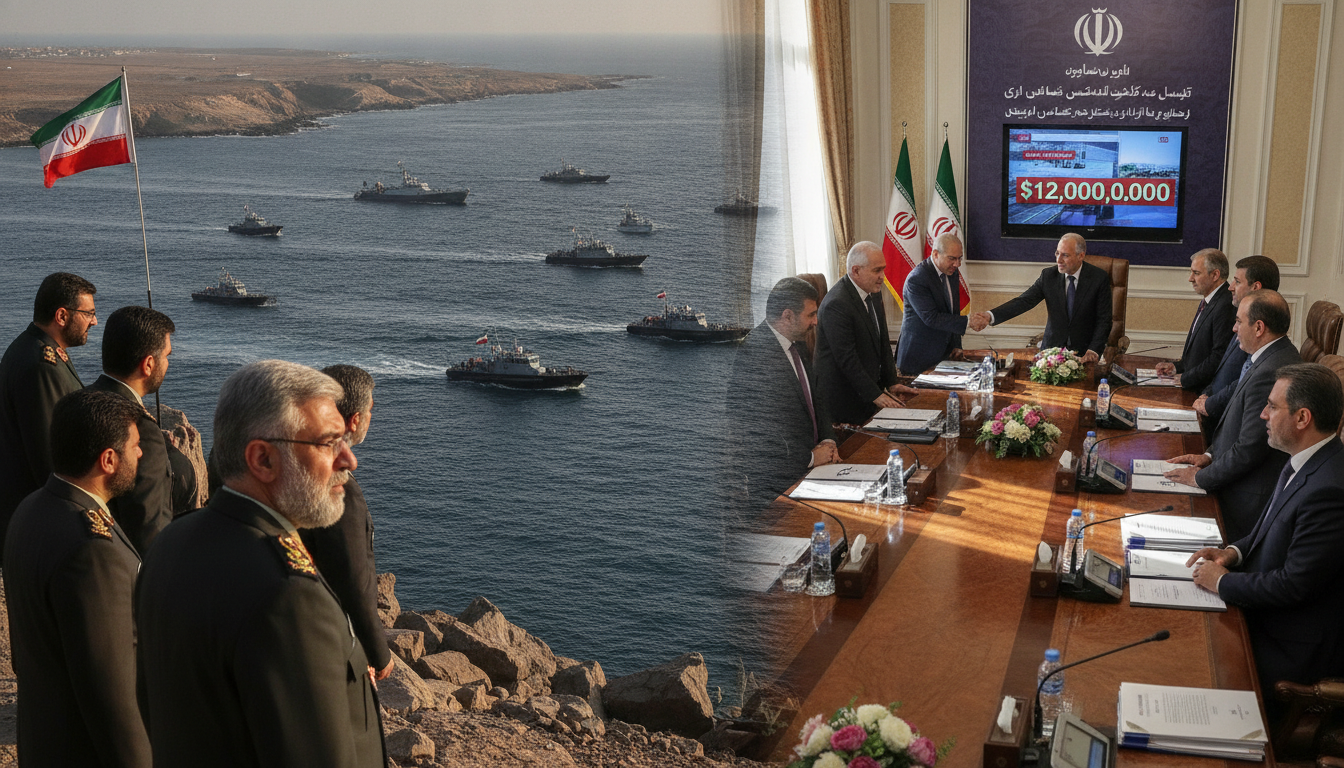
Iran says it will control Strait of Hormuz as U.S.-Iran talks in Switzerland yield framework
Iran asserts control of the Strait of Hormuz as U.S.-Iran talks in Switzerland yield a framework, two-month oil sanction relief and a $12B asset release
Iran Reaffirms Control of the Strait of Hormuz
Iran reiterated on Tuesday that it will retain administration of the Strait of Hormuz, a vital shipping lane through which roughly one-fifth of the world’s oil and LNG normally flows.
The declaration followed a round of intensive negotiations in Switzerland between U.S. and Iranian representatives aimed at halting the wider Middle East conflict.
Iranian negotiator Mohammad Bagher Ghalibaf said the post-conflict management of the Strait will not revert to pre-war arrangements, signalling a permanent shift in maritime oversight.
Tehran’s stance raises immediate questions for commercial shipping and regional security as diplomats move to translate political language into enforceable arrangements.
Swiss Talks Produce a Negotiating Framework, Not a Final Deal
Delegations concluded a weekend of talks at a lakeside complex in the Swiss Alps after marathon sessions that included an 18-hour negotiating stretch.
U.S. Vice-President J.D. Vance described the discussions as having set “very solid” foundations for a successful final agreement, while technical teams remained on site to refine details.
Officials said the outcome in Switzerland is a framework rather than a finished pact, with further work to be handled by specialized groups over a defined timetable.
Negotiators indicated the process could lead to a formal document within a 60-day window that may be extended as needed.
U.S. Lifts Some Oil Sanctions and Agrees to Release Frozen Assets
As part of the tentative diplomatic progress, Washington announced a two-month suspension of sanctions on Iranian oil transactions and permitted trade in Iranian hydrocarbons until August 21.
U.S. officials framed the measures as temporary, intended to ease economic pressure while negotiators build confidence that funds will not be diverted to extremist activity.
Iran reported an immediate agreement to unfreeze $12 billion in assets, to be released in two tranches of $6 billion, a move Tehran describes as essential relief for its economy.
American representatives stressed safeguards and monitoring systems will be tied to any transfers to ensure compliance with anti-terrorism financing rules.
Technical Talks Shift to Oman and Regional Diplomacy Intensifies
Following the Swiss sessions, Iran’s negotiating team departed for Oman to focus specifically on arrangements for administering the Strait of Hormuz.
Other regional diplomatic activity intensified, with Iran’s president scheduled for a state visit to Pakistan and U.S. officials set to engage Gulf partners in the coming days.
The Pakistan and Qatar mediators who helped convene the Switzerland meetings will remain involved as working groups pursue technical and security protocols.
These parallel diplomatic tracks aim to reconcile Iran’s insistence on maritime control with international demands for freedom of navigation.
Energy Markets and Economic Impact
Markets responded swiftly to the rapprochement, with Brent crude retreating below $78 a barrel after earlier spikes above $126 at the height of the conflict.
Analysts cautioned that any durable easing in oil supply risks will depend on whether the proposed arrangements can be turned into reliable, verifiable mechanisms on the water and ashore.
For consumers and governments, temporary sanction relief provides short-term relief for energy prices but leaves long-term investment and insurance questions unresolved.
Shipping companies and insurers are likely to demand clear protocols and international guarantees before fully restoring pre-conflict routing and coverage.
Ceasefire Management and the Lebanon File
Negotiators also sought to fold Lebanon into the broader settlement, with plans to set up a conflict-management cell to halt fighting between Israel and Hezbollah.
Iranian officials said the consolidation of a ceasefire in Lebanon would be the “first real test” of the Swiss protocol’s durability and of each party’s commitment to de-escalation.
The humanitarian toll in Lebanon has been acute, with authorities reporting thousands of deaths and more than a million people displaced since hostilities escalated in early March.
Diplomats said the Lebanon track is central to any comprehensive settlement because spillover violence there has repeatedly undermined regional stability.
Western officials noted that resumption of inspections by the International Atomic Energy Agency would also be an early indicator of trust-building, though Iran has not publicly confirmed a renewed invitation.
The AIEA’s inability to inspect sites hit by military strikes since June 2025 remains a sensitive issue, particularly around questions of highly enriched uranium inventories.
The coming weeks will test whether political momentum from the Switzerland meetings can be converted into enforceable, monitored steps on the ground and at sea.
If working groups produce clear technical protocols for the Strait of Hormuz, asset controls and verification mechanisms, the fragile diplomatic gains could reduce the risk of renewed escalation.
