
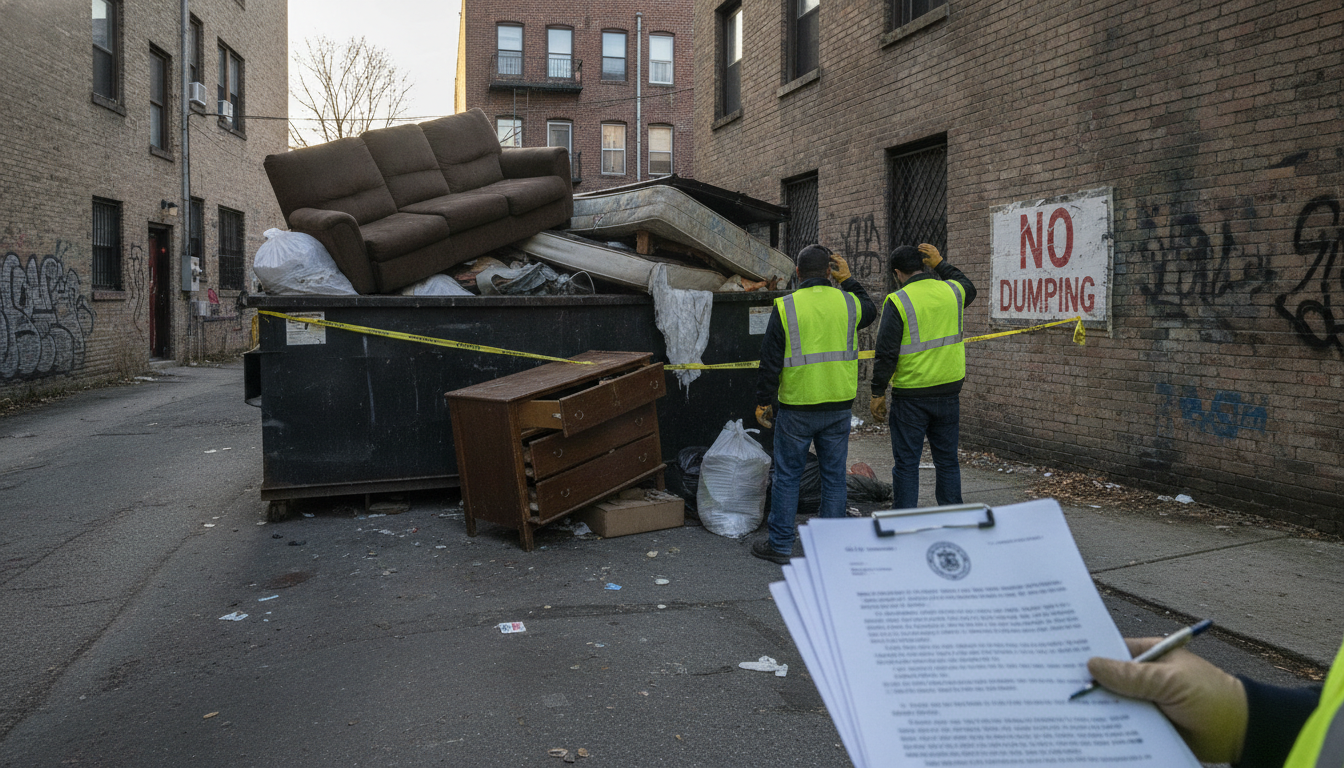
City report ties rise in dumpster dumping to outsiders and tenant misuse
City report links dumpster dumping to outsiders and tenant violations, prompting calls for stricter enforcement, better services and owner accountability.
Officials are confronting a growing problem of dumpster dumping after a report to the city’s utility committee identified two common causes: outsiders treating communal bins as personal landfills and tenants discarding large items in contravention of rules. The committee’s findings highlight that when tenants ignore disposal policies the legal and financial responsibility often reverts to property owners. The issue is prompting councillors and waste managers to consider new enforcement and service changes to curb illegal bulk-item disposal.
Report links outsider dumping and tenant misuse
A municipal report presented to the utility committee on Monday laid out evidence that many of the oversized sofas, mattresses and appliances left beside dumpsters were not generated by residents of the buildings where they appeared. Investigators found patterns consistent with transient drop-offs near high-traffic locations and commercial corridors, suggesting some people use public bins as convenient, unauthorized disposal sites. The same report warned that some tenants also lean on shared dumpsters for bulky-item disposal despite established collection schedules and rules.
City responsibility framework places burden on property owners
The utility committee document clarified that when tenants violate disposal bylaws the obligation to rectify and pay for removal typically falls to the property owner or manager. Municipal bylaws and waste contracts generally assign cleanup and associated costs to owners when refuse is abandoned on private property or in on-site containers. That transfer of responsibility has led to frustration among landlords who say they carry costs for behaviour they cannot always control.
Operational and financial impact on waste services
City waste crews face higher workloads and rising costs when crews must divert time to clear oversized items left at dumpsters, according to the report. In addition to increased labour and disposal fees, crews confront safety concerns and equipment wear when handling awkward household furnishings and appliances. Municipal budgets and service reliability are strained where repeated illegal dumping increases collection frequency or requires special pickups.
Enforcement options under discussion by the committee
Councillors and staff are weighing a mix of enforcement tools and service adjustments to reduce dumpster dumping, including targeted fines, clearer signage and permit systems for bulk disposal. Some officials argued for stepped-up bylaw enforcement and the use of surveillance or licence-plate tracing where legal, while others favoured expanding scheduled bulky-item pickup programs to reduce temptation. The committee acknowledged enforcement can be resource-intensive and that stronger penalties will require consistent monitoring to be effective.
Landlord and tenant education proposed as immediate step
The report recommended clearer communication between municipalities, property managers and tenants about acceptable disposal practices and scheduled collections. Education campaigns, written tenancy addenda and visible bin labelling were suggested as low-cost measures that could reduce accidental or willful misuse. Property managers told the committee that stronger tenant agreements and routine reminders could help, but they also requested municipal support for removal options when tenants fail to comply.
Environmental and public-safety considerations highlighted
Officials noted that abandoned bulk items at dumpsters are more than a nuisance: they can attract pests, obstruct bin access and increase the risk of fires or hazardous-material exposure. The report emphasised that improper disposal of electronics and appliances can have environmental consequences if items are not routed through proper recycling streams. Reducing dumpster dumping was framed as both a public-health priority and an environmental-management issue.
Cities will need to weigh the balance between enforcement and service provision as the committee prepares recommendations for council. Some members signalled a preference for pilot programs that combine targeted enforcement with expanded removal services in hotspots identified by the report. Others urged a broader review of contract terms for private waste haulers to ensure they include provisions for bulk-item pickups and rapid response to illegal disposals.
The utility committee is expected to bring forward specific proposals to the full council for consideration, including potential bylaw amendments, budget requests for enforcement and options to fund additional bulky-item collection. Municipal staff will also be charged with identifying locations where outsider dumping is concentrated and proposing tailored responses. The report made clear that without coordinated action, the burden of cleanup and cost will continue to fall unevenly on property owners and municipal services.
Longer-term solutions discussed included exploring designated communal drop-off sites, mandatory tenant education at lease signing and incentives for building-level waste management improvements. The committee left open the possibility of partnering with community associations and private haulers to pilot alternative disposal programs. Any change, councillors acknowledged, will require funding and public buy-in to be sustainable.
The city’s utility committee report underscores a persistent challenge in urban waste management: distinguishing between illegal outsider dumping and tenant misconduct and ensuring accountability rests with the appropriate parties. As staff draft recommendations for council, officials say they will seek measures that reduce illegal bulk-item disposal, protect public health and avoid imposing disproportionate costs on property owners.
