
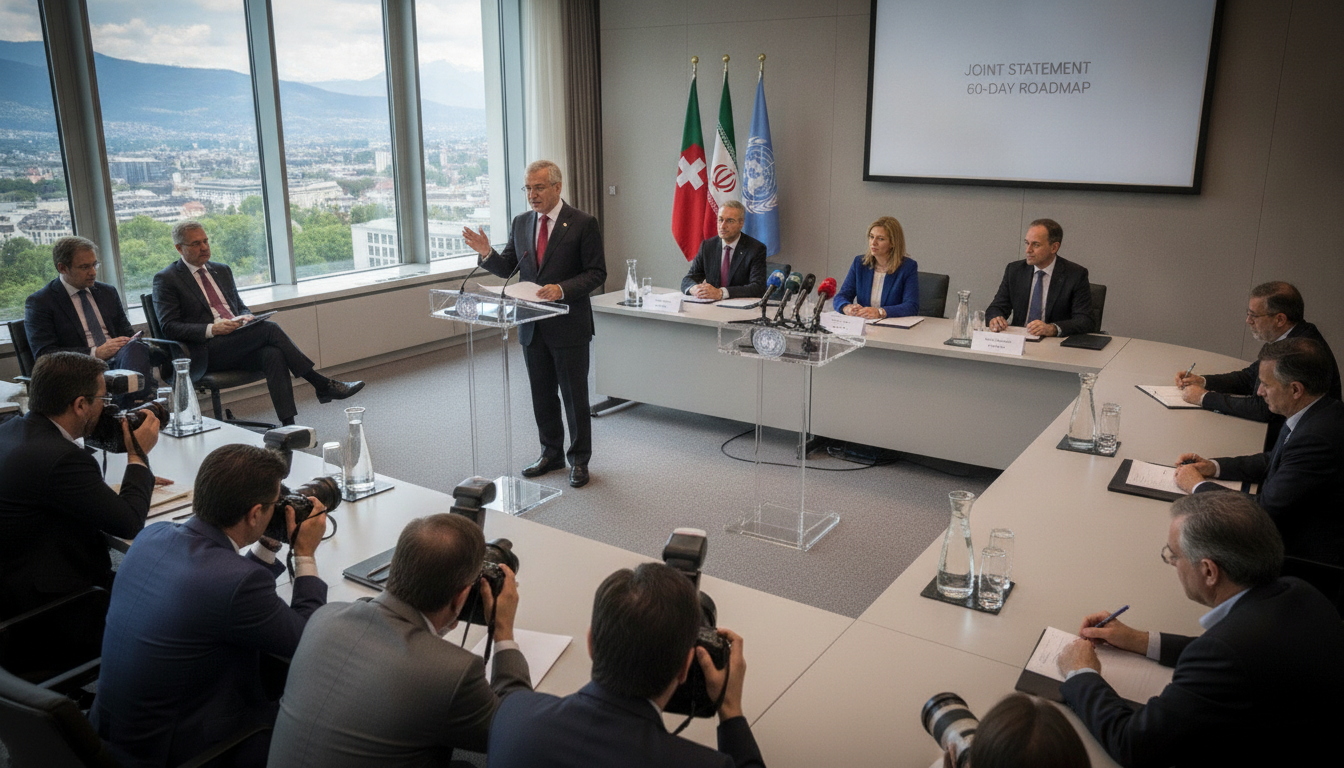
U.S.-Iran talks in Switzerland end with 60-day roadmap, mediators say
Mediators Pakistan and Qatar said the first round of U.S.-Iran talks in Switzerland produced a roadmap to reach a final deal within 60 days, marking a tentative step toward ending months of conflict.
The first round of U.S.-Iran talks in Switzerland concluded on Monday with Pakistani and Qatari mediators announcing a “roadmap” designed to produce a final agreement within 60 days, officials said. (apnews.com)
Swiss Session Concludes with a 60-Day Timeline
The talks took place at the Burgenstock resort, where delegations from Washington and Tehran met under the facilitation of Pakistan and Qatar. The mediators said the gathering set a timeline for negotiators to convert initial understandings into a comprehensive settlement within two months. (investing.com)
Negotiators described the session as intensive and procedural, intended to establish the architecture of future technical discussions rather than to resolve final terms. Officials signalled that the high-level committee created at the meeting will oversee the coming rounds of detailed negotiations. (axios.com)
Mediators Pakistan and Qatar Outline Concrete Steps
Pakistan and Qatar released a joint statement after the session, calling the outcome “encouraging progress” and outlining immediate steps to sustain the ceasefire and open channels for further talks. Both countries have played central roles in shuttle diplomacy that led to the Swiss meetings. (enca.com)
The mediators said their role will continue through the negotiating window, coordinating technical teams and ensuring that communications between Tehran and Washington remain steady as detailed work proceeds. Their involvement is presented as crucial to bridging gaps on operational issues such as maritime security and regional ceasefires. (chinadailyasia.com)
Technical Working Groups and a ‘De-confliction’ Cell
Participants reported that the talks established working groups to address discrete elements of a final deal, including Iran’s nuclear activities, the status of the Strait of Hormuz and mechanisms to prevent escalation in Lebanon. Officials said a “de-confliction” cell would be formed to manage immediate security frictions while broader accords are negotiated. (globaltimes.cn)
Those technical teams are expected to meet in coming days and weeks to convert political understandings into operational language and timelines that can be implemented if both sides agree. Mediators will chair or facilitate several of those sessions, according to participants. (globaltimes.cn)
Points of Contention and Diplomatic Strains
Observers noted continuing sharp differences over verification, sanctions relief and timelines for nuclear constraints, which are among the most complex issues to be resolved within the 60-day window. Delegations entered the Swiss talks with divergent red lines that will require sustained negotiation to reconcile. (investing.com)
The atmosphere was occasionally tense, with reports of procedural disputes and a decision by Iran’s delegation to avoid certain public gestures organized by other parties. Nevertheless, diplomats emphasized that private exchanges continued and that mediators maintained channels open when direct contact was limited. (chinadailyasia.com)
U.S. Team, Iranian Delegation and External Pressures
The U.S. delegation included senior envoys who met with their Iranian counterparts alongside the mediators, and U.S. officials said the session was intended to kick off the 60-day negotiation phase. High-level U.S. participation signalled Washington’s commitment to seeing the timetable through, even as internal political messaging added pressure to the talks. (axios.com)
Comments from political leaders outside the room, including public statements by the U.S. president, were noted by participants as complicating the diplomatic environment but did not halt the process. Mediators took responsibility for shuttling messages and keeping negotiations focused on the technical agenda. (chinadailyasia.com)
What Comes Next and the Stakes for the Region
Over the next 60 days the parties will be expected to convert the roadmap into binding commitments on nuclear limits, sanctions relief and regional security arrangements if an agreement is to be reached. Success hinges on technical verification arrangements and reciprocal actions that both sides must deem credible. (aljazeera.com)
Failure to reach a comprehensive deal within the timetable could lead to a resumption of hostilities or a return to previous patterns of escalation, according to diplomats and analysts. Mediators and participating states are racing to translate a fragile political opening into enforceable, mutually acceptable terms. (investing.com)
Diplomats said they will reconvene the technical groups immediately, monitor progress closely and report back to the high-level committee established in Switzerland as the 60-day period unfolds. Observers across the region and beyond will be watching whether the roadmap yields the concrete steps needed to produce a durable settlement.
