
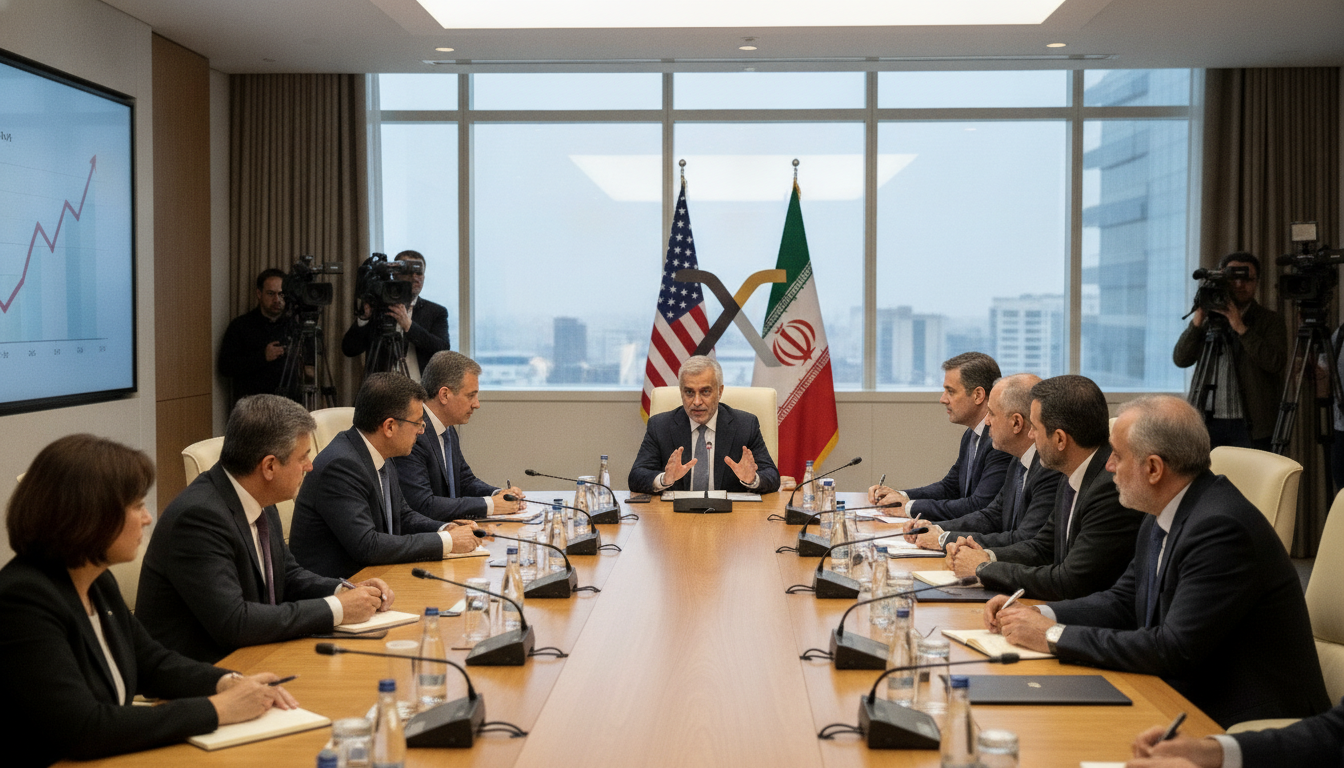
US-Iran talks analyzed by Mahjoub Zweiri ahead of negotiations
Mahjoub Zweiri analyzes the US-Iran talks, outlining U.S. aims, Iran’s priorities, and likely outcomes following an exclusive NewsFeed interview on June 21, 2026.
Professor Mahjoub Zweiri told NewsFeed on June 21, 2026 that the current round of US-Iran talks is driven by pragmatic U.S. aims to slow Tehran’s nuclear advances while reining in regional escalation. He described negotiations as transactional but fragile, with both sides testing how much they can achieve without conceding core security positions. The analysis frames the talks as less about grand bargains and more about calibrated, short-term steps.
Zweiri Lays Out U.S. Objectives
Zweiri said Washington’s immediate objectives in the US-Iran talks include securing robust verification measures, achieving temporary restrictions on sensitive nuclear activities, and creating space to manage regional tensions. He argued the Biden administration seeks to show domestic and allied audiences measurable progress without committing to a long-term treaty that could be politically costly. According to Zweiri, the U.S. also wants to limit Iran’s capacity to rapidly breakout to a weaponized fuel cycle while keeping secondary sanctions as leverage.
Iran’s Negotiating Priorities and Red Lines
The professor emphasized Iran’s focus on sanctions relief and preserved sovereign control over its nuclear and missile programs as central negotiating priorities. Iran, he said, is likely to push for phased lifting of sanctions tied to verifiable, reversible measures rather than permanent concessions. Zweiri warned that Tehran’s declared red lines—no inspections of military sites and no surrender of sensitive enrichment know-how—will complicate efforts to reach comprehensive agreements.
Sanctions Relief and Nuclear Verification
Zweiri explained that sanctions relief will be the most politically significant outcome for Tehran and a primary bargaining chip for Washington. He expects negotiators to explore incremental sanctions easing tied to technical verification steps overseen by the International Atomic Energy Agency. That approach, he suggested, allows both sides to claim progress while preserving leverage should either party fail to meet commitments.
Regional Security and Proxy Conflicts
Beyond the nuclear file, Zweiri highlighted the interlinked security dynamics in the Middle East that influence the US-Iran talks, including proxy conflicts and maritime security incidents. He noted that Tehran is likely to demand recognition of its regional role and relief from pressures exerted by U.S. partners, while Washington wants Tehran to curb activities by allied militias and proxies. The professor cautioned that absent parallel progress on regional de-escalation, negotiations over the nuclear issue will remain vulnerable to episodic violence that undercuts trust.
Diplomatic Obstacles and the Trust Deficit
Zweiri pointed to deep mutual suspicions and domestic political constraints in both capitals as structural obstacles to a durable accord. He said Iranian hardliners view extensive inspections as a threat to sovereignty, while U.S. policymakers must answer skeptical allies and an electorate wary of perceived concessions. The professor argued that building a narrow technical trust through verification protocols and confidence-building measures is more realistic in the near term than negotiating sweeping political agreements.
Possible Outcomes and Practical Timelines
On likely outcomes, Zweiri outlined three short-term scenarios: a limited technical agreement with phased sanctions relief, a temporary ceasefire-like de-escalation package tying regional restraint to nuclear steps, or a breakdown that freezes diplomacy and preserves the status quo. He estimated that negotiators could reach a modest technical deal within weeks if both sides accept reversible measures, but warned that any broader settlement would require months and sustained third-party mediation. The professor urged international actors to prepare contingency plans for all three paths.
Global responses, he added, will be pivotal; European partners and regional states can amplify incentives for cooperation or deepen fissures depending on how they condition assistance and normalization. Zweiri stressed that clear, measurable benchmarks and independent verification by established institutions are essential to prevent rapid unraveling.
The expert concluded that the US-Iran talks on June 21, 2026 represent a narrow opening that could reduce immediate risks if handled pragmatically, but that durable progress will depend on patient diplomacy and credible verification. He recommended incremental steps, multilateral engagement, and steady communication channels to manage crises and expand cooperation over time. The coming weeks of bargaining will test whether tactical gains can be converted into longer-term stability.
