
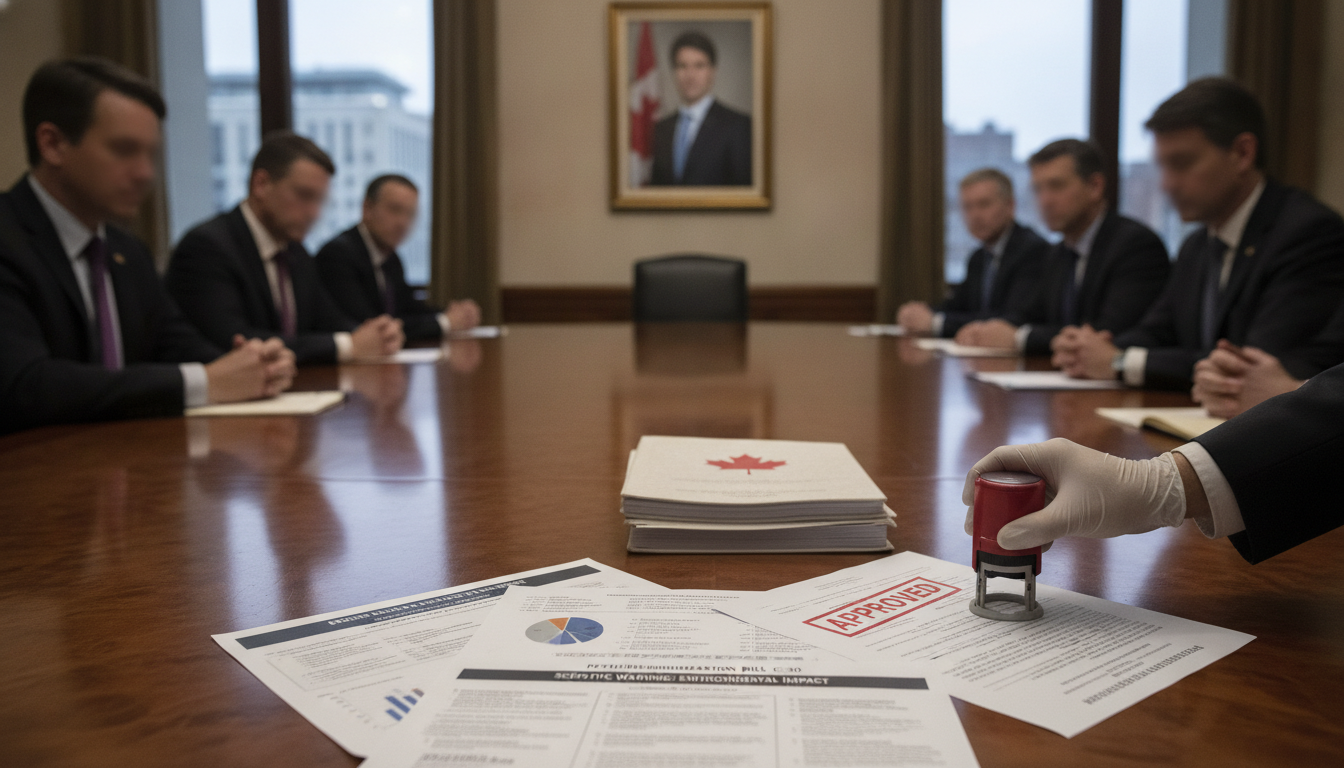
Federal bill C-30 allows ministers to reauthorize banned pesticides, sparking scientific and political outcry
Federal government adopts Bill C-30, allowing ministers to reauthorize banned pesticides for economic or food-security reasons, prompting widespread backlash.
The federal government adopted omnibus Bill C-30 on Thursday, June 18, 2026, introducing a contested change that allows ministers to reauthorize pesticides previously banned by Health Canada. The shift to the Pest Control Products Act framework permits a small group of cabinet ministers to authorize temporary use of chemicals on the grounds of “economic security” or “food security,” terms the government has not formally defined. The provision has set off immediate criticism from scientists, opposition parties and environmental and public‑health advocates across Canada.
Parliament approves Bill C-30 enabling reauthorization of banned pesticides
The House passed the omnibus legislation just before the end of the parliamentary session, enshrining the new ministerial power within a broader package of measures. The change gives ministers the authority to override prior Health Canada refusals and permit a pesticide’s use for up to six years in cases of severe infestation or other cited emergencies. Government officials say the measure is designed to be exceptional and temporary, applied only when required to protect food supplies or economic stability in agriculture.
Scope of new ministerial powers under the Pest Control Products Act
Under the amended Pest Control Products Act, ministers may allow a previously banned product back into use under specific conditions and mitigation measures intended to limit environmental and human‑health risks. The law sets no public, statutory definition for “economic security” or “food security,” leaving interpretation to the cabinet. The authorization can be time‑limited and accompanied by restrictions the government says will reduce environmental harm to an “acceptable” level, according to ministerial spokespeople.
Health minister’s office frames use as temporary and restricted
Marjorie Michel, the federal health minister, did not take questions in the House but her office issued a statement through spokesperson Alexandre Bergeron saying any reauthorization would be temporary and tightly controlled. The minister’s office emphasized that extraordinary powers would only be used in exceptional circumstances and that additional safeguards and mitigation measures would apply. Parliamentary officials including Government House Leader Steven MacKinnon have publicly asserted that decisions would not be taken if they pose clear health risks, framing the change as a measured response to rising pressures on the food system.
Scientists, opposition parties and senators raise alarm
A coalition of academics, public‑health professionals and environmental groups immediately condemned the change, arguing it undermines an evidence‑based regulatory system designed to protect Canadians. Public‑health doctors and researchers from multiple Canadian universities warned that substituting political judgment for scientific assessment risks increased exposure to harmful chemicals. Opposition parties—the Bloc Québécois, the New Democratic Party and the Green Party—criticized the government for curtailing debate and accelerating passage of the bill, calling the move regressive and dangerous.
Lobbying ties and CropLife meetings draw scrutiny
Critics pointed to the timing of the bill and recent interactions between the minister’s office and CropLife Canada, the industry lobby for seed, pesticide and fertilizer companies. The health minister addressed a CropLife event on April 29, 2026, and registry entries show multiple meetings between ministerial staff and the lobby in recent months. CropLife welcomed the reforms, saying they would help farmers adapt to climate pressures and maintain competitiveness, while urging fast implementation of the government’s new pesticide mandate.
Government cites rising food costs and sovereignty as rationale
Government spokespeople defended the amendment as a tool to protect harvests and strengthen Canada’s food sovereignty amid global supply challenges and rising grocery prices. Officials argue that limited, conditional access to certain crop‑protection tools could prevent severe losses during outbreaks and help maintain domestic food supplies. The proposal is presented as balancing agricultural resilience with continued commitments to human‑health and environmental protection, though opponents dispute that balance.
Opponents in the Senate and public‑health community have also noted that experts in health and environment were not given the chance to testify before Parliament on the change. Senators warned that political decision‑making should not supplant scientific review, citing studies that link long‑term pesticide exposure to health risks, including some cancers. The debate has highlighted tensions between regulatory precaution, agricultural lobbying and efforts to ensure affordable food.
The dispute is now likely to move beyond Parliament into public consultations, stakeholder lobbying and possible legal challenges as provinces, farmers and advocacy groups weigh the implications. With authorization powers in place, attention will turn to how the government defines exceptional circumstances, the transparency of ministerial decisions and the specific mitigation measures imposed when reauthorizations occur. The coming months will determine whether the new powers are used infrequently as the government promises or more broadly, as critics fear.
