
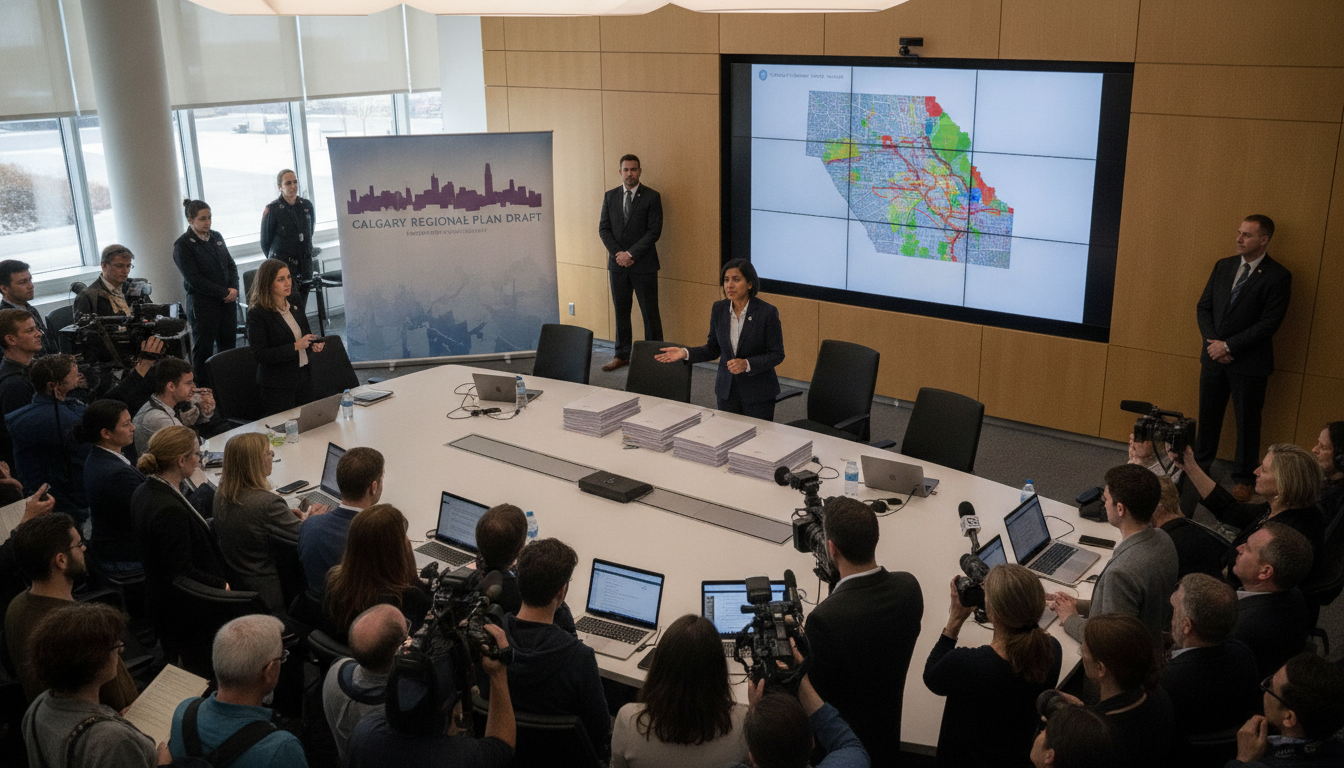
Calgary regional plan draft presented to council after input from nearly 48,000 residents
Calgary regional plan draft revised three times since 2023, reflecting input from more than 47,900 Calgarians and 180 organizations across 175 public events.
The city’s latest Calgary regional plan draft was presented to council this week, city officials said, marking the third revision of the document since 2023. Kathy Davies Murphy, the city’s director of regional planning, told council the draft reflects extensive outreach and iterative changes following public feedback. The plan’s development involved input from more than 47,900 Calgarians and over 180 organizations, and the city facilitated 175 events across five phases of engagement. Council will now review the document as it moves toward further deliberation and potential adoption.
Council reviews latest Calgary regional plan draft
Kathy Davies Murphy briefed council on the scope and process behind the new draft, emphasizing that it represents an accumulation of community input and technical updates. The presentation outlined the three iterations undertaken since 2023, each informed by feedback gathered during successive engagement phases. Council members questioned specific elements and requested additional information to support upcoming votes. Municipal staff noted that further refinements could follow council direction this spring and summer.
Public engagement reached nearly 48,000 residents
The city reports that more than 47,900 Calgarians contributed feedback through a mix of in-person and online channels. Officials described the engagement as broad-based, with participation spanning neighbourhood meetings, surveys and stakeholder briefings. Planners said this scale of input was used to test priorities and identify areas of consensus and concern. The participation figures underscore the municipal emphasis on public involvement in regional planning decisions.
Three iterations and five engagement phases since 2023
Municipal planners described a phased approach to drafting the Calgary regional plan, noting five distinct phases of public engagement that began in 2023. Each engagement phase, officials said, informed substantive revisions that were folded into subsequent drafts. The three formal iterations produced progressively more detailed policy directions and implementation tools, according to the city’s planning office. Staff emphasized that the iterative process was designed to reconcile technical analysis with community values.
Organizations and events shaped key revisions
More than 180 organizations — including community associations, business groups and non-profits — registered formal submissions that influenced the draft’s content. City staff said the 175 events included public open houses, targeted stakeholder sessions and technical meetings with agency partners. These interactions, planners reported, helped refine language on growth management, transportation priorities and servicing requirements. Officials told council that organizational feedback was mapped and used to prioritize modifications in areas with the most consensus.
Council deliberations and next procedural steps
Following the presentation, councillors signalled they would scrutinize the draft’s policy implications before advancing to a public hearing or vote. Municipal staff outlined an expected sequence of committee reviews, targeted briefings and potential amendments. Council will have the opportunity to request further analysis or hold additional consultations on specific topics. If council approves the document in its final form, staff will move to implement the plan’s timelines and monitoring mechanisms.
Implications for growth, infrastructure and housing
City planners said the Calgary regional plan draft is intended to provide a framework for long-term growth, infrastructure investment and housing strategy across the municipality. The plan’s policies are expected to guide decisions on land-use priorities, transit corridors and servicing sequences, officials told council. Planners also indicated that the final plan would include monitoring metrics to measure progress and adjust actions over time. Stakeholders watching the process said clarity on implementation and funding will be central to the plan’s effectiveness.
The draft presented to council is the product of an extended engagement campaign and multiple technical reviews, and it now moves into a phase of political scrutiny and potential refinement. Public interest in the plan remains high after the nearly 48,000-person participation total, and municipal leaders say they will continue to consider community input as they seek a path toward final adoption.
