
Ontario invests $2.8 million to expand Thunder Bay port and build Marathon international terminal
Ontario invests $2.8M to expand the Thunder Bay port and establish a new Marathon terminal, strengthening Northern Ontario shipping, supply chains and local jobs.
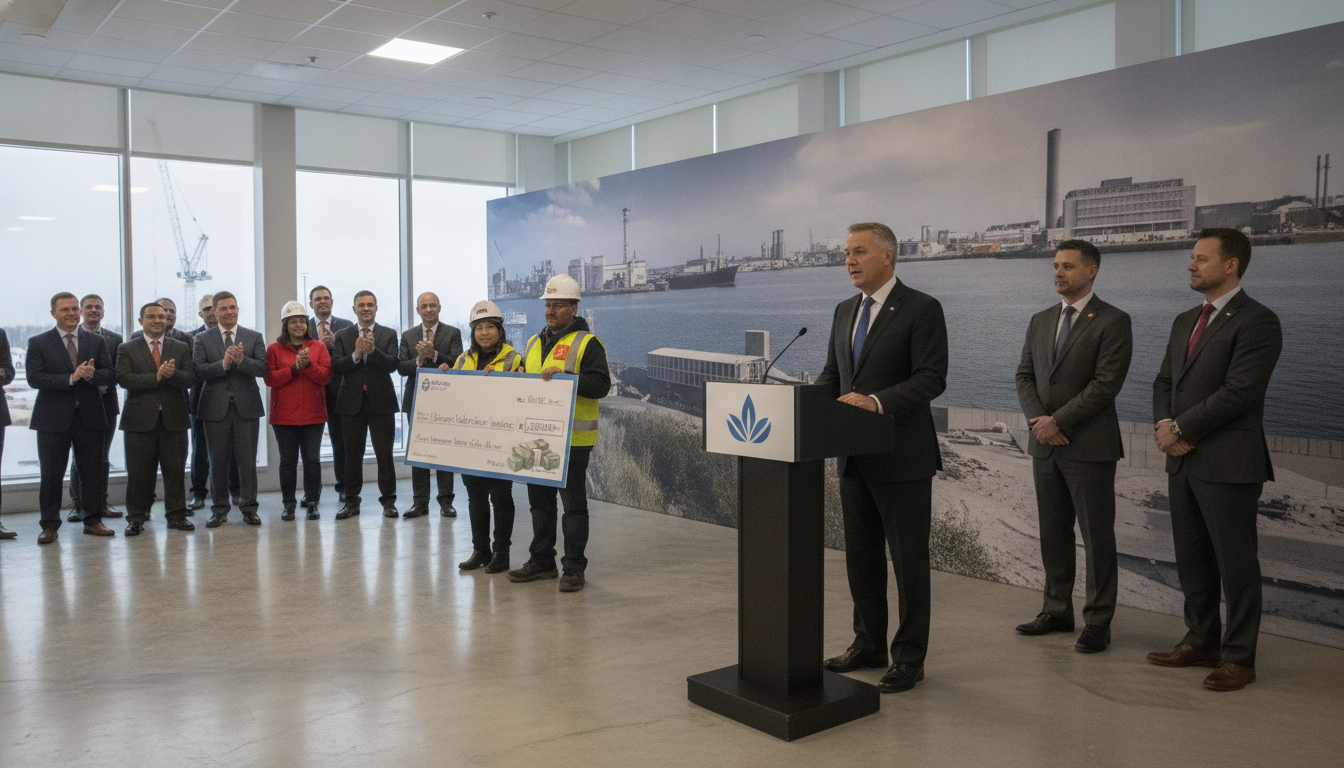
The Ontario government announced funding to expand the Thunder Bay port and to create a new maritime terminal at Marathon, a move aimed at boosting Northern Ontario shipping and trade. The Thunder Bay port expansion and Marathon terminal funding were detailed by Premier Doug Ford during a Tuesday morning announcement in Thunder Bay. The package includes cash from the Société de gestion du Fonds du patrimoine du Nord de l’Ontario, and the provincial government says the projects will support east-west commerce and national supply chains.
Province commits $2.8 million to Northern port projects
The province is directing more than $2 million to upgrades at two Lake Superior ports through the SGFPNO fund. Thunder Bay will receive a grant of $804,955 while Marathon will be granted $2 million to convert idle commercial wharves at a former pulp mill site. Officials framed the investments as targeted infrastructure spending to increase capacity for regional exports.
The funding announcement came with emphasis on strategic transportation and resource supports for the North. Provincial spokespeople and local leaders described the money as seed capital to modernize terminal areas and make both ports more competitive for domestic and international shipments.
Keefer terminal will add 10 acres of transit and storage
At Thunder Bay the Keefer terminal is slated for an expansion that will add roughly 10 acres of transit and storage space. The grant is intended to increase throughput for bulk commodities and improve on-site logistics for rail and truck transfers. Provincial officials said the added area will allow the port to handle larger volumes of grain, fertilizer and other bulk goods more efficiently.
Local port authorities will manage the work and determine detailed staging and construction sequences. The move is expected to relieve bottlenecks at existing facilities and improve turnaround times for shippers moving goods across the Great Lakes and beyond.
Marathon will convert former pulp mill wharves into an international terminal
Marathon will use its $2 million allocation to convert unused commercial wharves on the site of the former pulp mill into a new maritime terminal. Municipal officials said the location positions Marathon as the closest international port to the Ring of Fire mining region, creating a potential gateway for minerals and industrial components. The planned terminal is intended to serve shipments of regional materials including potash, mining supplies, forest products and pipeline components.
Marathon’s mayor emphasized the strategic geography of the site and the opportunity to attract new business to the area. Local leaders said the conversion work will repurpose existing waterfront infrastructure and open new export routes for Northern producers.
Government frames projects as supply chain and trade priorities
Provincial officials described the investments as part of a broader effort to strengthen east-west trade across Canada and to reduce reliance on U.S. gateways for certain commodities. The government said upgraded port capacity will reinforce national supply chains and support economic diversification in Northern communities. Officials also highlighted potential benefits for industries such as mining, forestry and renewable energy that rely on bulk shipping corridors.
The announcement linked the port projects to provincial priorities for regional economic development, with an emphasis on moving larger, heavier and more frequent shipments through Ontario-controlled terminals.
Local leaders welcome investment and raise broader policy concerns
Mayors and local legislators praised the funding as a vote of confidence for Northern communities while also pointing to limits in the broader policy mix. Marathon’s mayor said the new terminal will create long-term jobs and reaffirm the town’s role in regional trade. Thunder Bay’s mayor noted the expansion will bolster the city’s existing port infrastructure and support local employers.
Thunder Bay–Superior North’s provincial representative welcomed the upgrade but cautioned that construction jobs alone are not enough. She expressed concern that simultaneous pressures on health care and education could undermine wider community resilience even as infrastructure spending grows.
Next steps remain focused on planning and local implementation
Officials said the next phase will be detailed planning, procurement and site preparation under the oversight of local port authorities and municipal partners. The province did not provide firm completion dates when announcing the funding, and project timelines will depend on regulatory approvals, environmental assessments and construction scheduling. Municipalities are expected to report back with implementation plans and anticipated job counts as work proceeds.
The investments will be monitored by provincial and local officials to measure impacts on cargo volumes, turnaround times and regional employment outcomes.
The provincial funding for the Thunder Bay port expansion and the Marathon terminal signals a renewed focus on Northern Ontario shipping infrastructure and on diversifying supply chain routes. Local leaders say the projects could create construction work in the near term and sustained economic activity through increased exports, while critics call for parallel investments in public services to ensure the broader region benefits.
