
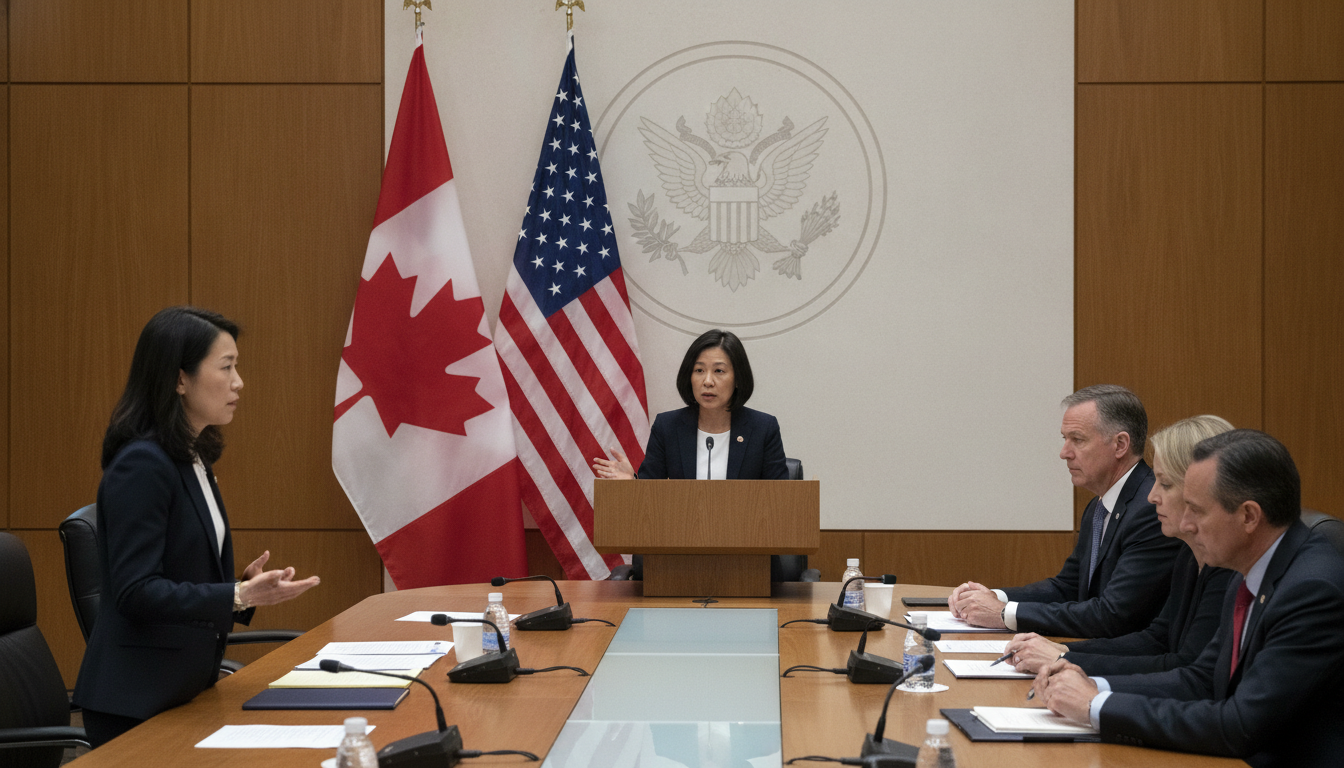
Canada-U.S. tariffs’ stop-start cycle raises consumer prices and strains cross-border economy
On-again, off-again Canada-U.S. tariffs are driving up prices for households and businesses while disrupting integrated supply chains, officials warn.
Canada-U.S. tariffs have re-emerged as a central economic friction point, introducing uncertainty that affects companies, workers and consumers on both sides of the border. Smith warned that the intermittent measures are eroding what has long been a close trade and security partnership and are contributing to higher prices for essentials. Policymakers and industry groups are increasingly urging predictable, long-term approaches to avoid further damage to cross-border commerce.
Tariff volatility hits businesses and workers
The fluctuating application of tariffs has imposed extra costs and administrative burdens on exporters and importers in Canada and the United States. Small and medium-sized firms report difficulty in planning production, procuring inputs and pricing goods when levies can change suddenly.
Workers in export-dependent sectors say the uncertainty chills hiring and undermines job stability. Labour groups and business associations have flagged layoffs and delayed projects where tariff unpredictability has made investment risks unacceptable.
Households facing higher food, fuel and housing costs
Rising import costs are filtering through to everyday household expenses, with higher prices for food and fuel cited repeatedly by retailers. Housing costs are also being affected indirectly as tariffs raise construction material prices and increase the cost of appliances and vehicles that homeowners purchase.
Economists point out that even modest tariff increases can magnify along supply chains, translating into noticeable changes at the checkout. Consumers in border communities are feeling the squeeze as price differences narrow and purchasing patterns shift.
Automotive and goods supply chains under strain
The integrated North American auto sector has proven particularly vulnerable to tariff swings, given its reliance on cross-border parts flows and just-in-time manufacturing. Tariff interruptions raise costs for manufacturers and can force temporary shutdowns or production shifts to mitigate exposure.
Beyond autos, a range of manufactured goods have seen delays and recalculated sourcing strategies as companies seek tariff-proof alternatives. Suppliers report that re-routing supply chains to avoid levies often raises costs and reduces efficiency, undermining the competitive advantages of close geographic trade.
Investment and hiring decisions put on hold
Business leaders describe the current tariff environment as a tax on certainty that weakens long-term planning. Firms say capital expenditures, hiring plans and new market entries are being postponed while policymakers signal possible tariff changes.
The uncertainty can also reduce foreign direct investment as global companies assess the reliability of rules governing North American trade. Investment that would strengthen regional economic ties risks being rerouted to markets perceived as more stable.
Bilateral leaders urged to restore predictable trade rules
Industry groups, labour representatives and some policymakers are calling on Ottawa and Washington to negotiate clearer and more durable frameworks for tariffs. Their argument is that predictable rules would lower costs, preserve integrated supply chains and protect jobs on both sides of the border.
Smith emphasized that restoring consistency in tariff policy is essential to repairing weakened trade ties and stabilizing prices for consumers and businesses. Observers say a coordinated approach, rather than unilateral levies, would better balance domestic policy objectives with the realities of a deeply interconnected economy.
The on-again, off-again nature of tariff policy has become a central concern for communities that depend on cross-border commerce, from manufacturers to farmers to retail households. Restoring predictable, transparent trade rules is seen as a necessary step to ease price pressures, safeguard jobs and rebuild confidence in the Canada-U.S. economic partnership.
