
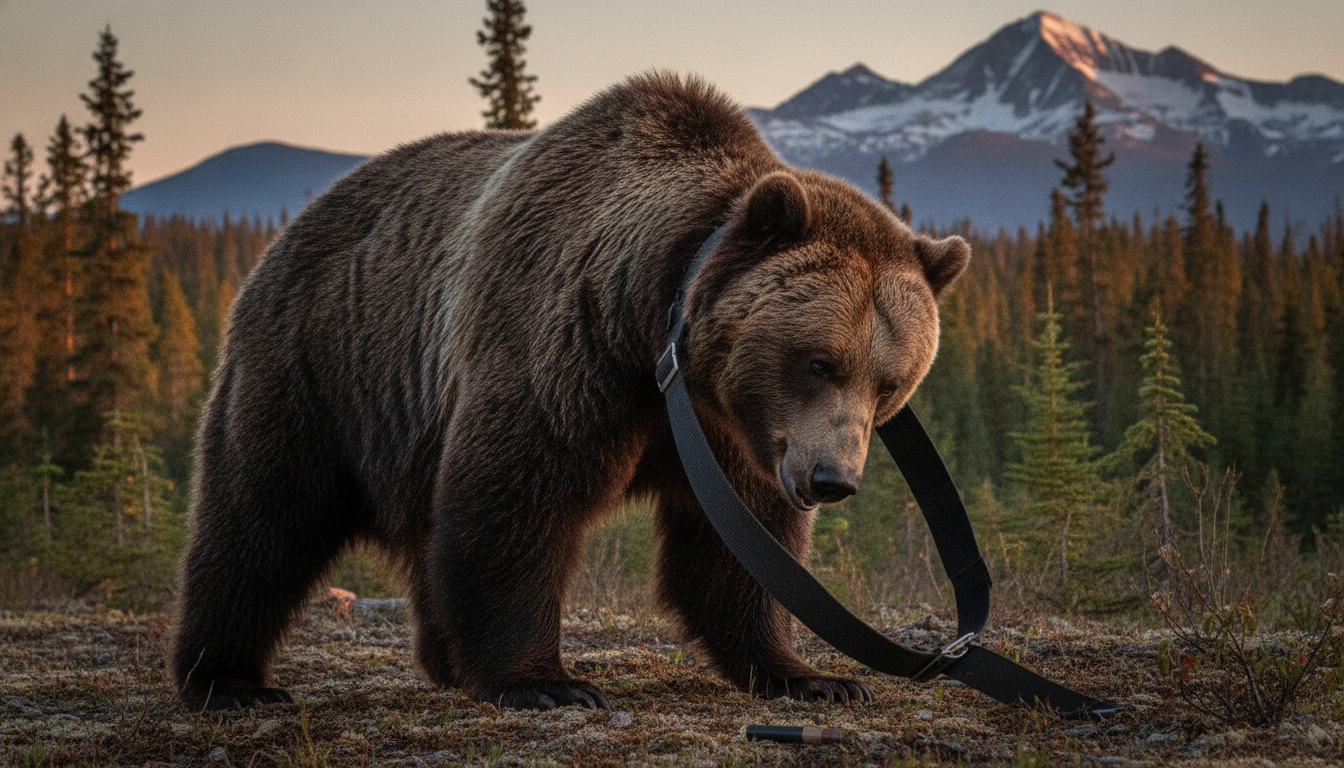
The Boss grizzly loses GPS collar within a week, Parks Canada says
The Boss grizzly shed its GPS collar within a week of being fitted, Parks Canada confirmed, saying collar loss can be common with large bears and offering no timeline for recollaring.
Parks Canada said the well-known bear removed the device within days of capture and that staff are monitoring the situation. The agency described the collar loss as not unusual for a large grizzly and declined to say whether a recollaring operation would take place.
Collar removal confirmed by Parks Canada
Parks Canada acknowledged that the collar placed on the bear known as The Boss was no longer attached within a week of deployment. The agency said short collar durations are an expected outcome in some cases and that crews were aware of the loss.
Officials did not provide details about the exact date of capture or the brand of collar used, citing operational discretion. Parks Canada also declined to commit to a recollaring timeline while assessments continue.
Reasons technicians cite for collars slipping
Wildlife biologists say several factors can contribute to collars coming off large grizzlies, including neck morphology, seasonal fur growth, and the animals’ strength. Bears may also rub collars off on trees, rocks or by rolling, and fast growth or thickening of the neck in mature males can change fit quickly.
Mechanical failure or improper fit can play a role, but experienced teams take steps to minimize those risks. Collars are designed with breakaway features in some programs to prevent injury, and investigators will typically examine recovered equipment when possible.
How collar loss affects monitoring and public safety
A lost GPS collar reduces real-time tracking capacity and complicates efforts to monitor movements linked to human-bear interactions. For bears that range near communities, researchers and managers rely on telemetry to anticipate problem behavior and coordinate responses.
Without collar data, Parks Canada and local partners depend more on public reports and observational surveys to piece together movement patterns. That shift can slow response times and requires clear communication with residents and park visitors about sighting protocols.
Scientific trade-offs and data gaps
GPS collars have provided important insights into grizzly behaviour, seasonal movements and habitat use, but they are not infallible. When a high-profile animal like The Boss loses a collar, researchers lose a continuous dataset that can span months or years and inform conservation decisions.
The absence of that data can leave questions about migration corridors, denning locations and interactions with other bears unanswered. Researchers often supplement collaring with camera traps, genetic sampling from hair or scat, and aerial or ground observations to fill gaps.
Animal welfare and management considerations
Decisions about whether to recollar a bear balance scientific benefit against animal welfare and public safety concerns. Capturing a large adult grizzly involves risk to both the animal and field crews, and agencies must weigh whether additional handling is justified.
Management teams must also consider the possibility that repeated captures could alter a bear’s behaviour or stress levels. In many jurisdictions, animal care committees and interagency panels review collaring proposals before operations proceed.
Potential next steps and public guidance
Parks Canada indicated it is assessing options and has not committed to a recollaring operation for The Boss. Any decision will likely factor in recent sightings, the bear’s known range, and whether collar data are essential to immediate safety or research objectives.
In the meantime, the public is asked to report sightings through established park channels and to maintain safe distances from any bear. Park managers stress that standard precautions — storing food properly, keeping pets under control, and remaining vigilant on trails — remain essential.
The Boss remains a monitored presence despite the lost collar, and officials say they will update the public if plans change. Observers are urged to provide accurate sighting details to aid wildlife teams while Parks Canada continues to evaluate the best course of action.
