
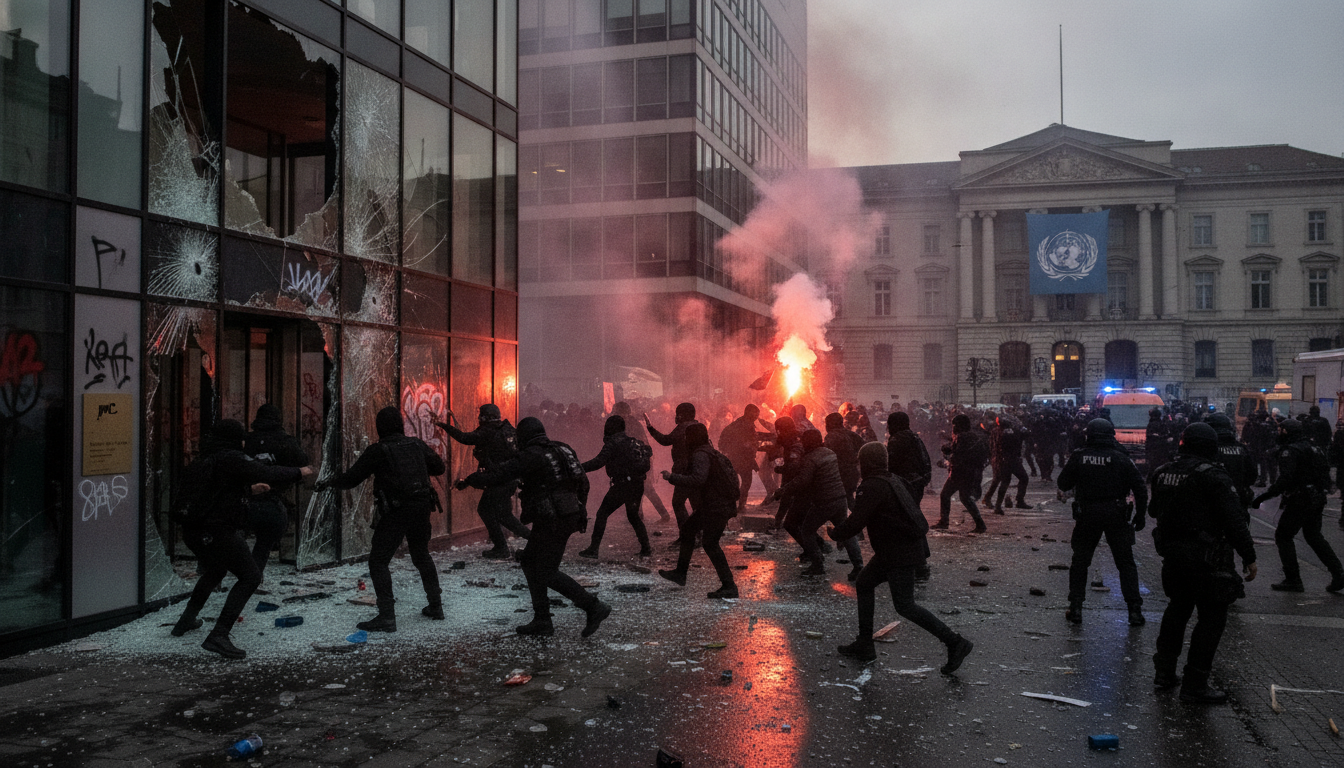
G7 protests in Geneva turn violent with clashes near UN ahead of Evian summit
G7 protests in Geneva escalate on June 14, 2026, as demonstrators clash with police near the United Nations; property damage and tear gas mar the march ahead of the Evian summit.
The G7 protests in Geneva on Sunday, June 14, 2026, devolved into violent confrontations between demonstrators and security forces on the eve of the leaders’ summit in Evian. Protesters, many clad in black and some with faces masked, battled police near the United Nations complex while nearby buildings were damaged and tear gas filled the streets. Swiss authorities said thousands took part in the march as security tightened ahead of leaders’ arrivals.
Clashes erupt near UN headquarters in Geneva
Tensions mounted in the late afternoon as groups sought to approach the highly secured United Nations office in Geneva. Police deployed water‑cannon trucks and officers in riot gear to hold the perimeter, and a police helicopter patrolled overhead for much of the evening.
Authorities reported repeated exchanges: protesters hurled bottles, stones and incendiary devices while police responded with tear gas barrages. Journalists on site described loud detonations and sustained sirens as security forces worked to prevent the crowd from breaching UN security zones.
Corporate and telecommunications offices hit by attackers
Several corporate and institutional buildings sustained damage during the unrest, with windows smashed and facades scorched. PricewaterhouseCoopers and the headquarters of the International Telecommunication Union were among the sites targeted, according to visual reports from the scene.
Bank branches also suffered, with reports of broken glass at the Banque du Léman and a Raiffeisen outlet. Emergency crews were seen extinguishing a vehicle fire nearby; the car bore the slogan “Eat the Rich,” painted in English on its exterior.
Scale of the march and presence of black blocs
Police estimated the total number of demonstrators at about 20,000 by early evening, a crowd that blended various activist causes. Among them, officers identified roughly 600 participants associated with “black bloc” tactics, groups known for coordinated, mobile actions and use of anonymity to carry out property attacks.
The larger march included a wide array of activists voicing anticapitalist, pro‑Palestinian, feminist, climate and Kurdish solidarity messages. Organizers had received authorization for the rally, but small violent contingents split from the main procession and engaged security forces.
Security response and crowd control measures
Swiss authorities said they established extensive barriers and a substantial policing presence to prevent the sort of widespread disorder seen in past summit protests. Two large water‑cannon trucks and multiple cordons were put in place around sensitive sites, officials reported, while backup from neighboring France was visible in planning documents circulating prior to the event.
Police used tear gas and dispersal tactics to push back aggressing groups, creating dense clouds that lingered around key avenues. Despite the strong security posture, skirmishes continued into the evening, and officers remained on alert as leaders were due to travel through Geneva the following day.
Route of the demonstration and incidents along the lakefront
The authorized procession set off shortly after 3:30 p.m. from the shores of Lake Geneva and moved through central thoroughfares under a sweltering June sun. Thousands marched under banners and chanted slogans, while smaller clusters repeatedly diverged from the approved route to confront barriers and police lines.
Initial clashes were reported near a hotel along the march route before violence spread intermittently to adjacent streets. Firefighters and first responders worked amid the unrest to secure damaged properties and to extinguish vehicle fires, prioritizing civilian safety in the chaotic scenes.
Context of the Evian G7 summit and historical reference
The unrest in Geneva came as world leaders prepared to meet at the G7 summit in Évian, scheduled from Monday, June 15 to Wednesday, June 17, 2026. Most leaders are expected to arrive via Geneva airport on Monday before proceeding to the French summit site, a transit that has prompted coordinated Swiss and French security arrangements.
Swiss authorities cited the disturbed legacy of mass protests in 2003 near a previous Evian summit, when violent groups triggered riots and looting across Geneva and Lausanne. Officials said measures this year were designed to prevent a recurrence of such large‑scale disorder and to protect both delegates and the public.
The demonstrations and subsequent confrontations on June 14 highlighted the deep public opposition that can surround high‑level diplomatic gatherings. As the G7 summit opens, security services on both sides of the French‑Swiss border remain on heightened alert and will be closely monitoring further protest activity.
