
Swiss referendum rejects 10‑million population cap while approving tighter civilian service rules
Swiss referendum on June 14, 2026 saw voters reject a right‑wing proposal to cap the population at 10 million and approve stricter rules for civil service alternatives.
Referendum outcome and immediate projections
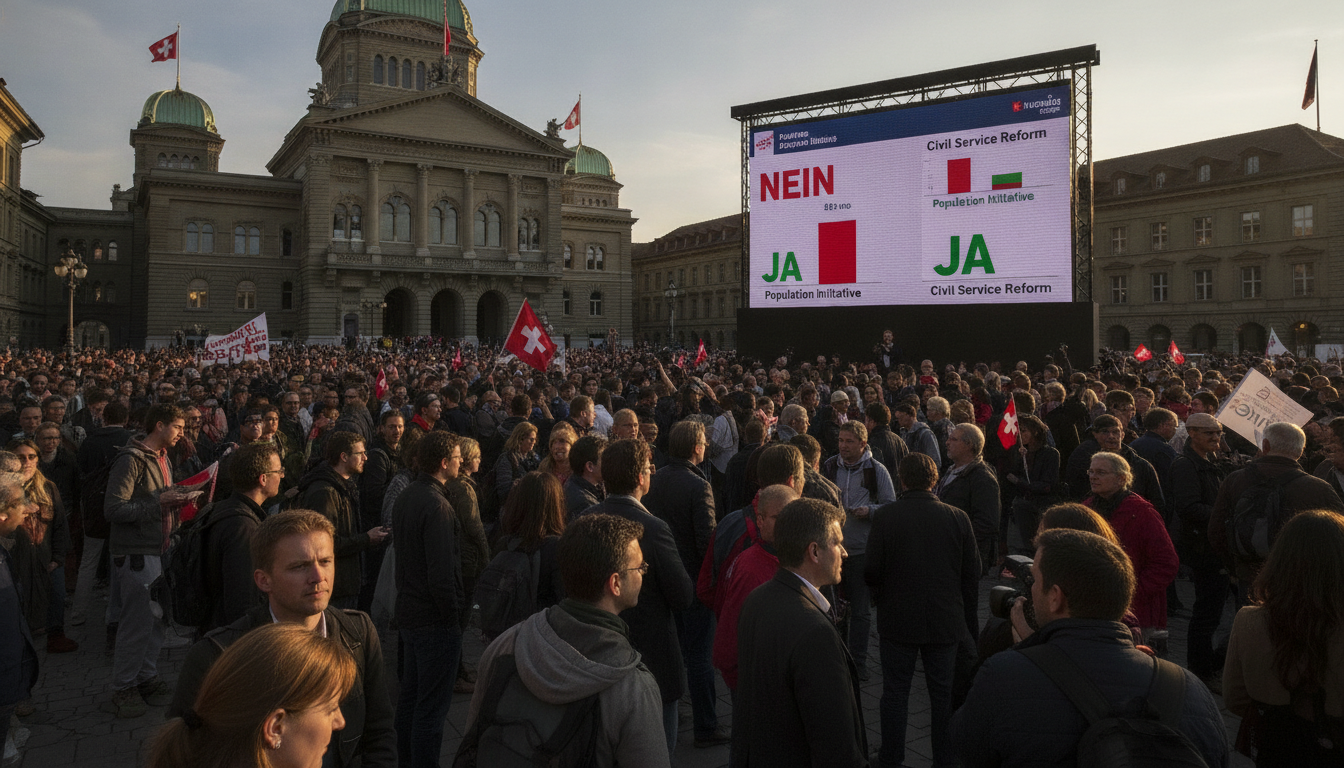
Thirty minutes after polls closed on June 14, 2026, projection data from pollster gfs.bern showed the anti‑immigration initiative had been defeated, with roughly 55% of voters opposed.
The same projections indicated a separate ballot measure tightening access to civilian service passed with about 53% support.
Federal and international observers noted turnout was robust for a weekend vote, with early tallies suggesting participation in the high 50s percent range.
Election authorities and media outlets published preliminary results throughout the evening as cantonal counts continued to be updated.
What the rejected initiative would have done
Backed by the Swiss People’s Party (SVP/UDC), the so‑called “sustainability” initiative sought to stop most new residence permits once Switzerland’s permanent population reached 10 million.
Proponents framed the measure as a response to pressure on housing, transport and public services and argued it would preserve quality of life through stricter immigration limits.
Opponents warned the proposal was unprecedented and argued it would force Switzerland to renegotiate or scrap key agreements with the European Union, including free movement, if the cap were breached for two consecutive years.
Those economic and diplomatic risks were central to the campaign mounted by business groups, major parties and the federal government.
Economic and diplomatic stakes cited by opponents
Business associations and the federal cabinet warned that a binding population cap could destabilize labor supply in export‑oriented sectors and undermine long‑standing bilateral ties with the EU.
Monika Rühl, director of the employers’ federation economiesuisse, said the projected rejection would preserve Switzerland’s commercial relationships and international standing.
Analysts and economists highlighted Switzerland’s low unemployment and an aging workforce as structural reasons why many employers opposed the proposal.
They argued that cutting access to foreign labour abruptly could raise costs, reduce competitiveness and deepen shortages in health care and construction.
Arguments from initiative supporters
Supporters, led by the SVP/UDC, pointed to rising rents, congested transport and perceived pressures on public services as justification for a hard limit.
At polling stations some voters compared unchecked growth to an overcrowded vessel and said a ceiling was necessary to protect local communities and infrastructure.
Campaigners also said limiting new permits was a sovereign policy decision about who may settle in Switzerland and when, and framed the initiative as a safeguard for future generations.
Their messaging resonated in parts of the country where housing shortages and commuting strains are most acute.
Civilian service reform and military context
The separate vote approved a law making access to civilian service more restrictive, strengthening the primacy of Switzerland’s compulsory military system for men.
Swiss military service operates as a militia model: men undergo initial training and periodic refresher service over several years, while civilian service has been the recognized alternative for objectors since 1996.
Government officials argued the reform was needed because the number of people opting for civilian service rose substantially after procedural checks were relaxed in 2009.
Critics on the left warned the change risked eroding a long‑standing alternative to military conscription and could penalize genuine conscientious objectors.
Regional trends and political implications
Early results suggested the population cap initiative faced steeper resistance in urban and economically integrated cantons and performed better in rural and conservative areas.
Political commentators said the outcome confirmed a recurring Swiss pattern: voters often reject measures perceived as risking economic stability, even when public concern about immigration is palpable.
The vote will shape parliamentary debate in the months ahead and is likely to feature in canton‑level planning and federal negotiations with European partners.
For the SVP/UDC, the defeat prompts a choice between refining its message for future ballots or pursuing different legislative strategies to address voters’ concerns.
The federal government said the combined results underscored the delicate balance Swiss voters seek between managing public services and maintaining the country’s economic and diplomatic relationships.
