
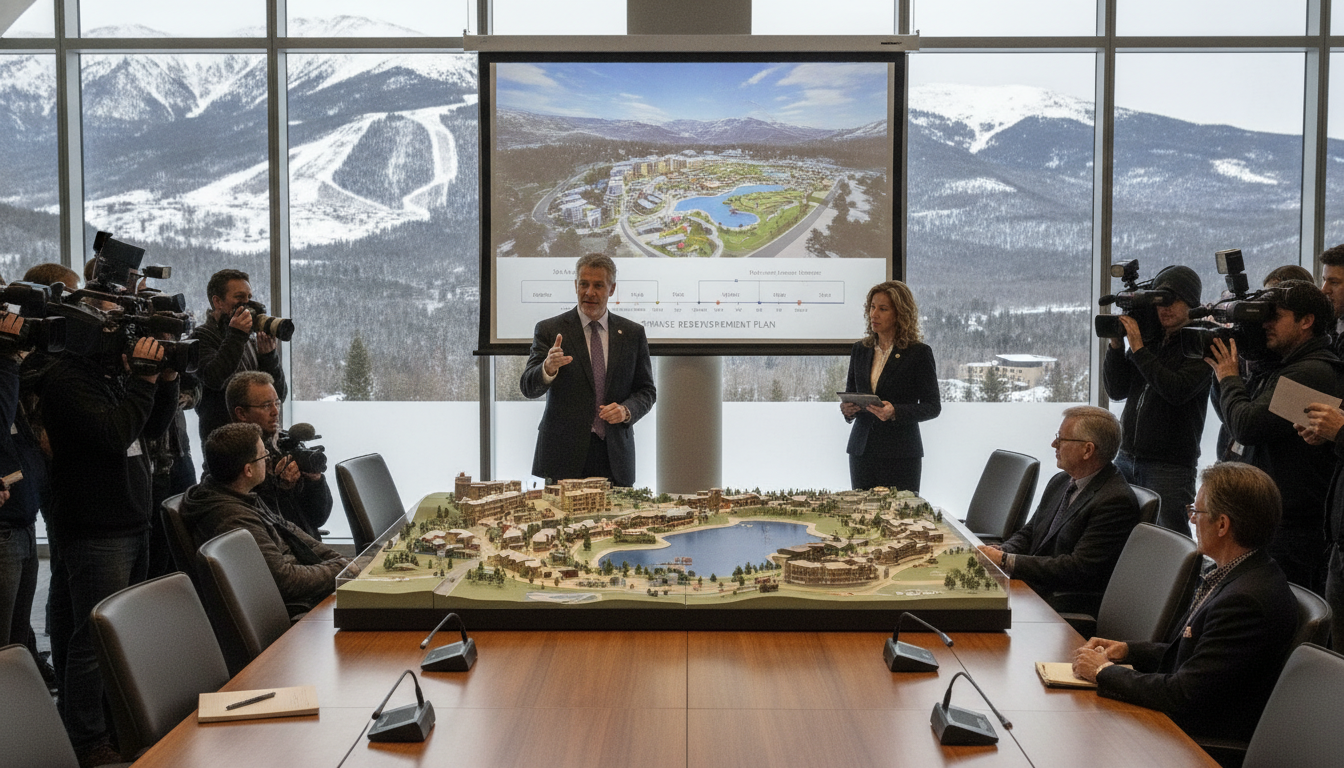
Fortress Proposes All-Season Resort at Former Ski Area Featuring Gondolas and Ziplines
Fortress plans to transform a former ski area into an all-season resort that would revive winter skiing and add summer attractions such as mountain biking and hiking. The proposal, presented in a five-phase plan by Fortress, calls for gondolas, ziplines, hotels, condos, shops and restaurants across the property. The project aims to convert a dormant slope into a year-round destination, pending approvals from local regulators and community stakeholders.
Developer’s Vision and Master Plan
Fortress’s master plan sets out five development phases intended to turn the former ski area into an all-season resort with a mix of recreational and commercial offerings. The company envisions infrastructure upgrades including gondolas to improve uphill access, ziplines for summer visitors, and new trails for hiking and mountain biking.
The plan also includes lodging and residential components, with proposals for hotels and condominiums alongside retail and dining spaces. Fortress frames the project as an integrated resort meant to attract visitors across seasons rather than rely solely on winter operations.
Details of the Five-Phase Proposal
Phase descriptions submitted by Fortress outline sequential build-out intended to balance amenities and access improvements. Early phases emphasize core recreation infrastructure—lift and gondola installations, trail construction and initial hospitality units—while later phases would add residential complexes and expanded commercial areas.
The five-phase structure is presented as a staged approach to financing and permitting, allowing construction to proceed as approvals, market conditions and community input evolve. Fortress indicates that each phase would be subject to further design work and regulatory review before moving forward.
Planned Recreation and Amenities
Central to the proposal are multiple activity zones designed for both winter and summer use, with downhill skiing and snow-related programming retained alongside new summer attractions. The resort’s summer offerings would include mountain biking circuits, guided and self-guided hiking trails, and zipline courses intended to increase visitation outside the ski season.
Gondolas are proposed to improve mountain access for skiers, hikers and sightseers, and would be paired with base-area facilities such as rental shops and instructional services. Restaurants and retail spaces are planned to serve day visitors and overnight guests, broadening the on-site revenue base beyond lift tickets.
Economic Promise and Local Impact
Fortress and proponents argue the development could generate economic activity through construction contracts, hospitality employment and increased tourism spending. The resort model aims to create a longer operating season, which supporters say would help stabilize year-round jobs in nearby communities.
Local officials will weigh potential tax revenues and business opportunities against the costs of expanded services and infrastructure. The development’s scale means municipal planning departments will need to assess impacts on roads, water and emergency services as part of the approval process.
Environmental and Community Considerations
Environmental review and community consultation are likely to be major factors in the project’s approval timeline, given the site’s previous use as a ski area and its surrounding ecosystems. Questions cited by residents and advocacy groups typically include vegetation clearing, wildlife habitat disruption, water use for snowmaking, and erosion control on new trails.
Fortress has indicated design measures and phased implementation could limit immediate environmental disturbance, but formal environmental assessments and public hearings will be required. Nearby residents and regional stakeholders have signaled interest in a transparent process that addresses noise, traffic, and visual impacts from new buildings and lift infrastructure.
Approval Pathway and Next Steps
The proposal will move through statutory planning steps, including land-use applications, environmental assessment filings and municipal reviews before construction can begin. Fortress’s timeline positions the project as dependent on regulatory clearances, design refinements and community agreements that may adjust the scope of early phases.
Public meetings, technical studies and negotiation with local governments and agencies will inform final project approvals and permit conditions. The staged nature of the five-phase plan means certain amenities could be delayed or altered in response to feedback and regulatory requirements.
Fortress’s plan to repurpose the former ski area into an all-season resort presents both an economic opportunity and a suite of planning and environmental questions. As the proposal advances through public review and permitting, stakeholders will scrutinize details on infrastructure, ecological safeguards and community benefits before any construction begins.
