
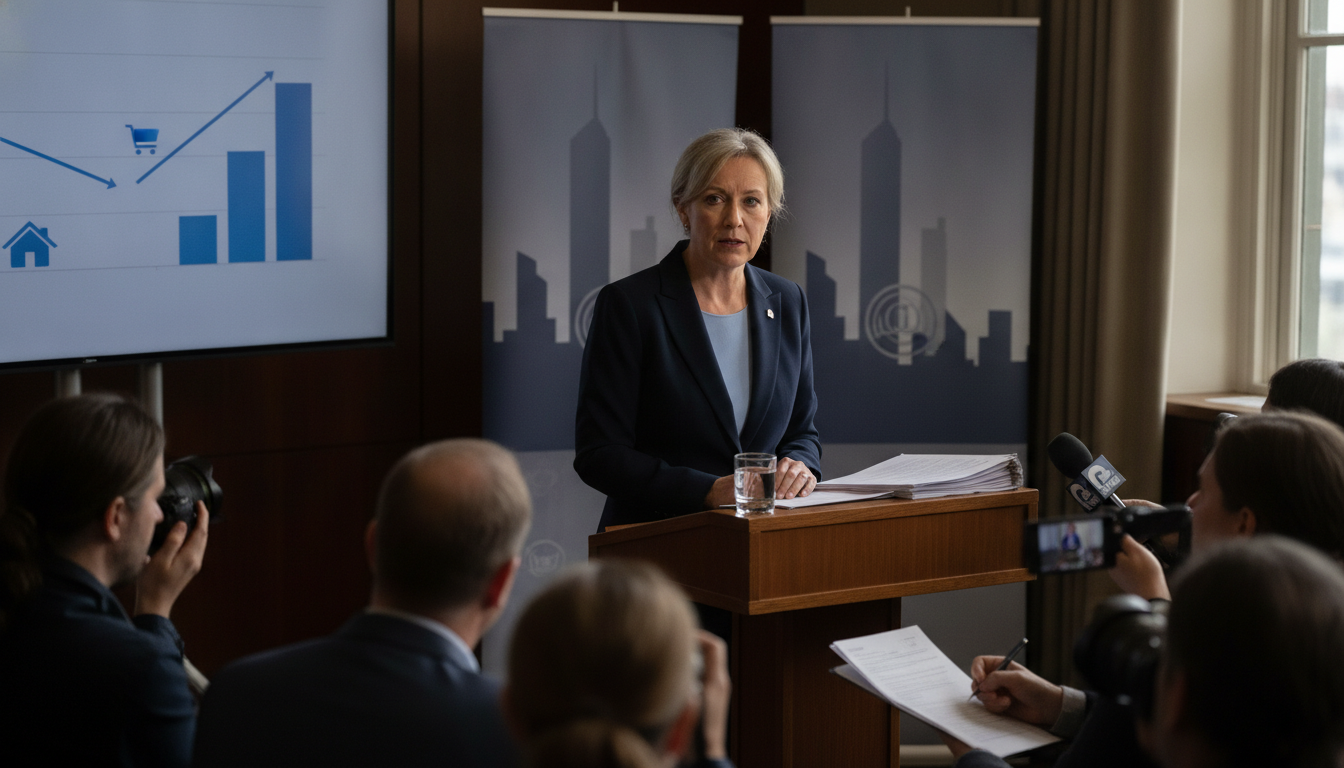
City will not set property taxes and user fees so high they choke demand, official says
Padbury says the city will balance property taxes and user fees to avoid pricing that reduces demand, with trade-offs revisited in every four-year budget cycle.
The city’s finance office signalled on Friday that it will avoid setting property taxes and user fees at levels that would drive users away or sharply depress demand. Padbury, a senior municipal finance official, told reporters the administration’s approach is deliberately calibrated to hold pricing within a range that sustains public use while meeting revenue needs. The comments underline a broader municipal effort to weigh affordability against the cost of delivering services as the next budget cycle approaches.
Padbury frames the pricing strategy
Padbury said the goal is to “get that balance between pricing and demand correct,” noting the city will not adopt targets that require prices so high they push away users. She described the process as iterative, with officials weighing projected revenues, service costs and likely user behaviour. The remark was offered as officials prepare options for council that will be revisited through the upcoming four-year budget cycle.
The official framed property taxes and user fees as complementary tools for raising revenue and managing demand. According to Padbury, each decision will be modelled to prevent unintended drops in usage that could undermine service objectives and long-term fiscal stability.
Implications for property taxes and households
Raising property taxes can be an effective way to generate predictable revenues, but it also affects homeowners’ annual budgets and can have knock-on effects for renters and small businesses. City staff will therefore assess the distributional impact of any proposed tax increases before bringing options to council. The finance office intends to use sensitivity analysis to gauge how different tax scenarios would affect household affordability and municipal revenue targets.
Officials said the city must balance maintaining infrastructure and community programs with the risk of eroding public support if increases are perceived as excessive. That balancing act is particularly sensitive in neighbourhoods with older homeowners on fixed incomes or in areas facing rapid assessment growth.
User fees used to manage demand and costs
User fees — from transit fares and parking to recreation programs and water rates — are cited as tools not only for revenue but for managing demand. Padbury’s comments emphasised that fee-setting will aim to avoid pricing services out of reach for typical users while still reflecting the full cost of delivery where appropriate. The finance team will examine whether targeted subsidies or sliding-scale fees can protect access for low-income residents without undermining cost recovery.
Officials noted that user fees, when calibrated correctly, can encourage efficient use of services, reduce peak-period congestion and fund maintenance without relying solely on tax increases. However, the city must be careful: steep fee hikes risk reducing participation and erasing the anticipated revenue gains.
Four-year budget cycle shapes decisions
The city’s four-year budget cycle offers a built-in schedule for revisiting property taxes and user fees, allowing officials to adjust course as economic conditions and usage patterns change. Padbury described the cycle as an opportunity to make evidence-based adjustments rather than one-off fixes. Staff will produce revenue projections, usage forecasts and impact assessments to inform council deliberations at each cycle.
This recurring review process is designed to surface trade-offs early and give councillors, stakeholders and residents an opportunity to offer feedback during public hearings. Officials stressed that trade-offs — between affordability, service levels and fiscal prudence — are enduring and will be debated through successive budgets.
Balancing affordability, services and fiscal sustainability
City leaders face the challenge of funding capital repairs and rising operating costs while ensuring residents can afford essential services. Padbury’s statement underlined the municipality’s intent to strike a balance that preserves service take-up and community benefits. City staff are expected to present multiple budget scenarios that lay out the consequences of different tax and fee paths.
Analysts and community groups commonly urge municipalities to pair modest, predictable rate increases with targeted relief measures for vulnerable populations. Officials indicated those principles will guide the design of any fee increases or tax adjustments considered in the coming months.
Next steps for council and public engagement
City staff will now move toward preparing detailed modelling and options for council consideration, including scenarios that show impacts on households, businesses and service usage. Those options are expected to be tabled as part of the scheduled budget process, with opportunities for public consultation and hearings. Padbury emphasised that transparency and clear communication about the rationale for proposals will be central to the process.
Councillors will weigh the modelling and public feedback before deciding on a package that seeks to preserve access to services while maintaining fiscal discipline. The administration has signalled a preference for measured, evidence-based choices rather than abrupt or steep increases.
The city’s pledge to avoid price levels that dampen demand reflects a broader municipal priority: sustaining public access to services while meeting the financial realities of running a growing community.
