
Edmonton infill fight intensifies as Parkview residents appeal multi‑unit approvals
Edmonton infill dispute: Parkview residents appeal approval of multi‑unit developments to the Alberta Court of Appeal, with a hearing scheduled for early August.
Residents appeal multi‑unit infill approvals
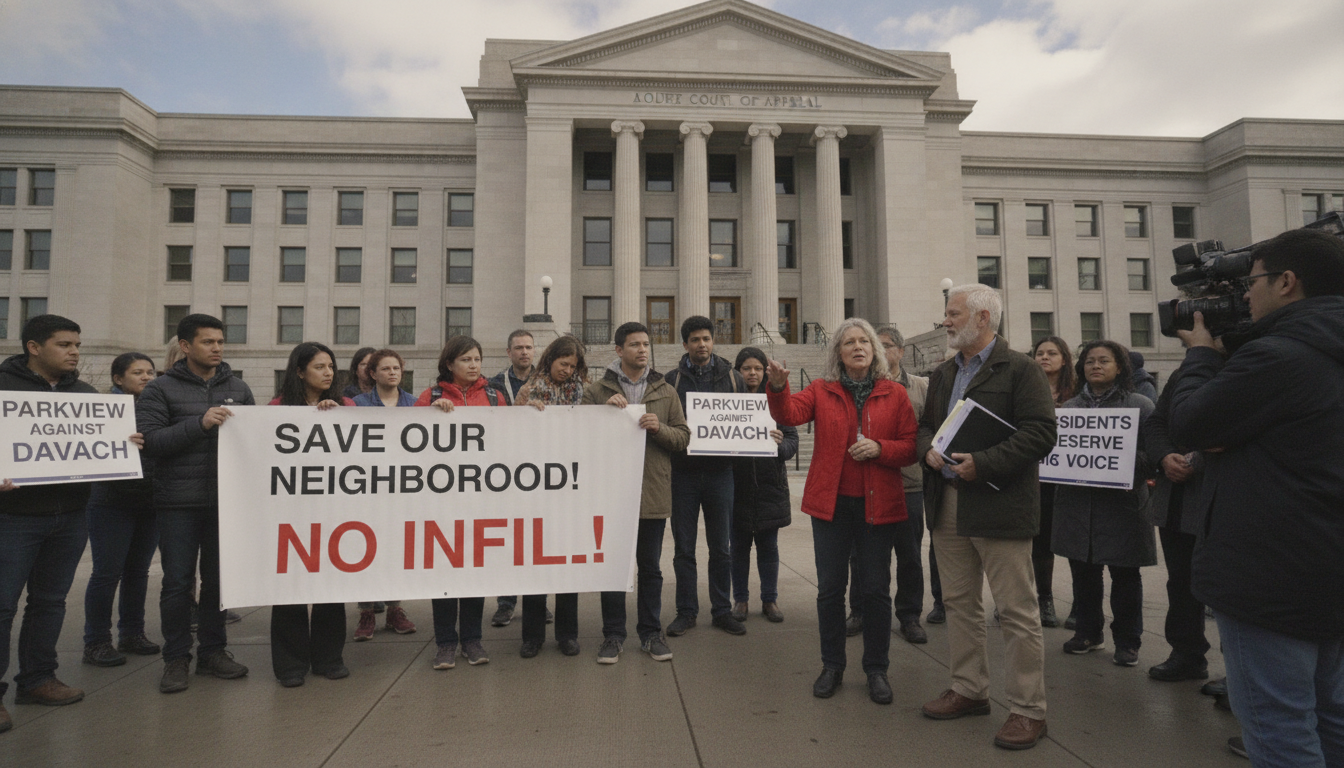
A group of Parkview homeowners has taken an appeal to the Alberta Court of Appeal to block two proposed multi‑unit infill projects, saying the plans will not fit on the lots as drawn. The local dispute focuses on development applications by Davach Properties that were cleared by the Edmonton subdivision and development appeal board in May, a decision now under legal challenge.
Residents say they are worried about losses of green space, narrower separations between properties and the cumulative effect if multiple eight‑unit buildings are permitted on adjacent lots. Lawn signs appearing across 88 Avenue and nearby streets reflect growing alarm among neighbours and a steady stream of "for sale" notices.
Alberta Court of Appeal hearing set for early August
The appeal board found the developer’s drawings left sufficient space for required elements such as a retaining wall, a drainage swale and fence posts, calling concerns about reduced widths "speculative." Homeowners argue the site plans do not demonstrate the clearances needed for those features and say professional builders who reviewed the submissions reached different conclusions.
Davach Properties declined to comment on the record while litigation proceeds. The court timetable currently lists the hearing for early August, creating a window in which both legal and planning arguments will be tested at a higher level.
Zoning changes allowing up to eight units underlie dispute
The conflict in Parkview comes as Edmonton’s 2024 zoning bylaw enables higher density in established neighbourhoods by allowing up to eight units on a single lot, provided each unit meets a minimum of 75 square metres of land per unit. That regulatory shift is intended to increase housing options across the city but has also prompted anxiety in mature communities worried about sudden and concentrated redevelopment.
Critics say the bylaw’s language leaves room for interpretation around setbacks, usable sideyard widths and how technical features such as swales and retaining walls are measured. Proponents counter that the rules set minimum lot area standards that developers must meet before permits are issued.
Ward councillor raises alarm about concentrated purchases
Ward councillor Thu Parmar has told constituents that developers are increasingly purchasing multiple homes on single blocks, a trend she says is producing "dramatic changes" in neighbourhood character. Parmar said the pattern has prompted seven communities in her ward to pursue restrictive covenants as a way to slow or shape infill projects while the city and residents negotiate local responses.
Parmar advocates directing most aggressive densification to designated corridors such as near the Exhibition Lands and Blatchford, while encouraging gentler, incremental redevelopment in long‑standing residential areas. Her comments reflect a broader municipal debate over balancing city‑wide housing goals with local expectations.
Planners and developers emphasize housing supply and renewal
Some urban planners and consultants argue the debate often overlooks the need for updated housing stock and greater affordability in mature neighbourhoods. Chelsey Jersak, a development strategist, notes that many post‑war bungalows are reaching the end of their useful lives and that population in some established areas has actually declined in recent years.
Jersak says infill should be framed as a response to shifting household sizes and affordability pressures rather than solely as a construction issue. She argues carefully designed multi‑unit projects can keep families and seniors in neighbourhoods they grew up in while adding rental and ownership options that are scarce in a tight market.
Practical impacts on neighbours and infrastructure concerns
Parkview residents raising objections point to concrete impacts such as added parking demand, more garbage bins and potential strain on local drainage systems. Neighbours also describe social costs: long‑standing relationships and block cohesion that could fray if properties are sold to a small number of developers and rebuilt rapidly.
Questions about how features like retaining walls and swales will be sited on small lots have taken on added urgency because several proposed infills are clustered close together. That clustering is central to residents’ fear that the cumulative effect will be more disruptive than single, isolated rebuilds.
The appeal will test how municipal boards and courts balance technical planning rules, community expectations and citywide housing objectives. The outcome could shape redevelopment patterns not only in Parkview but also in other Edmonton neighbourhoods wrestling with similar tensions.
