
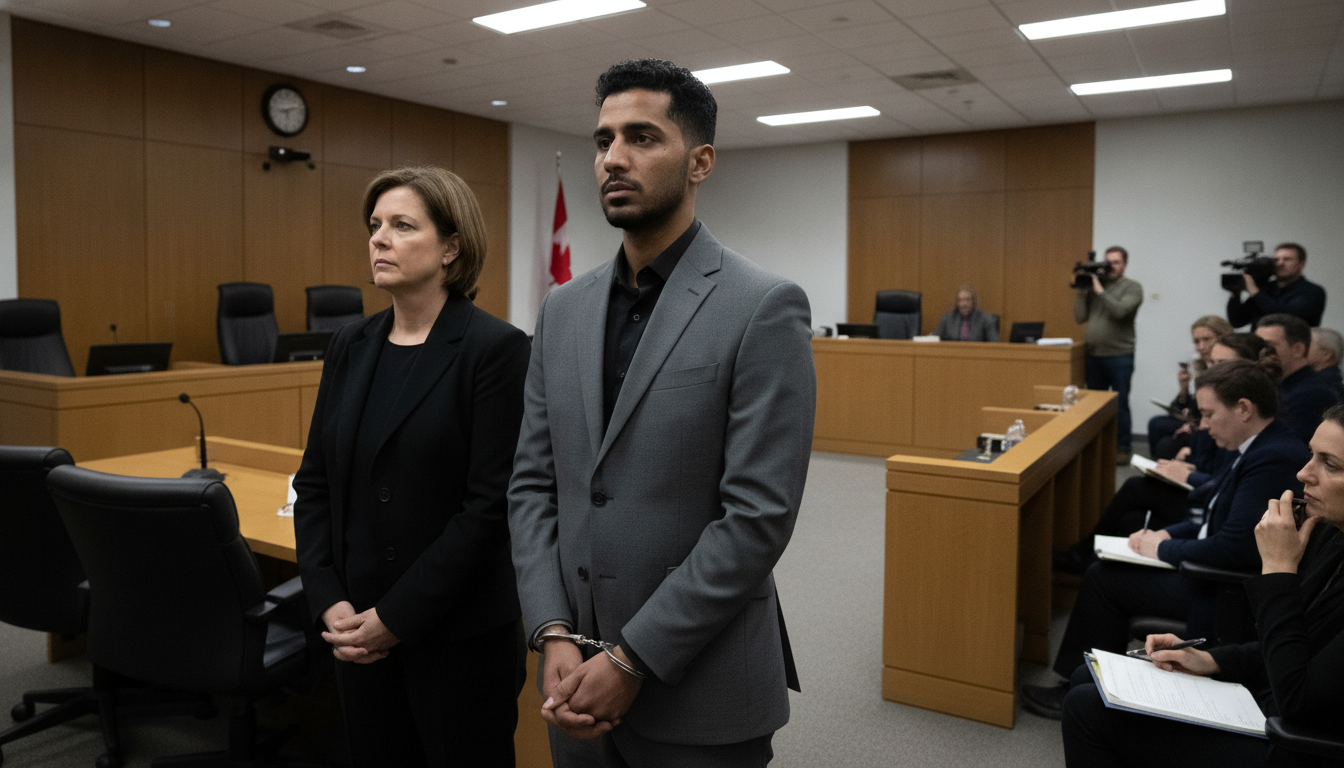
Calgary hotel shooting suspect sentenced to 15 years after manslaughter plea
A Calgary man who pleaded guilty to manslaughter in the March 25, 2024 Calgary hotel shooting was sentenced to 15 years in prison, with parole eligibility set for June 24, 2032.
Guilty plea accepted and sentence imposed
Justice Chidinma Thompson of the Court of King’s Bench accepted a joint Crown and defence submission on Monday after 31-year-old Ahmed Abdi Hassan entered a guilty plea to manslaughter.
The plea resolved a scheduled second-degree murder trial in relation to the Calgary hotel shooting that left Liban Abdirahman dead at a Super 8 motel on Shawville Road S.E.
How the March 25, 2024 shooting unfolded
Court documents say Hassan, Abdirahman and a third man had travelled from Edmonton and were invited to stay in a woman’s room at the hotel on the night before the shooting.
The Crown summarized that the three men consumed a substantial amount of alcohol and cocaine, and the fatal shooting occurred about two hours after the woman left the room for an appointment on March 25.
Evidence read into the record
Crown prosecutor Margot Engley read an agreed statement of facts describing the incident inside room 415.
The statement says Hassan was armed with a semi-automatic handgun loaded with multiple 9mm rounds and, from the doorway area, fired seven times at Abdirahman, striking him three times in the back, including a wound to the head.
Aggravating factors cited by Crown
Prosecutors argued several aggravating features supported the 15-year sentence, including that Hassan habitually carried a firearm and shot the victim from behind.
The head wound was described as penetrating the frontal lobe, and the Crown told the court these details factored into its joint recommendation on sentence length.
Defence position and victim family impact
Defence counsel Balfour Der told the court Hassan maintained he was not admitting to murder but offered remorse and agreed to the manslaughter plea, a move the defence said spared the victim’s family a full trial.
The judge noted that Hassan addressed the victim’s mother in court and offered an apology, although she waved him off as he spoke.
Parole eligibility and time served calculation
Under the joint submission, Hassan must serve a minimum of half his 15-year sentence before seeking parole; with credit for time spent in remand, he will have slightly more than 12 years remaining.
Der informed the court that the earliest Hassan can apply for release is June 24, 2032, reflecting the credited remand period and statutory calculation under the sentence agreement.
Legal counsel and court records identify the victim as Liban Abdirahman and a third man present that night as Mowlid Yusuf, with the woman who invited the group identified in proceedings as Ifrah Hassan.
The Crown’s reading of agreed facts and the defence’s acknowledgment framed the fatal incident as a manslaughter case for sentencing purposes rather than a conviction for second-degree murder.
The resolution in court removes the need for a trial that had been set to address a second-degree murder charge, but it leaves unanswered questions for the community about firearm access and substance use in fatal encounters.
Police and prosecutors in Calgary have increasingly raised concerns about gun violence and its connection to organized and opportunistic offending, and this case will likely be cited in discussions about sentencing and public safety.
Courtroom observers noted the procedural benefits of a joint submission in sparing witnesses and family members the ordeal of a full trial, while victims’ rights advocates say that plea deals must still reflect gravity and provide meaningful accountability.
Justice Thompson’s acceptance of the joint recommendation balanced those considerations with the aggravating circumstances the Crown outlined, resulting in the specified custodial and parole terms.
The sentence will be served under federal penitentiary rules, and parole boards will evaluate any future applications against statutory criteria, risk assessments and the offender’s institutional behaviour.
For the victim’s family, the sentence provides a measure of closure through a defined term of imprisonment, though it cannot undo the loss of life suffered in the Calgary hotel shooting.
Authorities have not indicated additional charges in connection with the incident, and the agreement between Crown and defence appears to conclude the criminal proceedings tied to the March 25, 2024 death.
Community members and legal observers will likely watch how the case influences public debate on gun possession, sentencing ranges for manslaughter, and the role of joint submissions in homicide prosecutions.
