
Haiti at the World Cup sparks renewed pride and youth interest across Montreal
Haitian community in Montreal rallies around Haiti at the World Cup, with schoolyard scouting, community screenings and cultural celebrations bringing renewed pride to families and youth.
Local youth embrace Haiti at the World Cup
Every midday the synthetic turf behind Antoine-de-Saint-Exupéry Secondary School fills with students dropping their lunches to play soccer, many barefoot or in socks. The news that Haiti qualified for the World Cup has turned those informal games into moments of national connection, with teenagers like 14-year-old Woodmaël and 13-year-old Enzo talking openly about representing the Grenadiers. For many young people of Haitian descent in Montreal, the national team’s success has sparked new curiosity about their heritage and a desire to wear the blue and red with pride.
Interest is visible beyond conversation, with boys and girls trying out for local teams and showing up at trials in greater numbers. Parents and coaches say the qualification has made the possibility of playing for Haiti feel reachable, even for youngsters who had not previously considered international representation. The World Cup presence is reframing soccer in neighbourhoods where the sport is already woven into daily life.
Coach Stanley Moiseau scouts talent in schoolyards
Stanley Moiseau, a coach with ties to both Quebec and the United States, watches the school games from the stands and remembers playing in those same courtyards as a child. Moiseau now works with AS Brossard and with Haitiana International, a Quebec-based group that helps channel promising players toward Haiti’s national program. He says scouting informal games has long been a way to find raw talent, and the World Cup berth has intensified those searches.
Moiseau emphasizes that development includes both athletic training and encouragement to pursue education. He describes his work as dual-purpose: advancing players’ soccer prospects while promoting school success and community involvement. His approach reflects a broader push in the diaspora to build pathways that connect neighbourhood play to organized clubs and national opportunities.
La Perle retrouvée becomes a focal point for screenings
In Saint-Michel, the community centre La Perle retrouvée has readied its former church hall as a gathering place for match screenings and celebration. The centre, operated by volunteers for three decades, plans to project Haiti’s games on a large screen and expects the 300-seat room to fill for key matches. Organizers say the venue will be decorated in national colours and will host intergenerational audiences, from elders recounting past World Cup memories to children experiencing the spectacle live for the first time.
Statues on the site’s parvis honour leaders of Haiti’s revolution, underlining the cultural and historical weight of the upcoming matches. Volunteers are coordinating food, flags and music, anticipating an atmosphere that mirrors stadium excitement despite the distance from the pitch. For many attendees, the screenings are as much about community solidarity as about the result on the field.
Elders recall 1974 and Manno Sanon’s historic goals
Among the centre’s oldest members, memories of Haiti’s previous World Cup appearance in 1974 remain vivid. Serge Isidore, now blind, recounts the shock and joy when Manno Sanon scored against Italy, an image preserved in Haiti’s sporting lore. That goal and other moments from 1974 are still sung about in Creole, and chants from that era — including the rallying cry “Toup pou yo!” — are expected to resurface in Montreal’s screenings and street gatherings.
Elders say those memories carry meaning beyond sport; they symbolize national achievement and resilience. For families who emigrated in the years since, the World Cup offers a rare public stage where multiple generations can celebrate a shared cultural milestone.
Group C match dates and community expectations
Haiti has been placed in Group C, with fixtures that include matches against Scotland on June 13 in Boston, Brazil on June 19 in Philadelphia and Morocco on June 24 in Atlanta. Local supporters have marked those dates and organized watch parties, prayer gatherings and street celebrations tied to each match. Young players following the schedule express cautious optimism, citing defensive improvements as an area for growth while hoping for at least one victory.
Community leaders stress that expectations are mixed with realism: opponents include established teams with deeper resources, yet the Grenadiers’ qualification itself is viewed as a victory for a nation facing many challenges. The schedule has mobilized Montreal clubs and community centres to coordinate transportation, viewing events and youth activities that coincide with match days.
Music, rara parades and public displays of pride
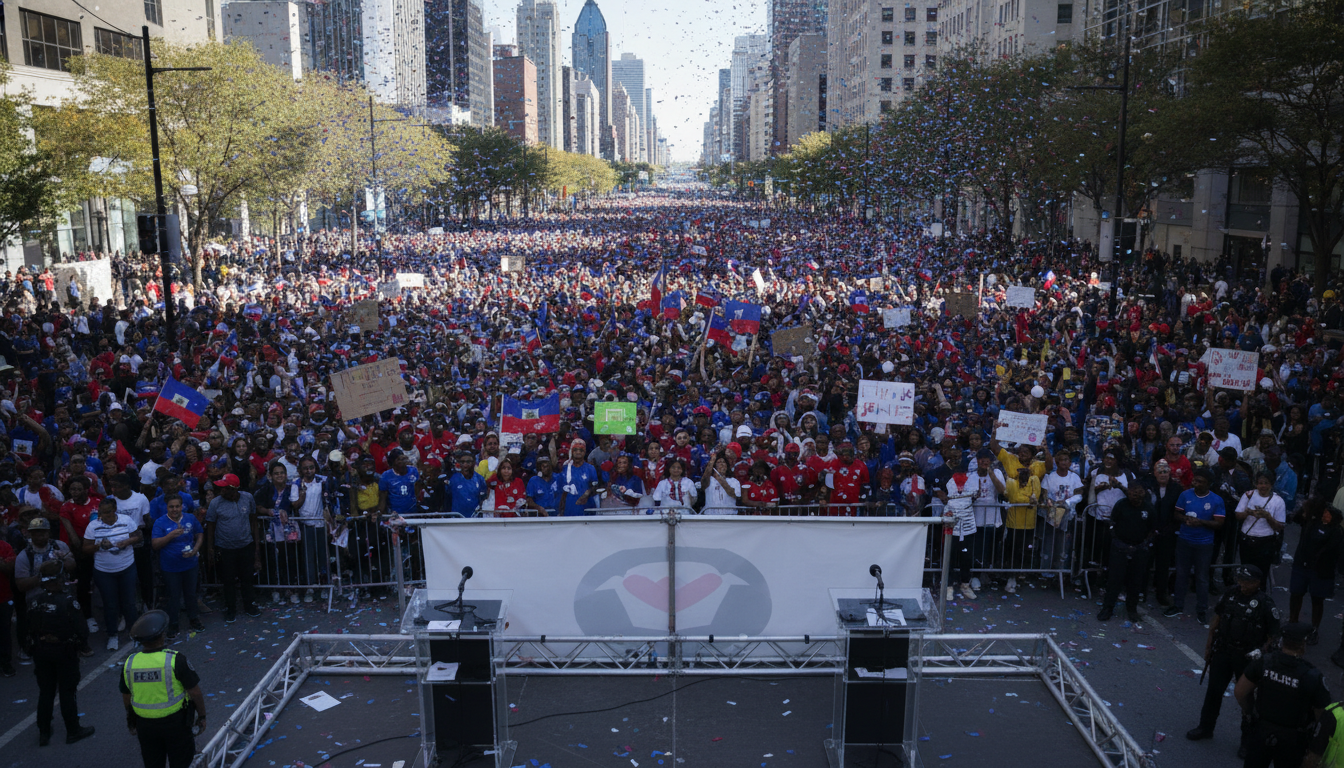
Beyond screens and schoolyards, Montreal’s Haitian neighbourhoods plan to turn the World Cup into a cultural procession as much as a sporting event. Traditional rara bands and drum ensembles are expected to play in the streets after matches, combining celebration with ritual. Organizers say rara—its rhythms and call-and-response energy—serves to galvanize crowds and to carry joy into the neighbourhoods long after a final whistle.
Flags, jerseys and brass-coloured caps will be visible across boroughs where Haitian families gather, and community centres are preparing to hand out colours and banners. Volunteers anticipate that small, spontaneous parades may wind through local streets, reflecting a communal impulse to mark the moment with music, dance and public camaraderie.
Montreal’s Haitian community sees more than a tournament in these games; they view the World Cup as an occasion to reconnect younger generations with their roots, to celebrate resilience, and to project a positive image of Haiti on an international stage. The impact will be felt in playgrounds, places of worship, community halls and on city sidewalks long after the final match is played.
