
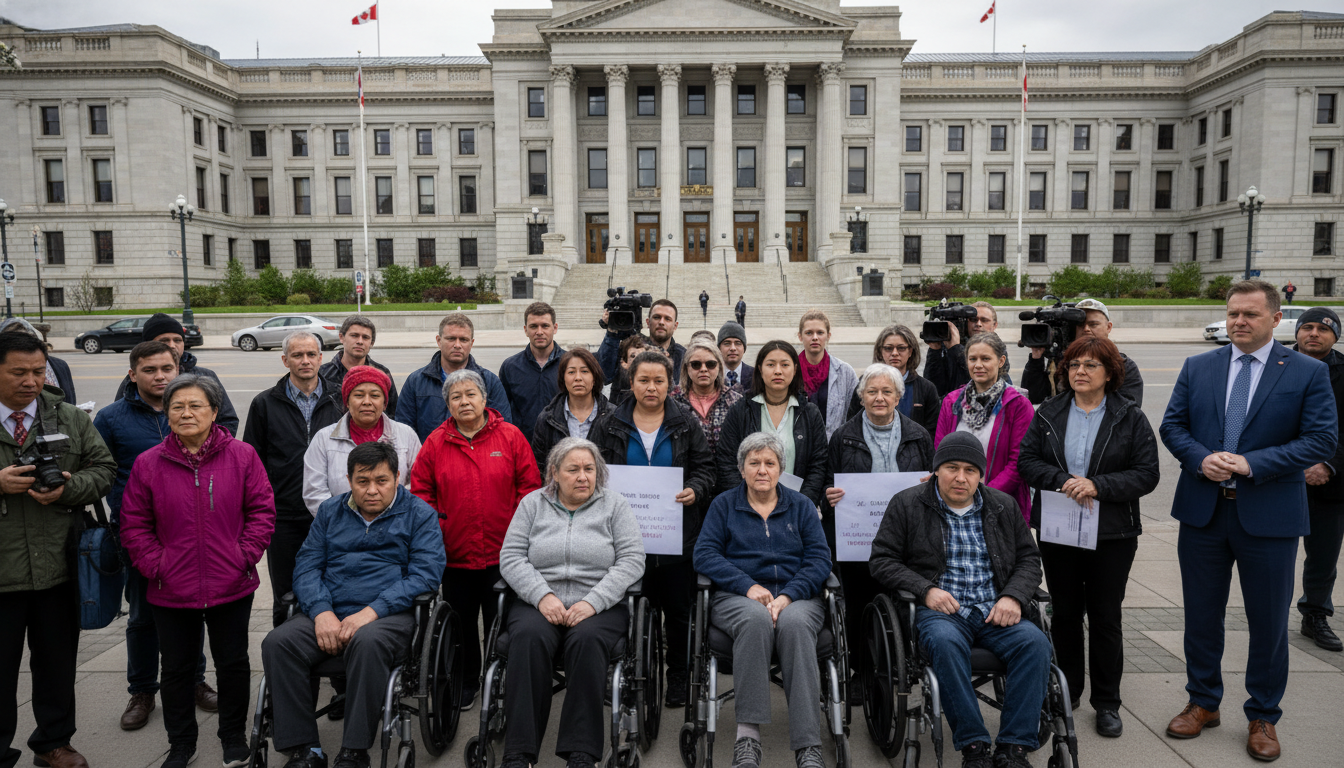
Alberta Disability Assistance Program transition cuts household income for rural AISH recipients
Alberta Disability Assistance Program shift set to begin July 1 reduces monthly payments for many AISH recipients, leaving some Alberta households facing immediate budget shortfalls.
Province to move AISH recipients to Alberta Disability Assistance Program on July 1
The provincial government announced a transition from Assured Income for the Severely Handicapped (AISH) to the Alberta Disability Assistance Program (ADAP) beginning July 1.
Officials say ADAP is structured to allow recipients to earn more employment income before benefits are reduced, a change the government argues will provide greater flexibility to those who can work.
The move will reclassify thousands of AISH recipients under ADAP rules, which include adjusted benefit levels and new household calculations.
The province also pledged a temporary $200 monthly top-up for affected recipients through the end of next year, intended to cushion the initial change.
Immediate household impact illustrated by Consort couple
Monique Peters and her husband, who live in the east-central Alberta village of Consort, say the change will lower their joint monthly income by several hundred dollars.
Under AISH the household received the maximum individual payment for each eligible partner; under ADAP the couple will see an individual individual benefit that is $200 less than the current AISH maximum, and further household adjustments for couples.
Peters described severe mobility limitations and chronic health issues that prevent paid employment, while her husband lives with a traumatic brain injury that also inhibits work.
They say the loss in income threatens their ability to cover fixed costs such as insurance and housing, and leaves them with little margin for unexpected expenses.
New couple calculation reduces combined benefits
Under the ADAP framework announced by the province, two adults in the same household who both qualify for disability assistance will have their payments adjusted to reflect shared household expenses.
Instead of receiving two full individual maximums, each partner in a coupled household will receive 88 per cent of the maximum individual benefit, which the province says better reflects mutual financial responsibility.
For many households moving from AISH to ADAP, that percentage translates into several hundred dollars less per month compared with prior AISH levels.
Advocates and affected recipients say the policy change compounds pressure from rising living costs, making already tight budgets even harder to manage.
Province defends ADAP as more flexible and employment-friendly
Government officials have characterized the Alberta Disability Assistance Program as a modernization intended to remove disincentives to work by allowing higher earnings before benefit reductions.
The administration highlights that, even after the transition, ADAP payments will remain among the highest disability supports in Canada and that the temporary top-up is designed to ease the transition.
However, the province’s emphasis on employment flexibility does not address recipients who are permanently unable to work, critics note.
Officials also say recipients may appeal eligibility or request to remain on AISH in specific circumstances, and that supports are available during the transition period.
Health and financial advocates voice concerns about timing and adequacy
Disability advocates and health-care groups warn the timing of benefit cuts comes as Albertans confront rising costs for essentials like groceries, insurance and housing.
Groups such as Friends of Medicare have publicly expressed alarm that some recipients will be forced to reduce spending on critical needs because of lower monthly income.
Advocates argue the new household calculation under ADAP fails to account for the additional medical and mobility-related costs that many people with disabilities face.
They also point to the limited capacity of some rural households to increase income through employment because of geographic isolation, transportation barriers and health limitations.
Appeals, transition support and what recipients should know
The province has said affected recipients will receive communications outlining the transition, the amount of the temporary top-up and options for appealing decisions.
Recipients who believe their health condition or household circumstances warrant continued AISH eligibility are being advised to submit appeals or supporting medical documentation to request reassessment.
Community advocates recommend that recipients begin budgeting for the change now, contact local social services for one-on-one planning, and seek legal or advocacy help if they face eviction or an immediate crisis.
Local agencies and non-profits in rural Alberta report increased demand for casework and emergency supports as the July 1 transition date approaches.
Broader policy context and potential implications for disability supports
The shift from AISH to ADAP forms part of a broader provincial approach to align disability supports with labour-market objectives and perceived household economies of scale.
Policy analysts say similar reforms in other jurisdictions have produced modest increases in employment among some recipients but have also produced short-term fiscal strain for households unable to work.
Economists caution that headline claims about encouraging employment must be weighed against the reality that many disability benefit recipients face long-term barriers to paid work.
There is also concern that household-level adjustments do not adequately reflect the incidence of disability-related expenses, which do not scale down simply because two adults live together.
Recipients and advocacy groups emphasize the need for careful monitoring of outcomes after the transition, including measures of food insecurity, housing stability and access to healthcare and mobility supports.
Researchers suggest targeted data collection and independent oversight to assess whether ADAP’s design meets the needs of non-working recipients as well as those who can participate in the labour market.
The province’s temporary $200 monthly top-up is intended to provide a buffer while recipients adapt or pursue appeals.
Officials say the top-up runs until the end of next year, which means the additional payment is scheduled through Dec. 31, 2027, providing a limited period for households to adjust.
Local officials and service providers say the top-up will not prevent every household from facing immediate hardship and that sustainable solutions will require ongoing engagement between government and disability advocacy organizations.
They are urging clear, accessible communication from the province on how appeals will be handled and what documentation is needed to apply for continued AISH eligibility where appropriate.
For rural communities like Consort, access to supports is complicated by distance from larger centres and limited local resources.
Transportation costs, scarcity of specialized healthcare and fewer employment opportunities make rural residents particularly vulnerable to benefit reductions.
Community leaders say municipal and regional social services will need additional funding and coordination to respond to increased demand for emergency supports and case management.
Some suggest that the province could create targeted rural transition supports or increase outreach to ensure people understand their options.
The policy change also highlights the role of insurance and housing markets in shaping outcomes for low-income households.
Recipients report that recent rises in home and vehicle insurance premiums strain already small budgets and that a single further increase could force difficult choices regarding shelter and medication.
Advocates recommend that recipients facing immediate financial crisis contact emergency services, charities and legal aid to explore options such as rent mediation, utility assistance and emergency food supports.
They also encourage community members to advocate for continued funding of local social programs that help stabilize households during policy transitions.
As the July 1 implementation date nears, observers say both provincial oversight and local supports will determine whether the Alberta Disability Assistance Program achieves its stated goals without causing undue harm.
Policy analysts and advocates are watching for the government’s follow-through on appeals processing, outreach, and any adjustments that respond to unforeseen negative impacts.
The transition raises broader questions about how governments balance fiscal policy, labour-market incentives and the needs of citizens with permanent disabilities.
For many affected households, the practical measures that determine daily life—access to prescriptions, mobility aids, housing stability and reliable transportation—may be more consequential than incentives to re-enter the workforce.
The province’s claim that ADAP will allow recipients to earn more before benefits are reduced addresses one policy dimension, but the lived experience of recipients like the Peters couple underscores gaps between theory and reality.
In the weeks ahead, affected individuals, advocacy groups and municipal leaders will seek clarity on appeals processes, the duration of temporary supports and the criteria for remaining on AISH.
If appeals are unsuccessful, households that cannot increase income will need immediate assistance to avoid falling into crisis, advocates warn.
Monitoring and independent evaluation of the transition’s effects will be crucial to determine whether ADAP meets its objectives without disproportionate harm to the most vulnerable.
For now, recipients should carefully review any correspondence from the provincial benefits ministry, note key deadlines for appeals, and contact local support agencies for help preparing documentation.
Community organizations may be able to provide budgeting assistance, referrals for medical documentation, and connections to emergency supports while longer-term solutions are pursued.
Alberta’s transition to the Alberta Disability Assistance Program will reshape disability supports for many residents starting July 1, and its impacts will be felt most acutely by those with fixed household budgets and limited employment prospects.
How the province adjusts implementation, supports appeals and responds to advocacy in the coming months will determine whether the policy change achieves its intended goals or exacerbates hardship for vulnerable households.
The Alberta Disability Assistance Program transition represents a significant policy shift; recipients and communities are preparing for its practical consequences as July 1 approaches.
