
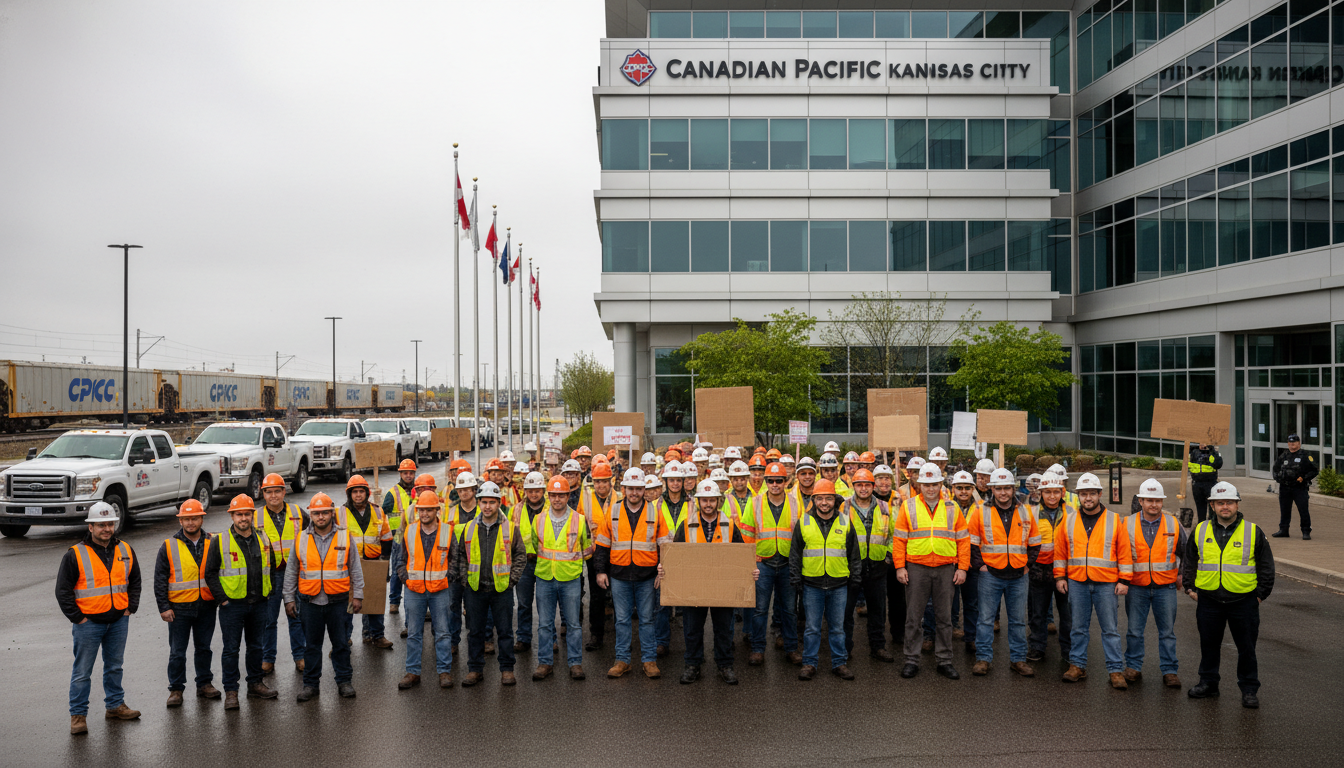
CPKC Signal Workers Walk Off After Talks Collapse Over Pay and Scheduling
Over 300 IBEW signal workers began striking CPKC on May 31, 2026, over wages and scheduling; Calgary-based CPKC says trains are running under contingency plans.
Signal Workers Begin Strike at CPKC
On Sunday, May 31, 2026, more than 300 members of the International Brotherhood of Electrical Workers, System Council No. 11, commenced a strike against Canadian Pacific Kansas City Ltd. (CPKC) after contract negotiations halted.
The walkout covers signal and communications technicians who install, test and maintain trackside equipment across Canada.
Union leadership said the action is intended to pressure the railway over pay inequities and work-scheduling changes they say were imposed during bargaining.
Union Highlights Pay Gap with Industry Peers
Union representatives told reporters that CPKC signal workers are paid materially less than counterparts at other railways, with differences reaching as much as roughly $4 per hour in some roles.
The IBEW said the gap has widened as other employers raised wages, leaving CPKC employees behind in what the union characterized as an increasingly competitive labour market.
Union chairman Jason Sommer argued the disparity and proposed scheduling concessions made the stalled contract unacceptable to members.
Railway Activates Contingency Measures
CPKC, headquartered in Calgary, said it has implemented contingency plans and that trains continue to operate safely and efficiently across Canada.
In a company statement, CPKC described the union’s wage and scheduling demands as beyond the increases granted to other bargaining units in recent years.
The railway also said it proposed operational scheduling solutions during talks and characterized the union’s positions as unrealistic.
Bargaining Breakdown Centered on Scheduling and On-Call Pay
According to union officials, the employer’s latest offer included modest pay increases paired with demands that would permit broader unilateral scheduling changes and reduced compensation for on-call coverage.
The IBEW rejected those terms, saying they would diminish predictability for workers and undercut current on-call pay arrangements that compensate employees for irregular hours and emergency responses.
Company officials countered that their proposals were designed to address operational challenges with established scheduling models used elsewhere in the field.
Analysts See Limited Immediate Disruption
Market and rail analysts say the early impact on freight movement appears limited, as CPKC’s contingency protocols are designed to maintain service while signalling specialists are off the job.
Chris Murray of ATB Cormark Capital Markets said he does not anticipate material operational disruption in the short term, though he cautioned that a prolonged stoppage could change that assessment.
Observers note that signal work is specialized and that extended shortages of certified technicians could eventually slow dispatching, increase delays and raise costs for the carrier.
Union Warns of Targeted Pressure on Operations
Union leaders acknowledged the strike’s limited headcount relative to the railway’s total workforce but warned their members’ work is strategically placed to create stoppages and operational friction.
Jason Sommer said the union intends to exert “pressure and annoyance” on the company to affect its bottom line and hasten a return to the bargaining table.
Labour strategists commented that targeted disruptions to signalling and communications can ripple across schedules even when trains themselves remain physically moving.
Outlook for Negotiations and Potential Resolution
Both the IBEW and CPKC said they remained hopeful of resuming talks and finding a settlement, though neither side provided a timeline for when bargaining might restart.
The union is pressing for wage increases that close the gap with industry peers and for protections against unilateral scheduling changes, while the railway insists its proposals align with broader compensation patterns across its Canadian bargaining units.
If discussions resume, mediators or back-to-work mechanisms could be considered, but labour and management must first bridge substantial differences on pay and operational flexibility.
The stoppage that began on May 31, 2026, underscores frictions in Canada’s rail sector as companies and specialized craft unions negotiate pay and scheduling in a period of rising labour expectations; both sides say they want a negotiated outcome and will monitor operations closely as the situation develops.
