
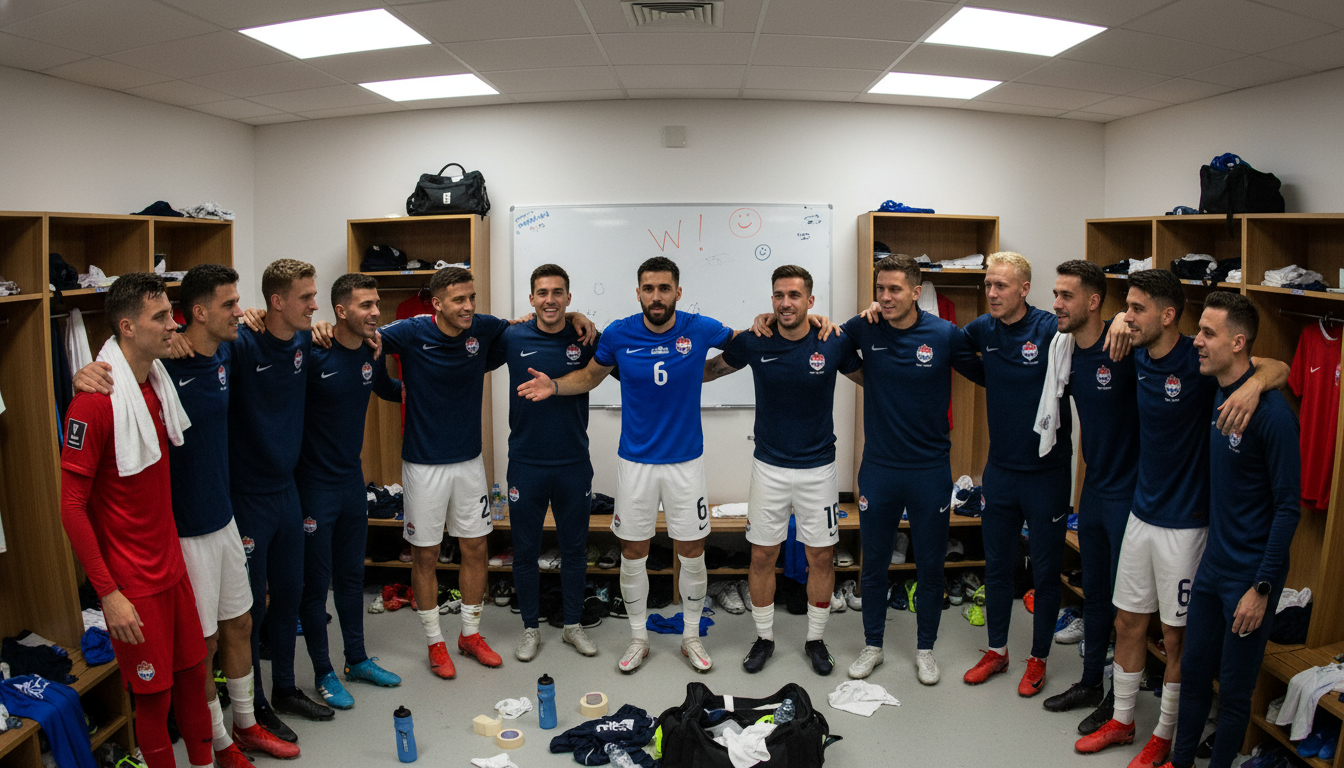
Eustaquio credits team chemistry for grind-out results
Eustaquio says team chemistry is the difference as squad leans on unity to secure results and defend leads in tight matches.
Marco Eustaquio told reporters that strong team chemistry has been central to recent results as his side navigates a stretch of tight games. He said the players’ mutual respect and sense of accountability off the pitch have translated into greater resilience during matches. Eustaquio—whose brother Mauro once played for the now-defunct FC Edmonton—stressed that camaraderie and personal bonds are helping the group repeatedly find ways to earn points.
Eustaquio frames unity as a competitive edge
Eustaquio said the locker room culture is not merely friendly but competitive in a constructive way. He described teammates holding one another to standards that push performance during training and match day. That daily accountability, he added, shows up when the team must defend a narrow lead or chase a late equalizer. Coaches and players say a cohesive dressing room often underpins sustained results across a season.
Brotherhood and personal ties behind the scenes
Player relationships have been tested off the field and, by most accounts, strengthened rather than fractured. Eustaquio referenced family ties within soccer as part of his perspective, noting his brother Mauro’s professional background in Canada with FC Edmonton. He described how personal history and shared experiences foster a sense of responsibility to teammates that goes beyond simple friendship. That interpersonal fabric, he believes, reduces friction and promotes consistent communication under pressure.
How chemistry helps in tight matches
Statistically, teams with tighter defensive concentration and clearer role understanding give themselves more margin in late stages of games. Eustaquio highlighted how his teammates routinely make the extra effort in the final minutes, whether that means blocking shots, tracking runs, or closing passing lanes. He argued that the willingness to "dig deep" is a product of trust: players back each other up instinctively because they believe their colleagues will do the same. Coaches have pointed to that instinctive support as a key factor in converting narrow leads into full victories.
Accountability and leadership on and off the pitch
Leadership within the squad appears distributed rather than concentrated in a single figure, Eustaquio said. Senior players take responsibility for younger teammates’ development while peers openly critique and correct each other in training. That culture of mutual accountability creates standards that persist through travel, recovery days and match preparation. Club staff note that when players police standards themselves, it reinforces tactical plans and reduces lapses during high-pressure moments.
Coaching role and tactical implications
Coaches have leveraged the group’s chemistry by assigning clear defensive and attacking responsibilities and trusting players to execute without constant intervention. Eustaquio credited the coaching staff for creating an environment where open communication is encouraged and mistakes are treated as learning opportunities. That approach, combined with the players’ willingness to accept constructive criticism, has allowed tactical instructions to be absorbed more quickly. As a result, the team has shown the capacity to switch between risk-averse defending and proactive pressing when circumstances demand it.
The club’s medical and performance staff have also benefited from the team-first mentality, according to Eustaquio. Players are more forthcoming about minor knocks and recovery needs when they feel supported by teammates. That transparency helps the coaching team manage load and availability, reducing the chance that a small problem becomes a prolonged absence. In a long campaign, those marginal gains can add up to crucial points.
Responses from opponents and league observers
Opponents have taken notice of the side’s consistency in late moments, often remarking on the group’s discipline and compactness. League commentators point out that while talent remains important, groups that can repeatedly execute fundamentals under pressure are harder to beat. Eustaquio’s comments underscore a common theme among successful teams: that a strong culture yields repeatable results even when games do not go as planned. Analysts say the combination of tactical clarity and interpersonal trust raises the floor of performance across the squad.
Eustaquio’s reflections also touch on the broader ecosystem of Canadian soccer, where family ties and local player pathways are prominent. By mentioning his brother’s past with FC Edmonton, he framed his own experience within a lineage of players who have moved through regional clubs. That continuity, he suggested, strengthens community connections and gives younger players visible role models.
Overall, Eustaquio painted a picture of a group whose internal bonds are a strategic asset as much as an emotional one. He emphasized that liking one another is only useful when paired with discipline, accountability and a willingness to sacrifice for the collective goal.
The team will face a string of fixtures that will test whether the chemistry can sustain results under mounting fatigue and tactical adjustments from opponents, but for now the players point to a shared commitment that keeps them competitive.
