
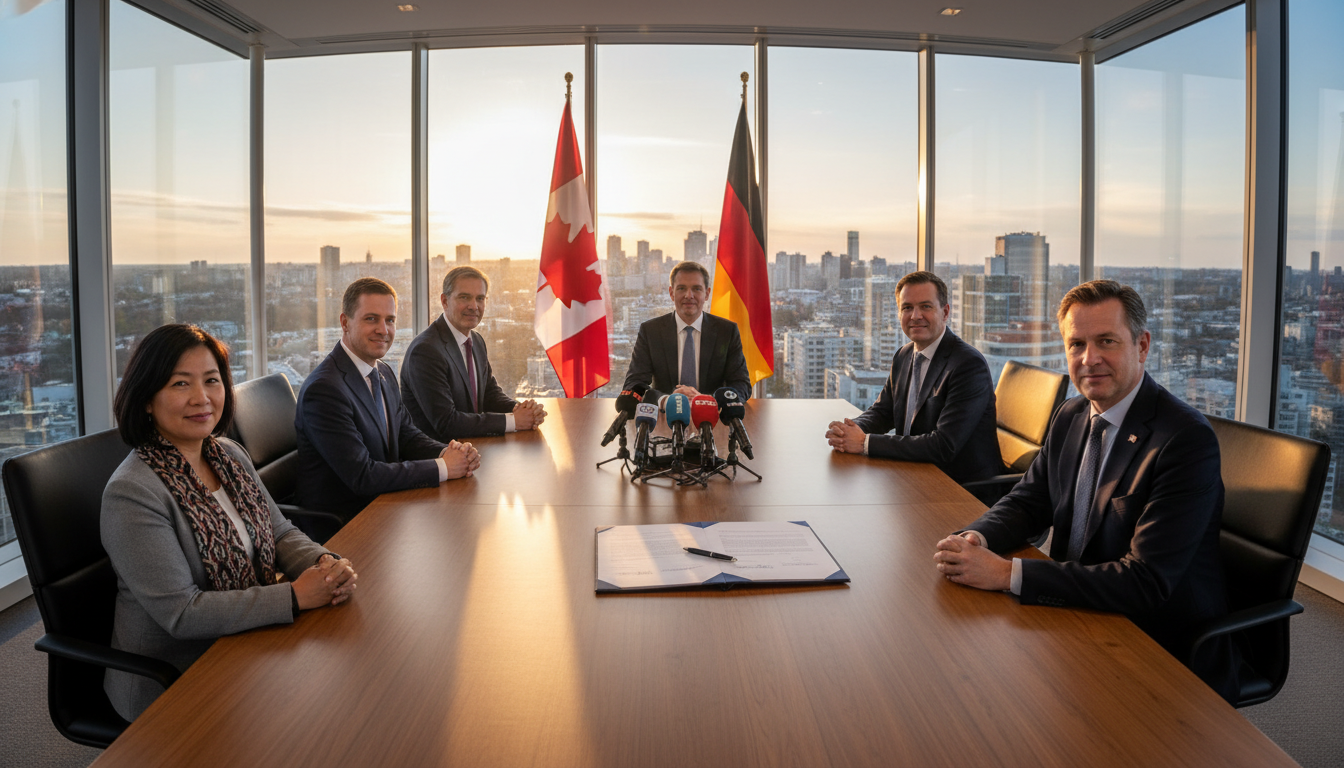
Ksi Lisims LNG secures 20-year German offtake as Ottawa frames deal as energy-security win
Canada inks deal for Ksi Lisims LNG: Germany’s SEFE to buy up to 1Mt/year through 20-year agreement, advancing the $17B northwest B.C. export project.
Canada’s Ksi Lisims LNG project won a major offtake commitment on Thursday, with Germany’s state-backed Securing Energy for Europe (SEFE) agreeing to purchase up to one million tonnes of liquefied natural gas per year. The energy minister, Tim Hodgson, said the 20-year arrangement — set to begin deliveries in 2030 — underscores growing global demand for Canadian gas. The deal is being pitched by Ottawa as a boost to allies’ energy security and a step toward a final investment decision on the $17-billion northwest British Columbia export facility.
Federal minister hails European deal
Minister Hodgson told reporters in Vancouver that European buyers have been pressing Canada for reliable, lower-carbon supplies and framed the SEFE agreement as a strategic alignment with allied needs. He described the contract as the first long-term purchase of what officials call low-carbon Canadian LNG destined specifically for Europe. Hodgson said such contracts underpin financing and construction decisions for large LNG builds and pointed to the geopolitical importance of diversifying Europe’s suppliers.
Government officials said the agreement is consequential for the Ksi Lisims project’s commercial outlook and signals international appetite for Canadian volumes. They emphasized the deal’s potential to accelerate movement toward a final investment decision, while also acknowledging that the project has not yet reached that milestone.
Terms of the SEFE agreement and timeline
Under the deal, SEFE would buy up to one million metric tonnes per year for as long as 20 years, with deliveries slated to begin in 2030 if the project advances on schedule. Officials noted that the facility has regulatory approval and could be operational as early as 2029, contingent on a final investment decision and the start of construction. The Ksi Lisims partners describe the arrangement as a long-term anchoring contract that would help underpin project financing.
The export facility has been pegged to carry as much as 12 million tonnes of LNG annually over a potential 40-year operating life. With the SEFE commitment, plus separate agreements with TotalEnergies and Shell, proponents say five million tonnes of capacity are now tied to customers, leaving the remainder available for future offtake arrangements.
Project capacity, ownership and financing
Ksi Lisims is being advanced by Western LNG and Rockies LNG Partners, groups that include predominantly Canadian independent gas producers, and differs from existing B.C. projects that are largely owned by international firms. Project backers say the model could allow Canadian producers to capture greater value from Asian and European markets. The concept includes floating liquefaction technology and a terminal sited on land owned by the Nisga’a Nation, which supports the development.
Regulatory approvals were secured in September 2025, and the federal government has listed the project for fast-tracking under its major projects initiative. Despite those milestones, investors have not announced a final investment decision and project proponents caution that timing will depend on capital markets, supply agreements and continued regulatory clearances.
Indigenous and environmental opposition remains
While the Nisga’a Nation is a proponent and the project site sits on Nisga’a land, several other First Nations have expressed opposition to elements of the plan. The Gitanyow, Gitxsan and Wet’suwet’en nations have raised concerns about a pipeline route that would cross parts of their territories and about potential impacts on ecosystems and traditional lands. Those objections have become a central political and legal hurdle for the proponents.
A consortium of environmental groups has also signaled resistance, citing emissions, marine and coastal impacts, and the broader climate implications of expanding fossil fuel infrastructure. Project backers counter that Ksi Lisims is being designed with low-carbon targets in mind and that long-term contracts for LNG can facilitate a transition away from higher-emitting suppliers globally.
Shipping routes and market implications
Ksi Lisims proponents note the project’s geographic advantage as one of North America’s shortest marine routes to Asian markets, given its location in northwest British Columbia near the Alaska border. For European deliveries, the government said smaller cargoes could transit the Panama Canal while larger shipments might travel around South America or Africa, and that cargo swaps among buyers can reduce transit distances. Those logistical choices will influence spot-market dynamics and transportation costs.
Analysts say the SEFE offtake could help diversify Europe’s supplier base and reduce reliance on coercive actors cited by Ottawa. Long-term contracts remain the industry standard to secure financing for large liquefaction projects, and proponents argue that contracted volumes provide price and supply certainty for both producers and purchasers. Market watchers will be watching for the timing of a final investment decision and for any additional offtake agreements that might close the remaining capacity.
The Ksi Lisims agreement represents a significant commercial step but not a completed project; proponents must still secure financing, finalize supply chains and navigate legal and political opposition. With regulatory approval in hand and a mix of international and state-backed buyers now committed, the project’s next milestones will be closely monitored by governments, Indigenous partners and industry stakeholders as they weigh economic opportunities against environmental and territorial concerns.
