
Nvidia investment in Taiwan to rise to about $150 billion annually, CEO Jensen Huang says
Nvidia to boost annual investment in Taiwan to about $100–150 billion, Jensen Huang says — a shift that could reshape the island’s semiconductor ecosystem.
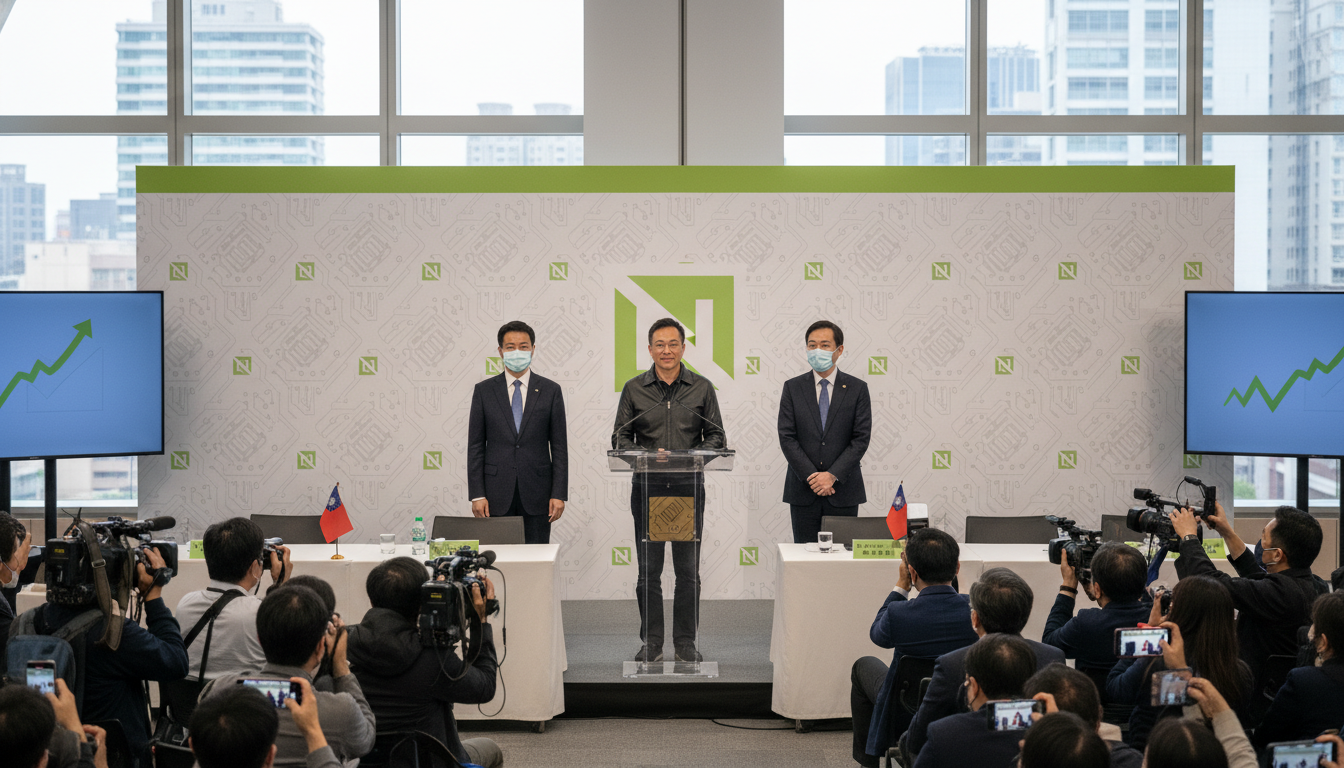
Nvidia announced a dramatic increase in planned annual spending in Taiwan, marking a major escalation in the company’s regional investment strategy. Jensen Huang told reporters in Taipei on Wednesday that the firm, which previously invested roughly $10–15 billion per year in Taiwan, now plans to spend about $100 billion and could raise that to $150 billion annually. The Nvidia investment in Taiwan represents a significant reallocation of capital aimed at securing production capacity and strengthening ties with local suppliers.
Nvidia confirms new spending targets
Huang stated the new figures directly, emphasizing a near tenfold increase from earlier annual outlays and signaling a long-term commitment to the island. Company officials framed the shift as necessary to meet rapidly growing demand for advanced chips used in artificial intelligence, data centers and high-performance computing. Nvidia characterized the plan as part of a broader strategy to ensure resilient manufacturing and supply chains.
Comparison with prior investment levels
Until a few years ago, Nvidia’s annual Taiwan expenditures were in the low double digits in billions, company executives said during their Taipei remarks. The jump to $100 billion, and the prospect of $150 billion, marks an unprecedented scale-up for a single market outside the United States for the chip designer. Analysts will watch how quickly those funds are deployed and whether the spending is concentrated in capital equipment, long-term contracts, research partnerships or new facilities.
Potential allocation and industry partnerships
Nvidia has not released a detailed breakdown of how the increased funds will be allocated, but the company’s needs point toward expanded fabrication partnerships, packaging and testing capacity, and investments in local suppliers. Much of the additional spending is likely to flow to foundries, advanced packaging houses and component manufacturers that support high-end GPU production. The scale of the pledge suggests multiyear contracts and potential co-investments with Taiwanese firms to accelerate capacity and technological upgrades.
Impact on Taiwan’s semiconductor ecosystem
A sustained surge in Nvidia investment in Taiwan could boost employment, attract complementary suppliers and accelerate technology transfer across the island’s semiconductor cluster. Local companies that supply materials, precision equipment, and testing services may see increased orders and longer-term planning horizons. The announcement also raises questions about how Taiwan’s infrastructure and training pipelines will respond to a rapid influx of demand for specialized labor and high-spec facilities.
Regional and global supply-chain implications
Shifting a larger portion of production spending to Taiwan has implications for global semiconductor supply chains and geopolitical risk management. Companies often balance production across locations to reduce exposure to disruptions, and Nvidia’s move underscores Taiwan’s central role in advanced chip production. Observers will monitor whether other global firms adjust their sourcing strategies in response and how governments respond to promote resilience and diversification in the sector.
Government and market responses expected
Taiwanese authorities and industry groups are likely to seek clarifying details from Nvidia about the timing, contractual framework and ancillary investments tied to the announcement. Local policymakers may view the pledge as an opportunity to negotiate training, infrastructure upgrades and incentives that lock in long-term benefits for the domestic economy. Financial markets and supply-chain partners will also look for confirmations and timelines that translate the announcement into tangible orders, contracts and capex schedules.
The incoming scale-up in annual commitments, as described by Jensen Huang, marks an important inflection point in Nvidia’s commercial posture toward Taiwan and the broader semiconductor industry. Observers will be watching for follow-up disclosures that specify where the money will be spent, which Taiwanese partners will be involved, and how quickly new capacity can be brought online.
