
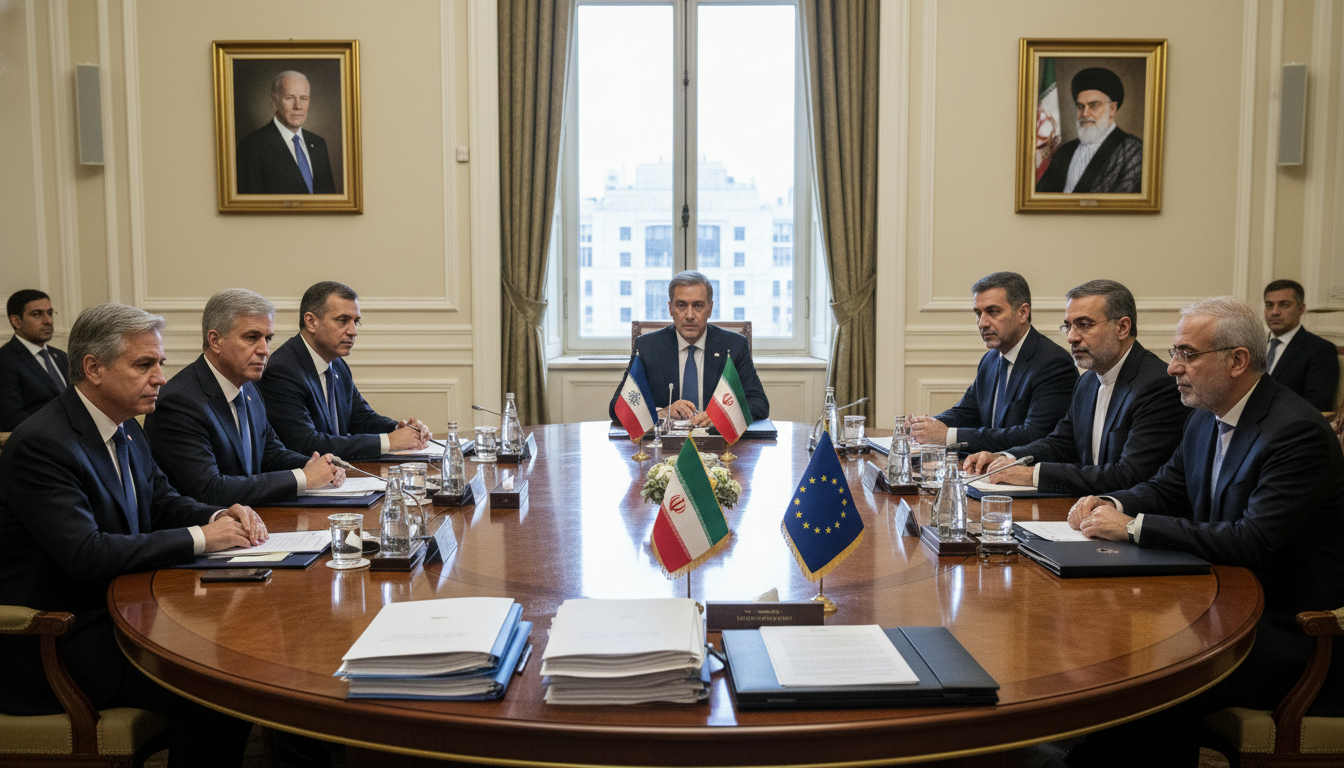
U.S.-Iran talks to reopen Strait of Hormuz continue amid doubts over nuclear and transit terms
U.S.-Iran talks to reopen the Strait of Hormuz are ongoing, but officials from both sides say a final agreement on nuclear safeguards and transit arrangements is not imminent, keeping uncertainty high.
The United States and Iran continued negotiations Monday aimed at winding down the war and reopening the Strait of Hormuz, but both governments warned against declaring an imminent breakthrough. U.S.-Iran talks have focused on restoring safe passage through the key oil and gas corridor while deferring several of the most contentious issues, especially those tied to Iran’s nuclear program. Officials described progress on a framework for ending hostilities, yet sharply differing accounts of specific commitments left observers questioning whether a signed accord is near. The negotiations are being watched closely by regional partners and domestic critics who say key details remain unresolved.
Both sides caution against declaring a breakthrough
Both Washington and Tehran signalled on Monday that, despite gains on a number of points, no one should assume a final deal is imminent. Iranian spokespeople described the current text as a preliminary framework that does not yet resolve the most difficult elements of a full agreement. U.S. officials likewise said significant work remains, stressing that any interim steps would be time-limited and contingent on follow-up negotiations. The discordant descriptions from each side underscore the fragility of the negotiating process.
Reopening the Strait of Hormuz at the centre of talks
Central to the discussions is reopening the Strait of Hormuz, the narrow waterway through which a substantial share of global oil and gas shipments transit. U.S. negotiators have said reopening the strait would not impose new tolls on commercial shipping, a point that contrasts with Iranian comments suggesting transit arrangements were still under consideration. Restoring unimpeded passage is being pitched as a concrete first step to de-escalate the broader conflict and resume regional trade flows. How and when maritime security would be guaranteed remains a core unresolved question.
Nuclear stockpile and enrichment remain unresolved
The fate of Iran’s highly enriched uranium and the duration of any moratorium on enrichment are among the most difficult outstanding issues. International inspectors have noted Tehran’s substantial stockpile of 60 percent-enriched uranium, and negotiators are debating options including removal of material, dilution to lower enrichment levels, or storage under international supervision. U.S. officials said these matters would be addressed in subsequent negotiating rounds, but Iran has pressed for a shorter timeline than the multi-decade limits the U.S. and some partners have historically sought. Enforcement mechanisms and verification provisions will be decisive to whether a lasting arrangement is achievable.
Disagreements over frozen assets and naval blockade
Iranian officials have publicly linked a cease-fire and the lifting of U.S.-led pressure to the release of frozen funds and an end to maritime restrictions, while U.S. statements have been more cautious. Tehran’s negotiators reportedly seek access to tens of billions in frozen assets, a demand that U.S. officials say they could address only if verifiable nuclear concessions are made. Meanwhile, Washington has maintained a global naval posture against Iranian-linked shipping since April, stating the blockade will remain until any agreement is signed and certified. The sequencing of financial relief, maritime measures and nuclear commitments is a key source of tension.
Regional reactions and political pushback
The talks have drawn swift and divided reactions across the region and in Washington. Israeli officials have voiced concern that any interim arrangement must prevent Iran from developing a nuclear weapon and curb its missile capabilities, and leaders have pressed for firm guarantees. In the United States, some lawmakers and commentators, particularly on the right, have denounced the emerging framework as too permissive, arguing it risks rewarding Iranian conduct without sufficient safeguards. Conversely, Iranian-aligned groups have framed a cease-fire and asset relief as political victories for Tehran, complicating regional dynamics.
Uncertain timeline and next steps for negotiators
Officials declined to provide a firm timeline for concluding remaining issues, saying further rounds of talks and technical work are expected. U.S. representatives indicated they would consider beginning the process of unfreezing assets only after verifiable steps on uranium enrichment are taken, while Iran signalled it wants immediate assurances tied to ending hostilities. Both sides acknowledged substantive progress on some front-line questions, but stressed that key enforcement, verification and sequencing mechanisms still need to be written into any package. Observers say the coming days will be crucial to determine whether the framework can be converted into a durable, signed agreement.
If a deal is to be reached, negotiators must bridge divergent expectations on nuclear constraints, maritime arrangements, and financial measures while securing buy-in from regional partners and domestic political constituencies. The U.S.-Iran talks have opened a pathway toward reduced hostilities, but the absence of consensus on the most consequential items leaves the ultimate outcome uncertain.
