
Xreal Aura smart glasses enter developer release as company plans commercial launch and aims for profitability
Xreal’s Project Aura smart glasses enter developer release, featuring OLED microdisplays and a tethered puck; company aims for a commercial launch and to break even next year
Xreal Aura smart glasses were unveiled to developers this week as the company outlined plans to move the product to retail later this year and to push toward profitability. The developer release showcases OLED microdisplays embedded in lightweight frames and a pocket-sized puck that powers the system. Company officials said the device is intended to bridge entertainment and productivity use cases while the firm scales manufacturing and software. The announcement positions Xreal as one of several firms hoping to convert years of investment in the smart glasses market into sustainable revenue.
Product reveal at Google I/O
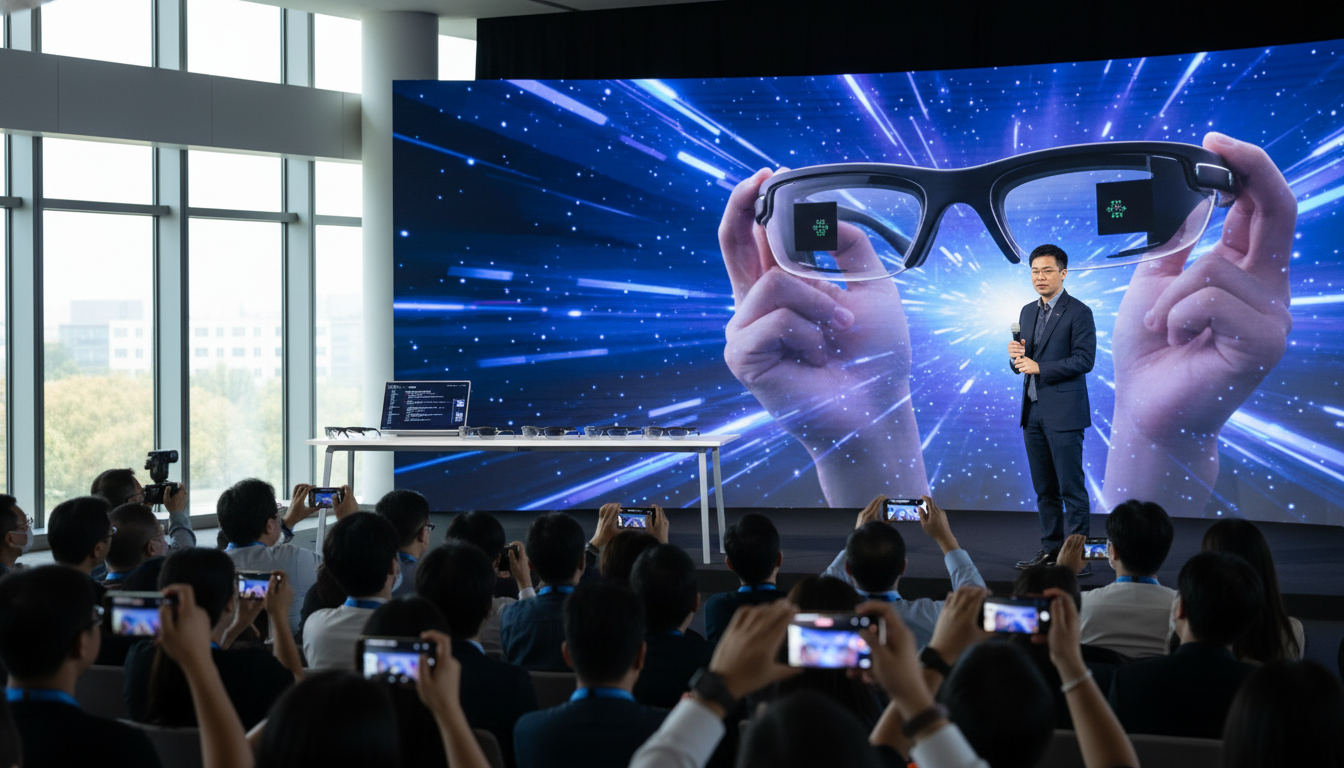
Xreal demonstrated Project Aura during industry events, presenting the glasses as a near-term offering for developers. The device pairs high-resolution OLED panels in the lenses with a compact external compute puck designed to be carried in a pocket. Xreal emphasized that the tethered approach allows a slimmer frame while delivering more processing headroom than fully self-contained glasses. The developer release will let third-party creators build and optimize apps ahead of the planned commercial launch.
The company framed the developer program as a way to accelerate app readiness and user experience testing. Developers will be able to test new interfaces such as hand tracking, immersive video, and location-based overlays. Xreal said these trials are key to refining an ecosystem that can support both consumer entertainment and professional productivity scenarios. Early access is intended to surface real-world issues before the broader market introduction.
Hardware choices: OLED lenses and a tethered puck
At the core of Project Aura are OLED microdisplays built into conventional-looking frames, delivering a private, high-resolution view for the wearer. Rather than housing all processing inside the glasses, Xreal’s design offloads compute to a separately pocketed puck that connects to the frames. The company argues this trade-off keeps the eyewear lightweight and comfortable while enabling richer graphics and longer battery life than fully integrated models.
That tethered architecture is a deliberate choice to balance performance and ergonomics, according to Xreal. The puck functions like a mini-computer that can run navigation apps, streamed video, and hand-tracking interfaces. While the extra device adds a step compared with fully standalone glasses, Xreal maintains the pocketable puck improves overall usability for extended sessions and heavier applications.
Software features and developer tools
Xreal highlighted a set of experiences designed to showcase what the glasses can do, including an augmented navigation app, immersive video playback, and hand-tracked creative tools. Demonstrations showed floating workspaces for productivity, private virtual screens for media consumption, and simple gesture-driven interfaces for gaming. The company emphasized privacy-focused design, noting that many experiences are meant to be visible only to the wearer.
For developers, Xreal is offering APIs and documentation to support 3D content, hand-tracking inputs, and spatial mapping. The developer program aims to encourage applications tailored to both casual users—such as virtual cinemas—and professional scenarios like portable workstations on flights or in coffee shops. Xreal told partners that the combination of hardware capability and software tooling is central to creating compelling reasons for adoption.
Industry context and commercial challenges
The smart glasses market has drawn substantial investment over the past decade while producing mixed commercial results. Large technology firms and fashion partners have launched models with varying degrees of consumer uptake, and some ventures continue to operate at significant losses. Observers say persistent obstacles include battery weight, user comfort, perceived social awkwardness, and the scarcity of truly indispensable apps.
Xreal’s push follows a period of renewed interest, with several competitors narrowing form factors and improving software stacks. The company argues that incremental advances across hardware, operating systems, and interfaces are converging to create a viable product category. Still, industry analysts caution that broad consumer adoption will depend on price, app ecosystems, and a clear value proposition beyond niche use cases.
Business timeline and financial goals
Xreal said the current units are for developers only, with a commercial release planned later in the year if testing goes as expected. Executives outlined a dual-track strategy: expand the software ecosystem through developer engagement while optimizing production and distribution to lower costs. The company also indicated intentions to pursue an initial public offering before the end of 2026, though executives declined to provide detailed timing.
On the financial front, Xreal reported efforts to raise gross margins and reduce marketing expenses as part of a path to break-even. Company representatives signaled confidence that continued cost discipline and stronger unit sales could push the business toward profitability in the near term. Observers will watch whether scaling device production and establishing recurring revenue from software or services can offset historically high development expenses across the sector.
Xreal’s developer release of Project Aura marks a pragmatic step that prioritizes real-world testing and ecosystem building over an immediate mass-market rollout. The approach aims to validate use cases, refine the user interface, and give third-party creators time to build apps that could make smart glasses more broadly useful. As the company moves from developer previews toward a commercial offering, its ability to translate technical promise into consumer value will be the decisive factor in whether the smart glasses category finally reaches a sustainable inflection point.
