
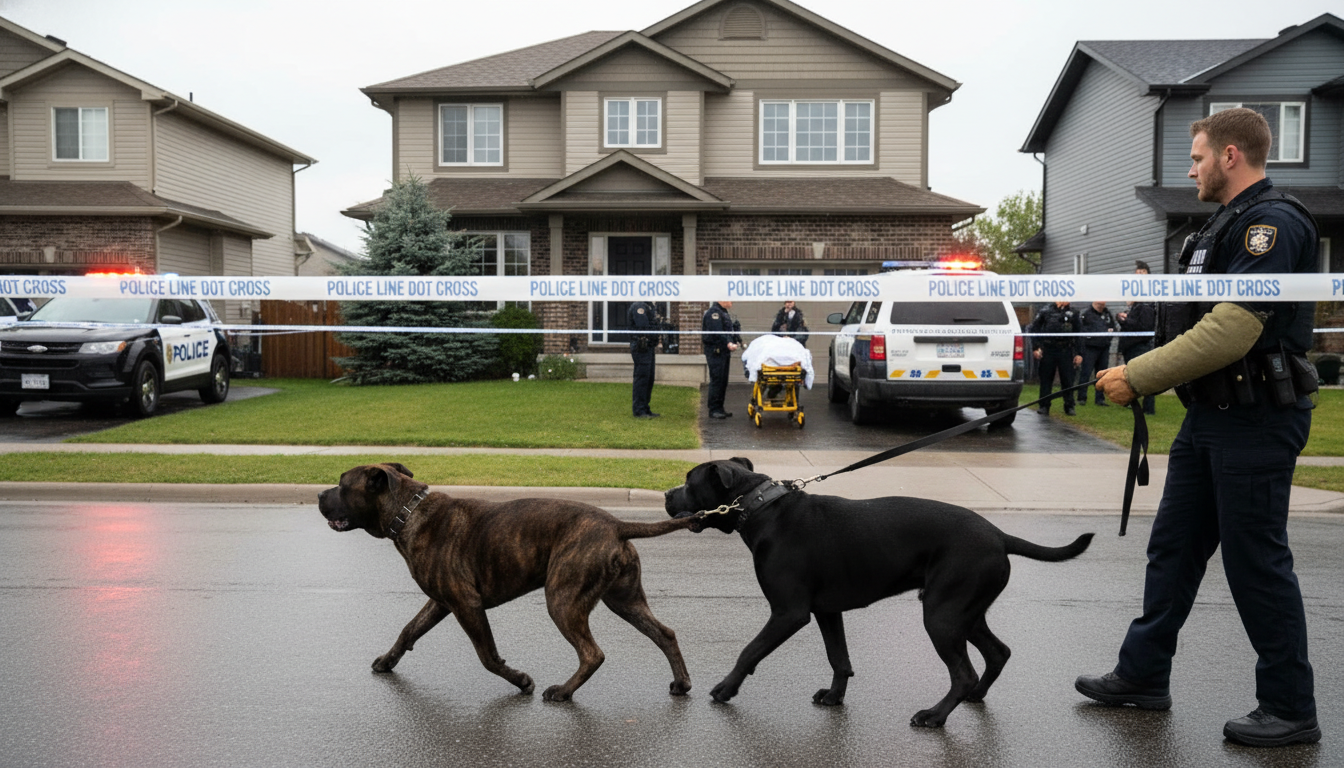
Cane Corso attack kills woman in southeast Edmonton; dogs had prior violent incidents
A Cane Corso attack at a southeast Edmonton home killed 28-year-old Kache Grist on April 1, 2024, after the two dogs, Khaos and Khairo, reportedly had a documented history of violence. The incident, which included earlier attacks that killed two pets and injured three adults, has prompted renewed calls for review of animal-control practices and public safety measures.
Fatal incident at southeast Edmonton residence
The fatal attack occurred at a private residence in southeast Edmonton where two Cane Corsos, Khaos and Khairo, lived with their owner, identified only as MacDonald. Emergency responders were called to the scene on April 1, 2024, after the dogs fatally maimed a visitor, Kache Grist.
Police and emergency medical services attended the property, and the severity of injuries sustained by the victim required immediate on-scene response. Authorities later confirmed that Grist did not survive the attack, marking one of the most serious canine-related fatalities in the city in recent years.
Recorded history of aggression before death
According to accounts related to the case, the two dogs had a history of violent behaviour prior to the April 1 incident. Earlier episodes reportedly included attacks that resulted in the deaths of two household pets and caused injuries to three adults.
All three injured adults required hospital treatment following those earlier incidents. One of the injured was the owner, MacDonald, who herself was treated after being hurt in a previous encounter involving the animals.
Victims and community impact
The death of Kache Grist has reverberated through the neighbourhood and among animal-welfare and public-safety advocates. Neighbours expressed shock that the dogs were still in the home after earlier aggressive episodes, and some residents have called for clearer enforcement of animal-control rules.
Families in the area have said they now feel less safe walking near the property and hope authorities will take steps to prevent similar tragedies. Community members are seeking information about how prior incidents were handled and whether additional interventions might have averted the fatal outcome.
Owner’s circumstances and responsibilities
MacDonald remained the owner of both Cane Corsos at the time of the April 1 attack. Reports indicate she had previously been injured by the animals, underscoring the dangerous pattern that preceded the fatality.
The case raises difficult questions about owner responsibility when animals show repeated aggression. Neighbours and animal-welfare advocates emphasize the need for timely, decisive action when dogs pose an ongoing threat to people or other animals.
Animal control and municipal policy considerations
The fatality has prompted discussion about animal-control measures in Edmonton, including how repeat incidents are tracked and what triggers stronger interventions. Advocates say clearer thresholds and faster enforcement could reduce the risk of future attacks.
Municipal authorities typically balance public safety, animal welfare, and due process when responding to dangerous-dog reports. The Grist fatality has added urgency to debates over whether existing policies adequately protect residents in situations where owners report previous violent behaviour by their pets.
Breed characteristics and expert perspectives
Cane Corsos are a large, muscular mastiff-type breed known for strength and guarding instincts, traits that can make aggressive incidents particularly dangerous. Experts stress that breed alone does not determine behaviour, and that training, socialization, confinement, and previous trauma all influence outcomes.
Behaviour specialists often recommend early intervention, professional training, and strict containment for dogs with documented aggression. They also note that human victims can be at heightened risk when animals are both large and aggressive, increasing the potential for severe injury or death.
The death of Kache Grist is a tragic reminder of the consequences when violent animal behaviour goes unchecked. The pattern of prior attacks that killed pets and injured adults, including the owner, highlights systemic questions about prevention, enforcement, and public safety that municipal officials and the community will need to address as investigations continue.
