
Waymo Pauses Robotaxi Service in Four Cities After Flooding Incidents
Waymo pauses robotaxi service in Atlanta, San Antonio, Dallas and Houston after vehicles entered flooded streets, sparking federal probes and safety reviews.
Waymo has temporarily suspended robotaxi operations in four U.S. cities after multiple vehicles encountered heavy rain and flooded roads, exposing gaps in the autonomous fleet’s ability to avoid water hazards. The company said the decision affects service in Atlanta, San Antonio, Dallas and Houston as it works to refine software and operational safeguards. Regulators including the National Highway Traffic Safety Administration and the National Transportation Safety Board are reviewing related incidents as the company races to implement a permanent fix.
Service Paused in Four Cities
Waymo halted operations in Atlanta and San Antonio after at least one vehicle became immobilized in standing water, and extended the precautionary suspension to Dallas and Houston amid severe weather forecasts. The company said the suspensions are intended to reduce exposure to elevated flood risk while engineers develop and test updated controls. Riders in the affected cities have been notified and alternative transportation options are being coordinated where possible.
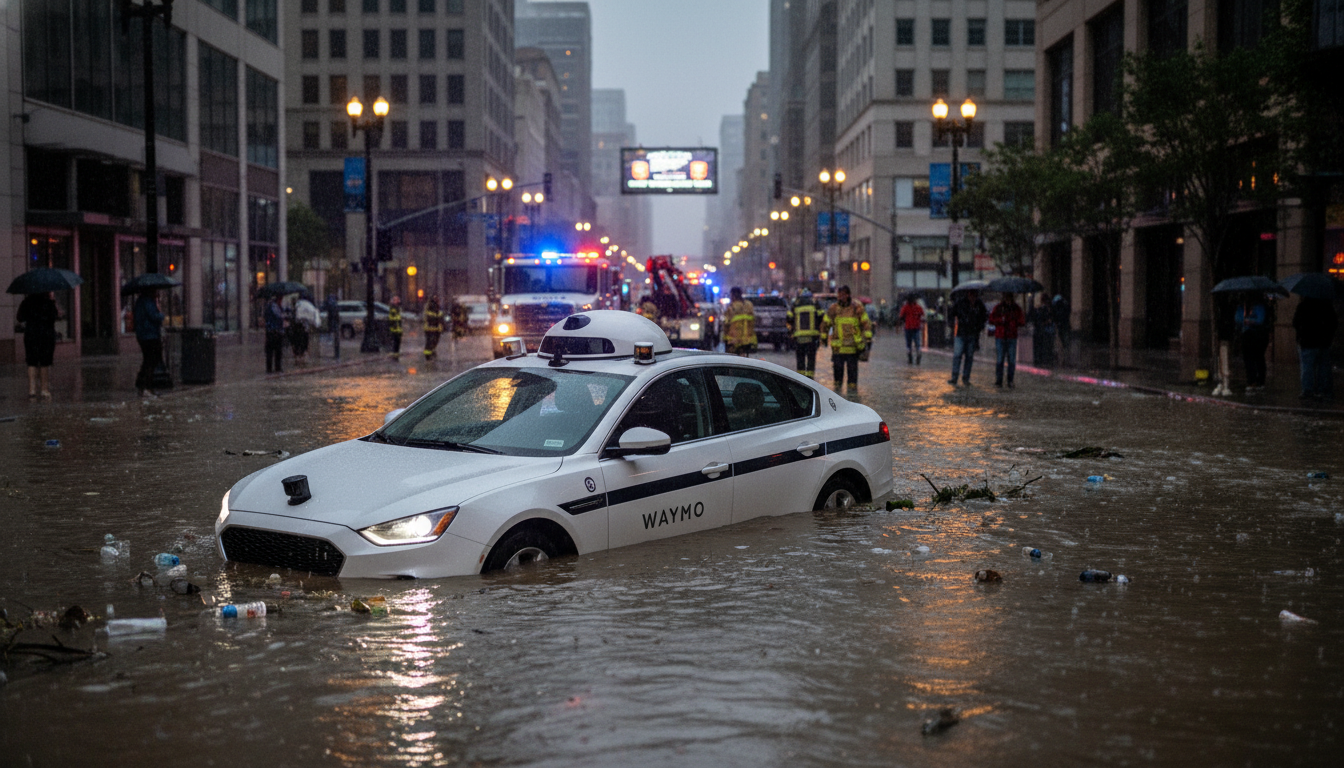
Local authorities and Waymo crews recovered the disabled vehicle in Atlanta after it remained stuck for roughly an hour, according to company statements and local reporting. Waymo has emphasized that the affected vehicle was unoccupied at the time and that no injuries were reported in the incident.
Robotaxi Trapped in Atlanta Floodwaters
A Waymo robotaxi entered a flooded intersection in Atlanta during an intense storm and stopped when it could not safely proceed, according to the company. Waymo said the vehicle was recovered and removed from the scene, and that unusually rapid rainfall produced flooding before the National Weather Service had issued a formal flash flood warning in the area.
The episode highlighted how quickly surface water can appear in urban corridors and the difficulty of relying solely on external alerts to detect localized flooding. Waymo acknowledged that flood detection remains a difficult real-world challenge for autonomous systems that navigate at scale.
Software Recall and Interim Fleet Restrictions
Last week Waymo issued a voluntary software recall for its fleet after identifying scenarios in which vehicles could enter flooded, higher-speed roadways. The company described the update it deployed as an interim measure that places restrictions at times and in locations where flood risk is elevated, rather than a final technical remedy.
Waymo said its engineers continue to develop a comprehensive solution that will more reliably prevent vehicles from choosing routes that expose them to standing water. Company officials described the current software patch as one component of a multi-layered strategy that also uses weather data and on-vehicle sensors to inform routing decisions.
Federal Safety Agencies Open Multiple Inquiries
Regulatory scrutiny of Waymo has expanded as a result of these and earlier incidents, with both the NHTSA and the NTSB engaged in ongoing investigations. The NHTSA confirmed it is aware of the Atlanta incident and has been in communication with Waymo, and it has sought additional documents after an initial batch of responses from the company was provided in redacted form.
The federal probes extend beyond flooding events. Investigators are also reviewing reports that Waymo vehicles have behaved improperly around stopped school buses and examining a separate January collision in which a robotaxi in California struck a child, causing minor injuries. Regulators have stressed that they will take appropriate action if safety gaps are identified.
Company Response and Next Steps
Waymo reiterated that safety is its top priority and described the operational pauses as precautionary measures while it refines system behavior in severe weather. The company said it relies on a variety of signals, including National Weather Service alerts, but acknowledged that localized flooding can develop faster than some external-warning systems detect.
Engineers are reportedly working on software updates, enhanced sensor interpretation and operational rules to reduce the chance of future water-related stops. Waymo also indicated it will continue to cooperate with federal safety agencies and supply requested data as investigators pursue their inquiries.
The unfolding sequence of service pauses and investigations underscores the practical hurdles that autonomous vehicle operators face when moving from controlled testing to large-scale public deployment. For regulators and the public, the incidents raise questions about how rapidly companies can develop and roll out fixes without exposing passengers or other road users to undue risk.
