
Proposed gravel pit in Bearspaw reignites fight as Heidelberg proposes 4.5 km conveyor
Residents and Rocky View County oppose the proposed gravel pit in Bearspaw as Heidelberg Materials plans a 4.5 km conveyor to Spy Hill; NRCB review pending in 2026.
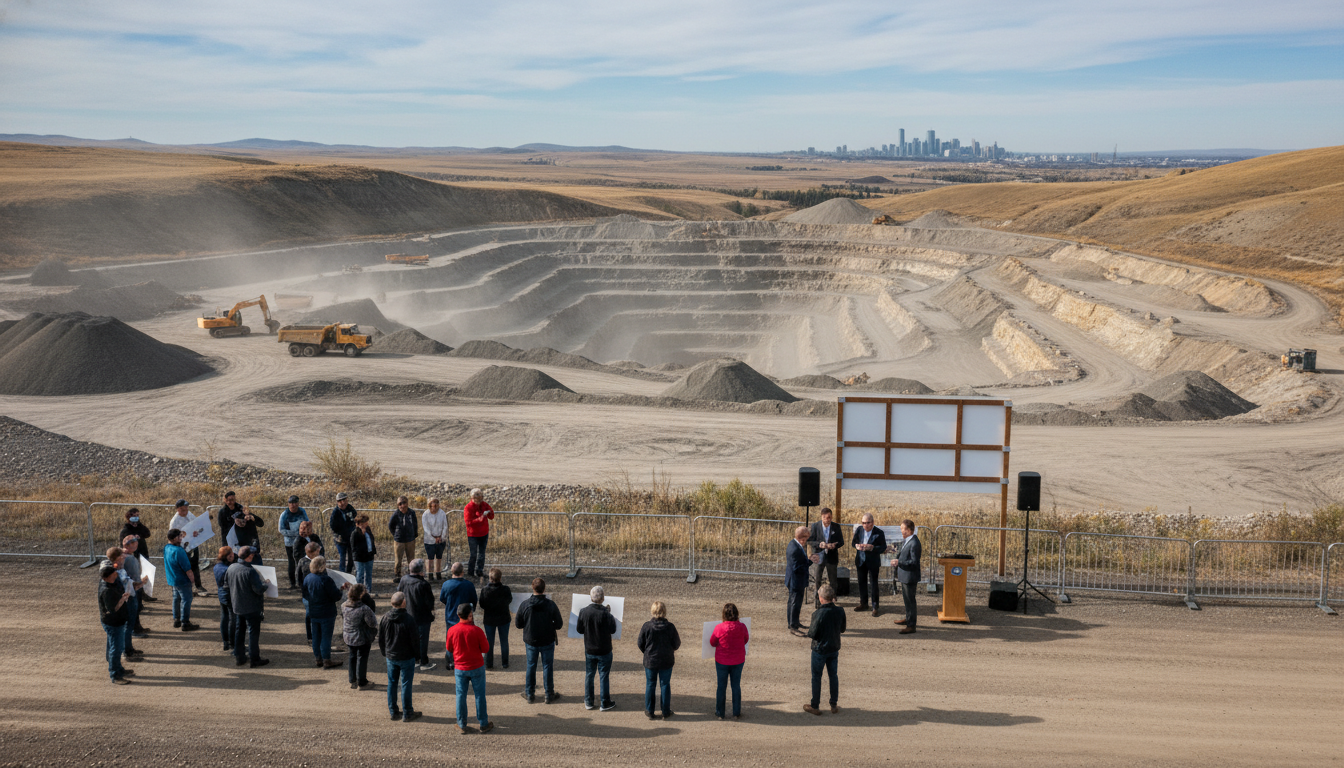
The proposed gravel pit on the Scott property at Rocky Ridge Road and 144th Avenue N.W., on Calgary’s northwest boundary, has reopened a long-running dispute between Heidelberg Materials and local residents. Heidelberg is pitching a 4.5-kilometre conveyor to carry aggregate to its Spy Hill facility, arguing the system will cut truck traffic while unlocking 243 hectares of resource-rich pastureland. Opponents say the project raises persistent concerns about silica dust, groundwater risk, noise and declines in property values, and they are mobilizing as the Natural Resources Conservation Board weighs the file.
Heidelberg’s conveyor pitch and project scope
Heidelberg Materials says the conveyor would connect the Scott property to its existing Spy Hill operation, avoiding thousands of truck trips and keeping aggregate close to where it is used. The company estimates the three-year construction phase would contribute roughly $43.4 million to the Calgary-area economy and create 367 temporary jobs. Over a projected 25- to 30-year life, Heidelberg forecasts ongoing revenues including about $21.35 million in taxes and levies to Rocky View County and continued supply for local construction.
Residents raise health and environmental alarms
Nearby residents, including Olympic gold-medallist Catriona Le May Doan, who lives about one kilometre from the site, say the proposed gravel pit threatens air and water quality and undermines local livability. They point to the risk of respirable crystalline silica becoming airborne during quarrying, potential impacts to groundwater and noise from operations and crushers already audible in the area. Critics also warn that even with a conveyor, extraction on the Scott property would concentrate industrial activity adjacent to residential subdivisions downwind of the site.
Local homeowners worry about property and cumulative impacts
Homeowners immediately adjacent to the proposed site say property values could “crater” and that the area has already endured the cumulative effect of several pits nearby. Retiree Rod Lipman described his lot as a de facto buffer between multiple operations and fears the project would bring extraction “to ground zero” for many households. Residents also cited long-standing complaints about gravel truck spills and safety issues on local roads as evidence that siting aggregate operations near communities has direct costs.
Municipal authority and the NRCB review
Rocky View County council rejected the quarry proposal multiple times, and county councillors say the NRCB referral effectively sidesteps municipal decisions. Coun. Samanntha Wright called the provincial review “a complete end‑run on municipal decision‑making,” reflecting broader tensions over provincial authority and local planning rules enacted after the 2021 council vote. The Natural Resources Conservation Board must determine whether the project is “in the public interest of Albertans,” and the agency has signalled a public hearing process that could result in a decision next year.
Company response and claims on traffic reduction
At a May 20 open house in Bearspaw, Heidelberg representatives said the conveyor would eliminate an estimated 70,000 truck trips a year from the Scott property and that current operations at a 112th Avenue pit are slated to wind down within a few years. The company’s land manager told attendees that groundwater monitoring, dust mitigation plans and a socio-economic study are being developed to address local concerns. Heidelberg also argued the proximity of the resource to Calgary helps keep gravel prices affordable and supports regional construction needs, citing a long-term demand estimate for hundreds of millions of tonnes of aggregate.
Public meeting turned heated as opposition organizes
The open house saw vocal pushback from neighbours, with at least one resident publicly confronting company staff and others urging officials to seek alternative extraction sites further from homes. Opponents noted that gravel is abundant elsewhere in Alberta and said other, less-populated locations should be prioritized for large-scale mining. Organizers and residents have signalled intent to participate in the NRCB process, underscoring a plan to press evidence on health, groundwater and property-value impacts during any public hearing.
As the Natural Resources Conservation Board prepares its next steps, the dispute over the proposed gravel pit in Bearspaw remains unresolved and highly contested, with economic arguments from Heidelberg colliding with long-standing community opposition and questions about the balance between provincial oversight and municipal planning.
