
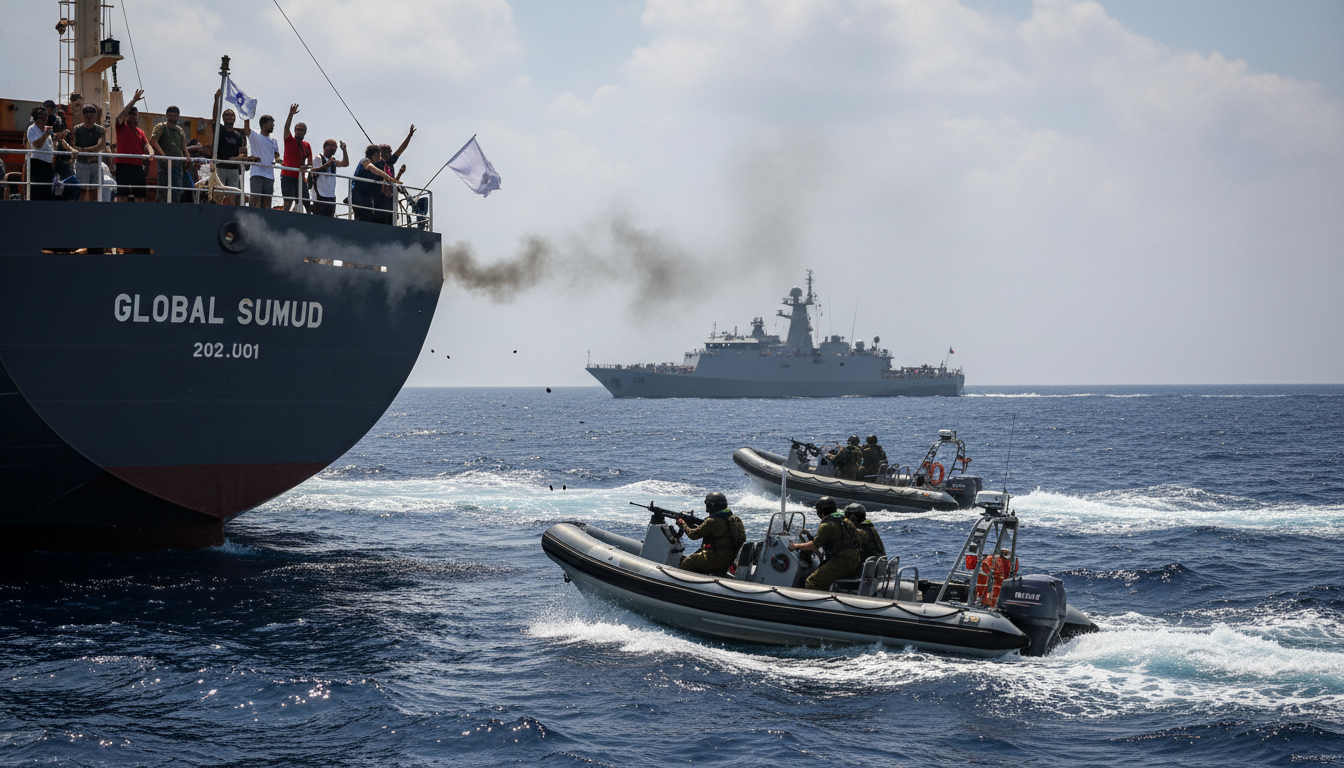
Israeli navy intercepts Gaza-bound Global Sumud Flotilla as activists accuse forces of firing rubber bullets
Israeli naval forces intercepted the Gaza-bound Global Sumud Flotilla on 19 May 2026; activists say rubber bullets struck multiple boats in the Mediterranean.
The Gaza-bound Global Sumud Flotilla was intercepted in the Mediterranean Sea on 19 May 2026, and activists on board allege Israeli naval forces fired what they described as “rubber bullets” during the operation. A spokesperson for the flotilla said multiple vessels came under fire while Israeli forces moved to stop the convoy, prompting urgent calls for clarification from international observers.
Details of the interception
A flotilla spokesperson said the confrontation occurred as the convoy approached waters off the central Mediterranean on 19 May 2026. Multiple boats with activists on board were reportedly targeted by rounds described by participants as rubber bullets, according to the organizers’ account.
Organizers did not provide independent, verifiable evidence in their initial statement, and details about injuries or the exact sequence of events remained limited. Local maritime conditions and the precise location of the interception were described only broadly as “in the Mediterranean Sea.”
Claims from activists aboard the Global Sumud Flotilla
Activists aboard the Global Sumud Flotilla said the use of less-lethal ammunition put passengers at risk and escalated tensions aboard already crowded vessels. Those on board reported fear and confusion as the naval operation unfolded, and several participants gave accounts of close-range exchanges.
The flotilla spokesperson emphasized that multiple boats were affected and called for documentation and third-party verification of the incident. Organizers framed the mission as a Gaza-bound convoy intending to deliver aid and draw attention to the humanitarian situation, while insisting they were not presenting a security threat to naval forces.
Israeli operation to intercept vessels
Israeli authorities launched an operation to intercept the convoy in the Mediterranean, according to the accounts from the flotilla and media reports distributed by the organizers. The interception was described as a coordinated naval action involving vessels moving to interpose themselves between the flotilla and the intended route to Gaza.
Israeli military communications about the operation were not included in the flotilla’s statement, and no official Israeli account was immediately available in the material released by the convoy organizers. The sequence of events and the rules of engagement applied during the interception have not been publicly detailed by either side in the initial reports.
Timeline and location
The incident took place on 19 May 2026, with activists reporting that the confrontation unfolded over several hours as the flotilla navigated international waters. Organizers said the encounters occurred in open sea, not in port or territorial waters, characterizing the action as an interception rather than a boarding or detention.
Precise coordinates and a minute-by-minute timeline were not provided by the flotilla in their initial release, and independent verification from third-party monitors or maritime authorities remained pending at the time of reporting. Journalists and observers were seeking clearer information about whether any vessels sustained damage or if anyone required medical treatment.
Statements from organizers and witnesses
A spokesperson for the Global Sumud Flotilla described the moment as a “dangerous escalation,” urging international actors and maritime authorities to examine the incident and to protect civilians aboard humanitarian missions. Witness accounts circulated by the flotilla emphasized the fear experienced by activists and the need for independent documentation.
Organizers asked for neutral observers or international monitors to be granted access to verify claims and to provide a clear record of what occurred. They said they would compile testimony and any available video or photographic material to support their account of the interception.
Verification and next steps
Independent confirmation of the events described by the flotilla was limited in the immediate aftermath, and journalists noted the difficulty of obtaining independent verification in open-sea incidents. Both the legal status of the flotilla’s voyage and the rules applied by naval forces during maritime interceptions can raise complex questions that typically require formal investigation.
Observers and humanitarian groups often call for transparent, impartial inquiries when clashes occur at sea to clarify facts and determine whether international norms were respected. At the time of reporting, the available public information was primarily derived from the flotilla’s own statements, and further reporting was expected as more sources came forward.
The full implications of the interception for ongoing maritime actions related to Gaza remain uncertain, as organizers prepare to document the incident and seek scrutiny from international authorities and media outlets.
