
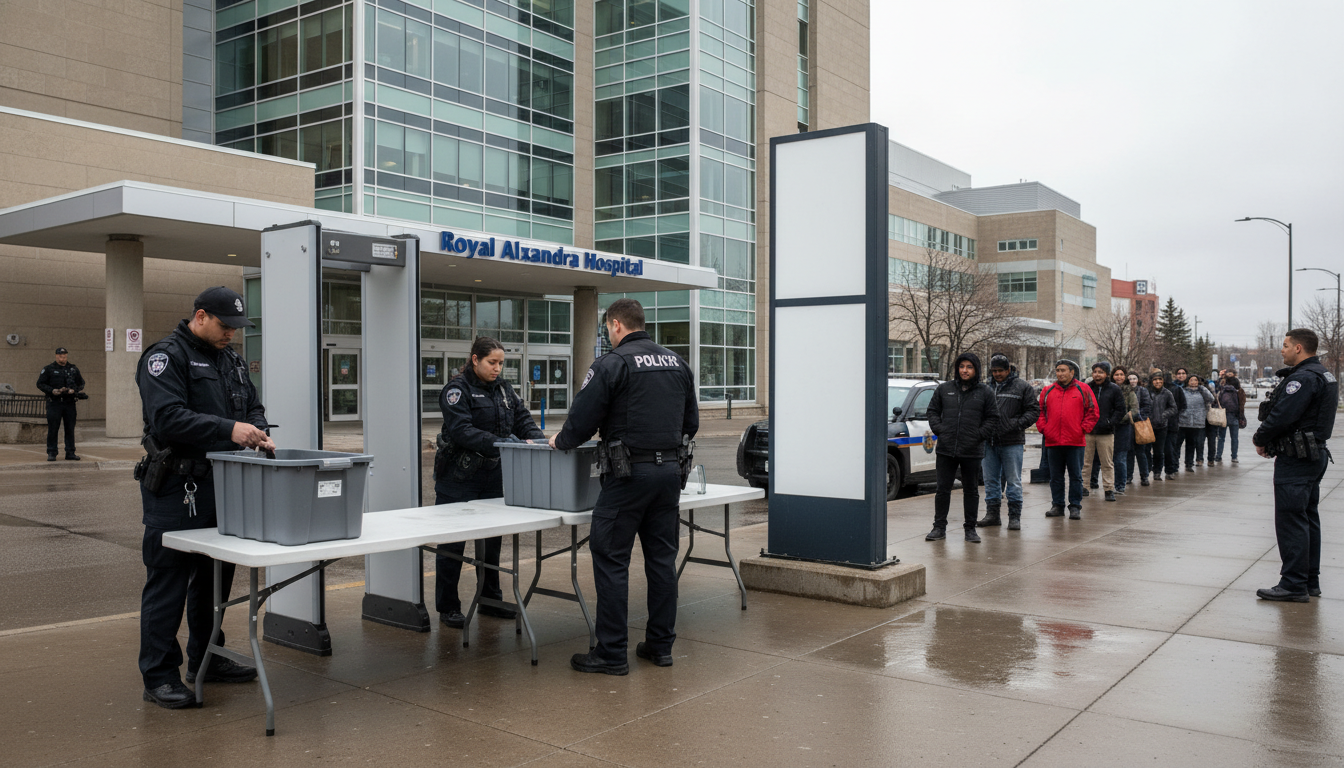
Royal Alexandra Hospital installs weapons detection system at emergency entrance
RAH installs weapons detection system at its emergency department after an April stabbing; patients and visitors must be screened, AHS says, including lockers.
The Royal Alexandra Hospital in Edmonton has begun screening all patients and visitors with a weapons detection system at the entrance to its emergency department following a stabbing in April. Alberta Health Services says the new weapons detection system is intended to improve safety while permitting quick, respectful movement through screening. The rollout follows a series of changes at the hospital, including a one-bag, one-visitor policy introduced earlier this month.
Weapons detection system placed at emergency entrance
AHS confirmed the system was installed at the RAH emergency department and that everyone entering will be subject to screening similar to what is used at large public venues. The technology, the health authority said, does not use harmful radiation and is safe for pregnant individuals and people with pacemakers or medical implants.
The screening units are intended to detect metal or other concerning items without interfering with phones, medical devices or personal data. RAH Protective Services will conduct secondary checks if the detector identifies a potential risk, and lockers will be available for prohibited items until visitors or patients leave the site.
How the screening process will function
Visitors and patients will pass through the detection system prior to entering the emergency area, and staff will provide directions to maintain traffic flow and minimize delays. If an item is flagged, Protective Services will carry out a follow-up screening; items deemed prohibited can be stored in hospital lockers during the patient’s stay.
AHS emphasized the screening is designed to be quick and respectful, with measures in place to reduce disruption to urgent care. The health authority also said the detection equipment will not affect medical implants, meaning people receiving care are not expected to be prevented from entering for device-related reasons.
Exemptions, refusals and patient-care policies
AHS outlined specific exemptions for visitors who refuse screening: a visitor may still enter when the patient is a minor, requires communication support, or the care team determines the presence of a support person is necessary. Otherwise, visitors who decline screening will be denied entry to the emergency department.
Patients who require emergency care but refuse to participate in screening will be assigned oversight by RAH Protective Services while in the department. Those seeking care who also refuse screening may be connected by Protective Services to Health Link for an initial nursing assessment, and, depending on urgency, referred to a virtual physician or an on-site healthcare professional.
Security oversight and personnel roles
Protective Services at RAH will take a central role in managing screening, secondary checks and oversight of patients who do not participate. The service will also be responsible for coordinating locker access and ensuring prohibited items are secured until departure.
Hospital officials said the screening program is coupled with operational protocols to preserve patient privacy and clinical workflow. Staff training and signage will be used to guide visitors through the new requirements and to explain the limited circumstances in which entry can be granted without screening.
Policy changes after April incident and provincial measures
The decision to accelerate implementation of weapons screening followed a stabbing that occurred among patients at the Royal Alexandra Hospital in April, prompting immediate review of security measures. Hospitals and Surgical Health Services Minister Matt Jones posted on social media on April 3 that AHS would advance a weapons screening program at the hospital and work to speed up timelines.
Earlier this month the RAH and other hospitals across the province also adopted a one-bag, one-visitor policy designed to reduce congestion and improve monitoring. Officials said that policy and the detection system are part of a broader effort to strengthen safety for patients, visitors and staff.
Final paragraph
The introduction of the weapons detection system marks a visible shift in hospital security at the Royal Alexandra, balancing safety protocols with the need to maintain access to urgent care; AHS said it will continue monitoring implementation and adjust procedures as needed to ensure both protection and timely clinical service.
