
OpenAI Trial Heads to Jury Over Musk Donations and Microsoft Ties
Jury begins deliberations in the OpenAI trial this week over Elon Musk’s donations, examining breach of charitable trust, unjust enrichment and Microsoft’s role.
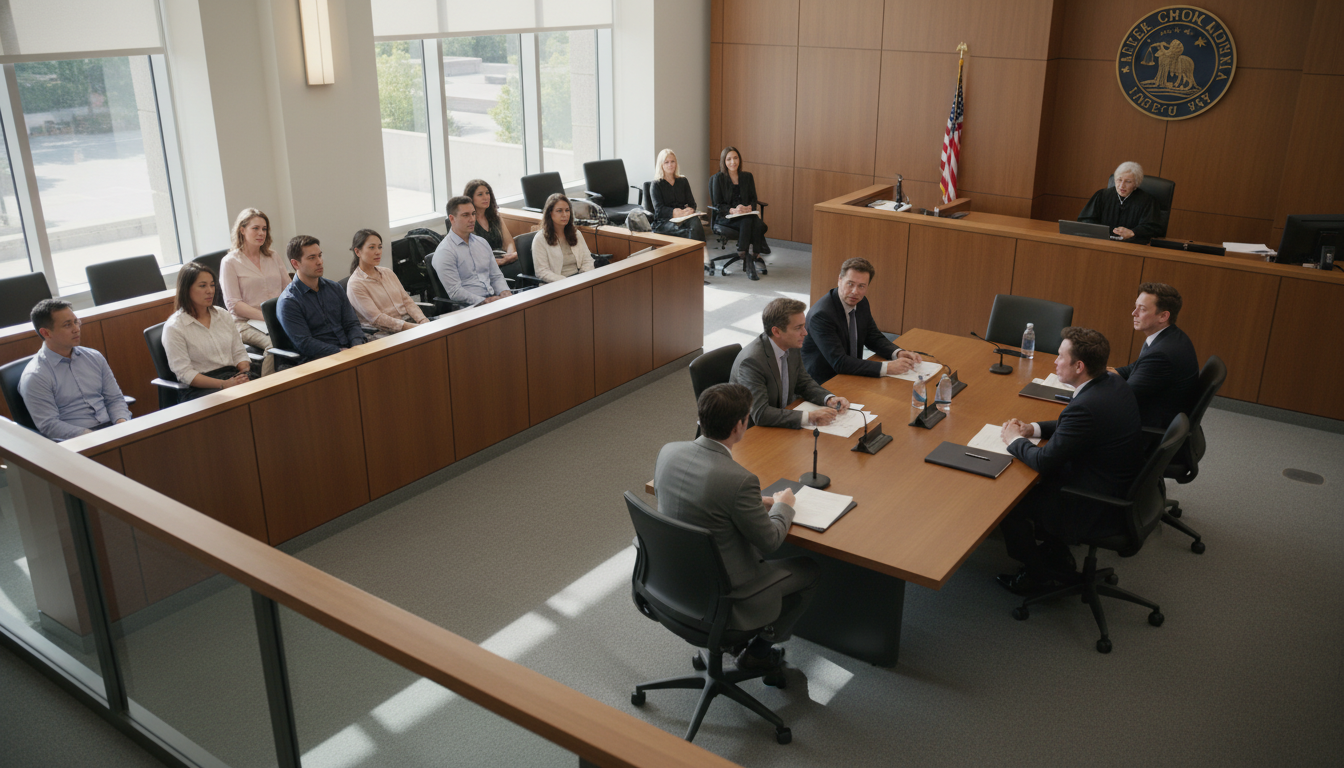
The OpenAI trial entered a decisive phase as nine jurors began deliberations over Elon Musk’s claims that the organization and its partners misused his donations. The case, filed in 2024, centers on whether Musk’s contributions were diverted from their intended charitable purpose and whether Microsoft aided that alleged breach. Jurors will weigh narrow legal questions even as the trial has revisited major episodes in OpenAI’s history, including founder disputes and the 2023 board upheaval.
Jurors Begin Deliberations
The jury panel of nine has been charged with resolving three principal claims brought by Musk: breach of charitable trust, unjust enrichment, and aiding and abetting a breach of trust. Court proceedings over recent weeks traced the evolution of OpenAI from its nonprofit origins through the creation of a for-profit affiliate and major corporate investments. Deliberations follow testimony from founders, executives, financial advisers and a forensic accountant who examined the timing and use of Musk’s donations.
Both sides have asked jurors to focus on limited legal questions rather than broad industry policy, but the potential consequences discussed at trial could reshape OpenAI’s structure. Lawyers will return next week for post-verdict hearings where judges will consider remedies if the plaintiffs prevail, although such proceedings could be unnecessary depending on the jury’s decision.
Breach of Charitable Trust Allegations
Musk’s legal team contends he expected his gifts to support a nonprofit mission that would keep the benefits of artificial intelligence broadly shared, not concentrated in a commercial enterprise. Plaintiffs stressed a 2023 Microsoft investment into OpenAI’s for-profit affiliate as a turning point that, they say, enabled enrichment by insiders and investors at the expense of the charity’s stated goals. Their argument frames certain corporate moves as a departure from the fundraising conditions alleged to have accompanied Musk’s donations.
Defense witnesses, however, testified that no one placed specific contractual restrictions on Musk’s gifts and that private fundraising and commercial arrangements were understood as necessary to recruit and retain top AI talent. OpenAI’s forensic accounting evidence also indicated that Musk’s donations had been expended by an earlier date, undermining the existence of a continuing charitable trust in the defense’s view.
Unjust Enrichment Claims and Evidence
The unjust enrichment count focuses on whether founders, executives or corporate partners personally benefited from Musk’s donations through equity stakes or other financial gains. Plaintiffs pointed to multibillion-dollar valuations tied to founders and to Microsoft’s significant holdings as evidence the organization’s commercial arm created private benefit. They described the nonprofit foundation as comparatively inactive, arguing the for-profit affiliate carried out most of the work and reaped the rewards.
OpenAI rebutted by saying that equity and compensation mechanisms were adopted to compete for talent needed to pursue advanced AI safely, and that the for-profit’s successes have supported the nonprofit mission. The defense emphasized governance changes made after the 2023 board dispute and said the foundation continues to exercise oversight, pointing to new controls and continued safety work as evidence of mission alignment.
Microsoft’s Involvement and Veto Clause
A central factual dispute at trial has been Microsoft’s role in events that plaintiffs say shifted OpenAI’s course. Musk’s attorneys highlighted Microsoft’s 2023 investment and pointed to language in earlier agreements giving the company significant governance rights, arguing that those provisions and Microsoft’s interventions helped enable commercial priorities. The period around Sam Altman’s abrupt firing and rapid rehiring in 2023 — described in court as the “blip” — drew particular scrutiny for the extent of Nadella’s engagement.
Microsoft witnesses testified that the company never learned of any specific restrictions on Musk’s donations despite conducting diligence, and that executives did not exercise a veto over board decisions in the way plaintiffs suggest. They argued Microsoft’s capital and cloud compute commitments were pivotal to OpenAI’s technical progress and did not amount to active participation in any alleged breach.
OpenAI’s Legal Defenses
OpenAI has asked jurors to consider three core defenses: that some claims are time-barred by statutes of limitations, that Musk delayed unreasonably in filing suit, and that Musk’s own conduct undercuts his claims. Defense attorneys pointed to public statements, communications and Musk’s formal departure from OpenAI’s board in 2018 and his last donations in 2020 to argue that grievances, if any, accrued earlier than the complaint filed in 2024.
The unclean-hands and unreasonable-delay defenses drew from testimony alleging Musk pursued competing AI projects while still affiliated with OpenAI and at times withheld funds strategically. OpenAI’s lawyers say these facts weigh against granting retroactive remedies that would upend an organization that has operated under its current structure for years.
Potential Remedies and Next Steps
If the jury finds for Musk, the court will then confront complex questions about appropriate remedies, which could range from monetary damages to structural changes at OpenAI. Plaintiffs’ lawyers have argued for relief that could strip or alter the for-profit arm’s status, but judges and scholars have noted that converting or unwinding sophisticated commercial arrangements would present legal and practical challenges. Defense counsel warned that radical remedies would disrupt ongoing AI development and contractual obligations with partners and customers.
Regardless of outcome, the case has already prompted changes in governance and renewed debate about how nonprofit missions intersect with commercial incentives in AI development. The judge has scheduled further hearings to let parties argue over remedies if the verdict favors the plaintiffs, but a defense verdict would likely end the dispute without imposing new operational constraints.
The jury’s decision will determine not only whether Musk’s claims succeed under the narrow statutes at issue, but also what precedent the verdict sets for governance, donor expectations and corporate partnerships in a sector racing to commercialize powerful technologies.
