
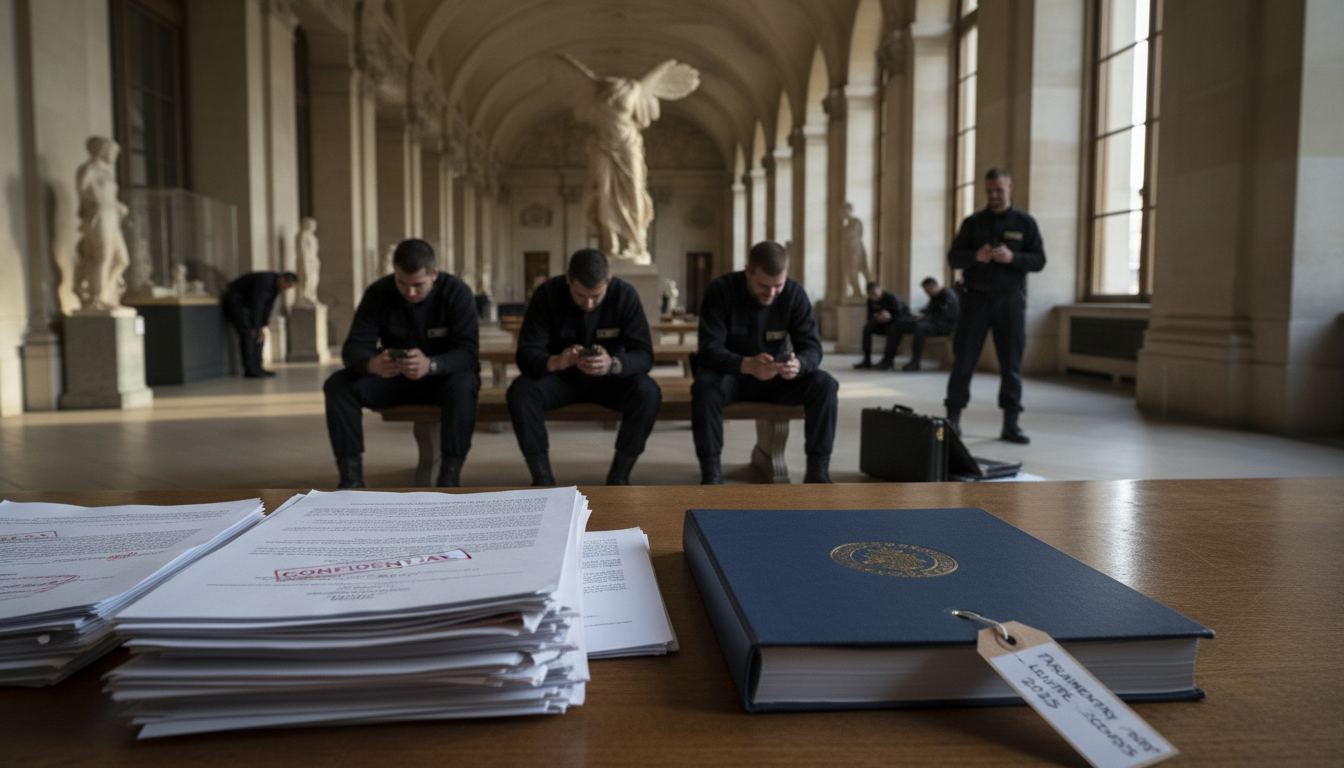
Louvre security failures flagged in parliamentary report after 2025 crown jewels theft
France parliamentary report finds Louvre security was sidelined; recommends governance, funding and staffing reforms to bolster museum protection.
The French National Assembly commission has concluded that Louvre security was relegated to a lower priority in the years before the high-profile October 19, 2025 theft of several crown jewels. The report, presented by deputy Alexis Corbière on May 13, 2026, says longstanding weaknesses in security systems and oversight allowed the robbery and other frauds to occur. Lawmakers are urging structural changes to governance, funding and staffing to prevent further breaches at the museum.
Parliamentary inquiry identifies systemic neglect
The commission was formed in early December 2025 after thieves removed eight crown jewels from display in broad daylight in central Paris. Investigators convened roughly 20 hearings and roundtables, interviewed more than 100 witnesses, and visited institutions in France and abroad before compiling their findings. The inquiry report concluded that decisions prioritizing visibility and influence over basic security contributed to chronic underinvestment in safeguards.
The report singles out a pattern of treating security recommendations as secondary and highlights a persistent underestimation of risks. That assessment echoes a prior review by the Cour des comptes that criticized the museum for favoring high-profile projects at the expense of safety. According to the commission, the result was an institutional culture that left critical protections outdated as visitor numbers rose.
Past audits warned of obsolete safeguards
Lawmakers who drafted the report noted two earlier audits that had flagged problems: one conducted in 2017 and another carried out by the jeweller Van Cleef & Arpels in 2019. Those reviews, the commission says, documented technological obsolescence and gaps in the museum’s security architecture that were not fully addressed. The repeated warnings, the report asserts, were not matched by decisive remedial action.
An internal administrative review launched immediately after the October 2025 heist also found deficiencies in how audits were taken into account by museum management. The commission’s rapporteur, Alexis Corbière, described the situation as an institutional failure to prioritize and act on expert advice, leaving the Louvre vulnerable despite available knowledge of its weaknesses.
Legal fallout and ongoing investigations
The theft prompted a wider series of criminal probes, including a separate ticketing fraud estimated at more than €10 million. Prosecutors say that, to date, around ten people have been formally charged in connection with these investigations, including three museum agents. On May 13, 2026, Paris judicial authorities announced that one museum employee had been indicted and placed under judicial supervision in the ticketing case.
Four suspects alleged to have carried out the October 19 burglary have been arrested, according to authorities, and parts of the stolen collection were recovered with some items damaged. The discovery of a damaged imperial crown near the museum added urgency to both the criminal inquiries and the parliamentary review, underscoring concerns about internal control and the chain of custody for priceless works.
Governance reforms proposed to reduce presidential appointment power
A central recommendation of the commission targets how museum directors are named. Currently, leaders of major cultural institutions are appointed by presidential decree, a practice the report says concentrates power and reduces accountability. The commission proposes that future directors be elected by the institution’s board of trustees, a body that would include parliamentarians and other stakeholders to ensure more transparent oversight.
Rapporteur Alexis Corbière framed the change as a remedy to what he called a “fait du prince” — an approach in which top positions are decided without broader institutional input. Lawmakers argued that insulating management selection from exclusive executive influence would improve scrutiny of safety-related choices and align strategic priorities with risk management.
Calls to boost funding, staffing and frontline professionalism
To address the technical and human shortfalls identified, the report urges enlarging the security fund established after the robbery, which currently holds €30 million. The commission recommends increasing those resources to accelerate upgrades to alarm systems, surveillance, and physical barriers across museums nationwide. It also calls for recruitment drives to convert temporary or contract security roles into permanent, certified positions.
The report emphasizes improving the attractiveness of security careers through better pay and career pathways, while discouraging reliance on short-term contractors for core protection duties. Lawmakers said a professionalized security workforce, backed by predictable funding, is essential to secure the Louvre’s vast footprint and manage risks posed by millions of annual visitors.
Questions raised about expansion amid overcrowding concerns
The parliamentary report also scrutinizes plans announced by President Emmanuel Macron in 2025 for a Louvre expansion dubbed “Louvre Nouvelle Renaissance,” which envisages refurbishing existing buildings and creating new spaces that could push annual visitor capacity to 12–15 million. Corbière warned that increasing capacity without resolving safety and staffing deficits could exacerbate structural wear and complicate protection efforts. He argued that expansion should be reconsidered until core security and staffing issues are fixed.
Critics say the drive for higher visitor numbers risks undermining both the physical conservation of the site and working conditions for personnel if proper mitigation measures are not in place. The commission recommends pacing any development with clear, funded security milestones rather than pursuing growth for symbolic or visibility gains.
The report’s publication marks a pivotal moment for French cultural policy, setting out concrete governance and operational changes intended to reduce vulnerabilities exposed by the 2025 theft. Lawmakers and cultural administrators now face the task of converting those recommendations into budgets, personnel plans and legal reforms to restore public trust and protect one of the world’s most visited museums.
