
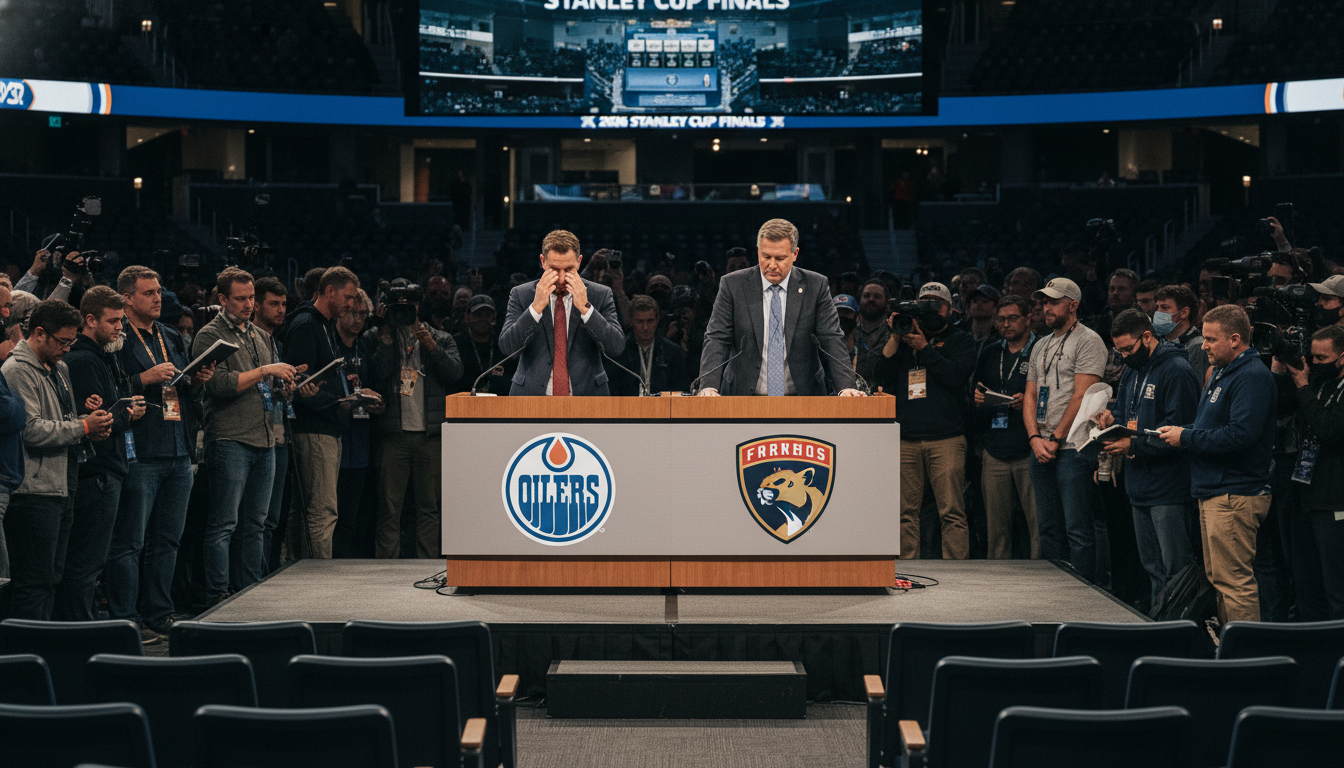
Playoff fatigue sank Oilers and Panthers as NHL off-season shrinks
Playoff fatigue left Oilers and Panthers depleted in 2026, fueling debate over compressed off-seasons, player recovery and NHL load management, and scheduling.
The Edmonton Oilers’ early exit and the Florida Panthers’ fall from contention this spring have renewed questions about playoff fatigue and the toll of consecutive deep Cup runs. Both franchises, which featured in finals as recently as 2024 and 2025, saw the physical and calendar demands of modern NHL seasons cut into players’ ability to recover and rebuild. Coaches, players and performance specialists point to compressed off-seasons, heavy travel and key injuries as drivers behind diminished on-ice performance in 2026. The debate now centers on whether structural changes — from scheduled rest to adjusted playoff timing — can protect elite players and maintain competitive integrity.
Panthers coach cites depleted reserves
Paul Maurice told reporters his club entered the season ready but found the well ran shallower than expected after three straight finals appearances. He said early-season energy gave way to chronic fatigue that limited the team’s capacity to sustain a championship push. Injuries to cornerstone players compounded the problem, leaving less margin for error as the schedule wore on. Maurice framed the issue as physiological and cumulative rather than a failure of effort or preparation.
Oilers’ regular-season struggles and abrupt playoff exit
Edmonton’s 2026 campaign, which ended in a first-round loss, exemplified how intermittent form across a long season can produce an abrupt playoff exit. The Oilers endured an inconsistent regular season and arrived at the postseason with key players hampered by wear and tear. Forward Leon Draisaitl said compressed recovery windows after deep runs left little time for mental reset or rebuilding muscle mass. The result was a roster that, by spring, struggled to recreate the explosive conditioning displayed in prior Cup runs.
Experts detail how long seasons erode muscle and recovery
University of Alberta kinesiology lecturer Matt Yaworski, who trains pro hockey players in the summer, described a common pattern: athletes return from the season leaner and with reduced muscle mass compared with their pre-season condition. He explained that in-season demands often permit only maintenance work rather than substantive strength gains. For teams that advance into late June, the typical three-month off-season for non-playoff players shrinks to six to eight weeks, curtailing the restorative and developmental window athletes rely on. The shortened cycle places players in the difficult position of trying to build on bodies that are still recovering.
Trainers warn about building mass on exhausted bodies
Erin Baker, owner of a North American strength and conditioning system, warned that attempting major strength or structural adjustments on fatigued athletes can increase injury risk. She said the ideal off-season contains a clear recovery phase followed by a gradual progression into strength and skill work. When that restoration phase is shortened or eliminated, coaches must choose whether to prioritize immediate gains or foundational rehabilitation. Baker pointed to other sports where leagues offer more generous recovery buffers and noted those differences affect how trainers plan annual programs.
Load management ideas run into culture and commercial limits
Proposals to schedule planned rest days or rotate star players during the regular season have proponents and detractors in hockey circles. Critics point to ticket-holder expectations and television contracts that rely on marquee names to drive revenue. While leagues such as the NBA have introduced rules around resting stars in nationally televised games, the NHL’s culture still views everyday availability as part of a player’s value. Medical and performance staff say coordinated load management could be feasible if implemented transparently, but franchise owners and broadcasters are cautious about any change that might be perceived as undermining the product.
Operational barriers and the playoff calendar
Shortening playoff series or changing start dates could relieve some pressure but would require buy-in from national broadcasters and the NHLPA. Television scheduling, cross-border travel logistics and international windows for tournaments complicate any straightforward fix. Teams also face roster and cap constraints that limit how often they can feasibly rotate top talent without compromising competitiveness. Those operational realities mean meaningful reform would need to be negotiated across multiple stakeholders rather than imposed unilaterally by individual clubs.
Hockey’s modern reality, experts say, is that elite players are effectively 12-month athletes whose off-season is as strategic as their in-season training. For franchises that sustain multiple deep postseason runs, the payoffs of success can arrive with the trade-off of an exhausted roster in the seasons that follow. The Panthers’ and Oilers’ 2026 outcomes underscore how narrow margins and cumulative fatigue can alter expectations even for top clubs.
League officials, team medical staffs and player representatives will likely continue discussions this summer about mitigating playoff fatigue without diluting fan value. Any change will require balancing athlete welfare, competitive fairness and the commercial imperatives that shape the NHL calendar.
