
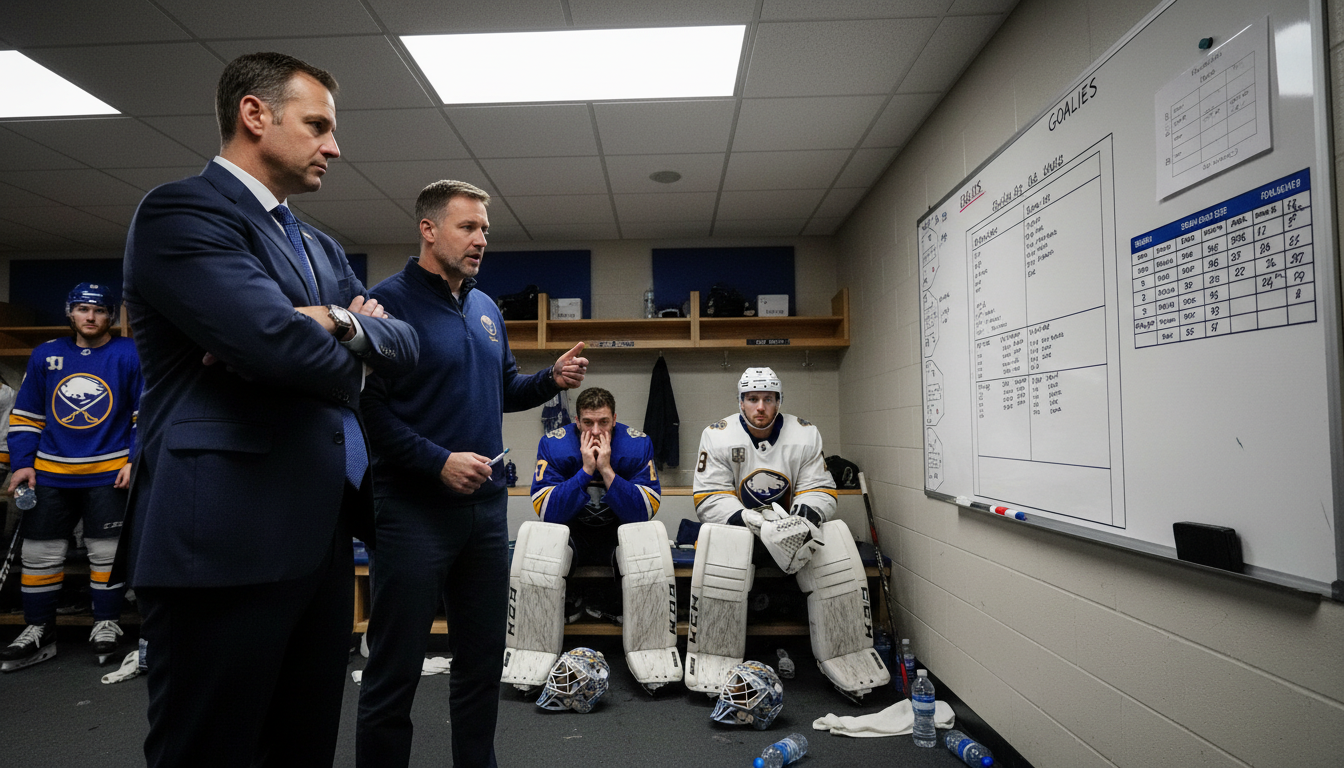
Sabres goaltending change debated as team weighs next moves
Buffalo Sabres goaltending change is under active discussion after a stretch of inconsistent netminding has raised questions about depth and structure in goal. The organization is assessing whether adjustments behind the crease could stabilize results and better position the team for the remainder of the season. This article examines the factors driving that conversation and the realistic options available to Buffalo.
Why goaltending is under scrutiny
Recent uneven performances in net have put Buffalo’s goaltending under greater scrutiny from coaches, executives and fans alike. Save percentage swings, difficulty with high-danger scoring chances and occasional slow starts in games have all contributed to increased attention on the position. In a league where goaltending frequently determines narrow outcomes, those inconsistencies can quickly translate into lost points and mounting pressure.
Goaltending evaluations often expand beyond raw numbers to include workload management, rebound control and how well a goalie tracks plays behind screens. Coaching staff also factor in a goalie’s rebound control and ability to communicate with defensemen when deciding whether to stick with a starter. For an organization, balancing short-term results with long-term development is a challenging calculus.
Recent team performance and context
Buffalo’s defensive structure and team play influence how sustainable any goaltending performance will be over time. When a team generates turnovers in the offensive zone and limits odd-man rushes, it naturally eases pressure on its netminders. Conversely, defensive lapses and systemic breakdowns expose goaltenders to higher-quality chances and can make reliable performances harder to maintain.
Injury considerations and travel schedules also affect goaltender form and recovery. The rigors of an NHL season sometimes require clubs to use tandem approaches or short turns in net to preserve legs and confidence. Evaluating the Sabres’ recent stretch requires looking at opponent strength, scheduling and the ability of the defense corps to reduce shots from dangerous areas.
Potential roster moves for Sabres goaltending
There are several realistic avenues Buffalo could pursue if it opts to alter its goaltending approach. One option is to adjust the rotation between the current netminders, with the aim of finding a rhythm that maximizes both confidence and rest. Coaches sometimes alternate starts to manage workload while giving both goalies opportunities to regain form.
Another possibility is internal promotion from the AHL affiliate, elevating a prospect to provide competition and a different look. Bringing up a younger goalie can spark a performance bump and test organizational depth without committing to a long-term change. More consequential moves such as a trade or waiver acquisition remain on the table but usually require careful cap and asset evaluation before execution.
Coaching, technique and system adjustments
Coaching staff play a central role in any goaltending change, not only in choosing starters but also in implementing technique and system tweaks. Goaltending coaches work individually with players on positioning, rebound control and puck-handling, while head coaches adjust defensive schemes to protect their netminders. Small changes in crease management or defensive support can produce measurable improvements in save percentage and goals-against trends.
Communication between coaches and goalies is critical when considering a change. If the coaching staff believes a technical correction or altered practice regimen would be sufficient, they may prefer that route before altering personnel. Conversely, if confidence is the primary issue, a new rotation or roster move can sometimes provide the psychological fresh start a goalie needs.
Implications for Buffalo’s season
Any goaltending change carries ripple effects across the roster and the team’s playoff and development timelines. Short-term, a shake-up can lead to improved results if it stabilizes the net and restores team confidence. It can also create uncertainty and require time for new patterns to settle, potentially costing points in the interim.
Longer-term implications include how the organization values its goaltending prospects and trade assets. A move that brings in an external veteran might signal a win-now posture, while promoting from within can indicate confidence in the club’s development pipeline. For Buffalo, weighing immediate competitive needs against the growth of younger goalies will be a key consideration for management.
Player morale and public perception also figure into decisions about goaltending. Goalies are often viewed as the backbone of a team, and shifts at the position attract scrutiny from media and fans. The front office must balance transparency about objectives with the need to protect player confidence and team cohesion.
In the coming days, the Sabres’ coaching staff and executives will continue to monitor performance metrics, practice observations and recovery timelines before deciding on any substantive change. Whatever path the club chooses, the decision will reflect both immediate competitive priorities and the long-term blueprint for the organization’s goaltending depth and stability.
