
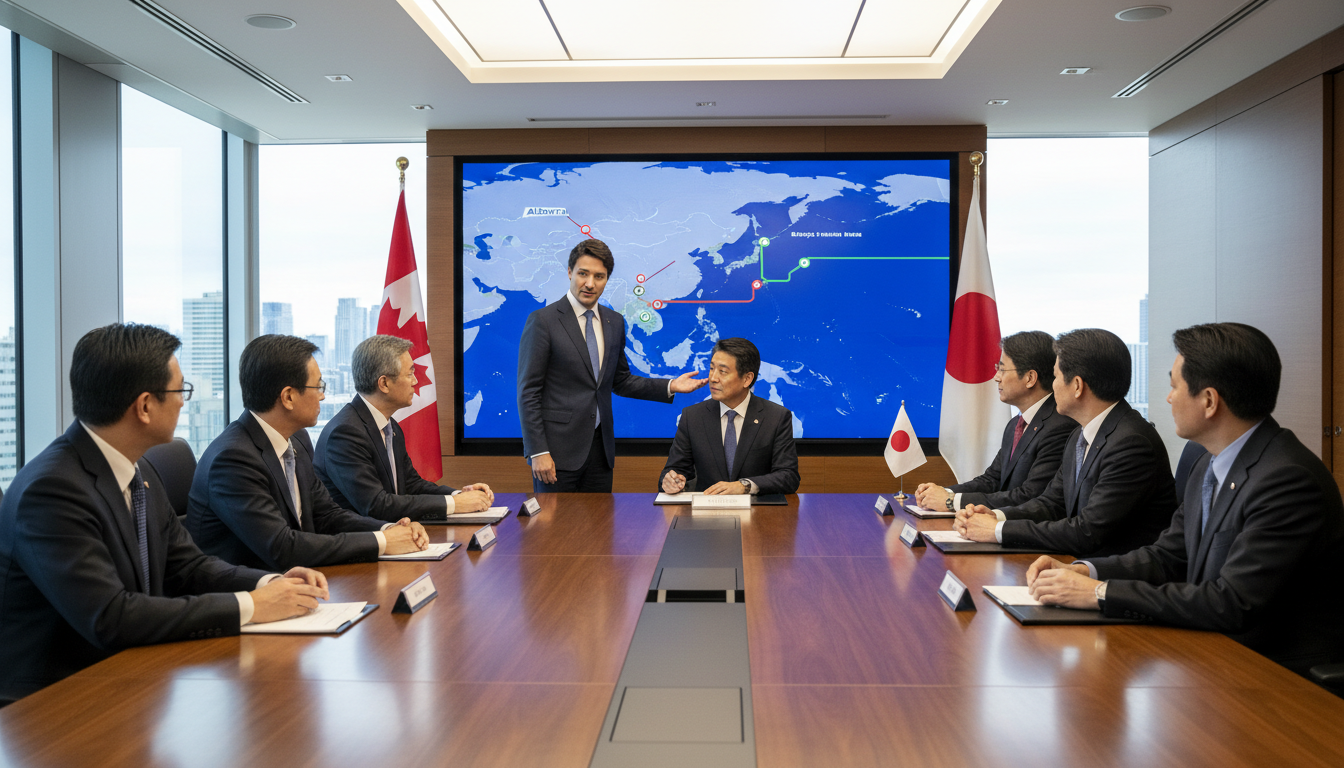
Carney says new oil pipeline to Asian markets ‘more probable than not’ as Ottawa weighs routes
Mark Carney says a new oil pipeline to Asian markets is ‘more probable than not’ as Ottawa studies routes, Indigenous objections and recent U.S. approvals.
Prime Minister Mark Carney told La Presse canadienne that a new oil pipeline to carry Alberta crude toward Asian markets has become "more probable than not" amid shifting global energy demand and Ottawa’s push to diversify export routes. He framed the project as part of a broader federal–provincial framework agreed with Alberta last year, while stressing that significant work and environmental safeguards remain before any construction could proceed. Carney’s comments mark his first in-person interview with La Presse since taking office, and they signal growing federal attention to pipeline route options and market access beyond North America.
Carney frames pipeline as part of a wider economic plan
In his interview, Carney linked the potential for a new oil pipeline to global market shifts and the fallout from conflict in the Middle East, saying countries are seeking new, reliable energy sources. He said the federal government is advancing a multipart plan with Alberta that aims to balance economic opportunity with emissions reductions and regulatory safeguards. Carney underlined that while chances of a pipeline have increased, the outcome is not guaranteed and remains contingent on further analysis and consultations.
Carney indicated the memorandum of understanding signed with Alberta late last year provides a policy framework rather than an immediate green light for construction. He described ongoing federal work as exploratory and focused on aligning infrastructure goals with Canada’s climate commitments. Officials are examining how routing, technology and emissions mitigation could shape a project acceptable to multiple stakeholders.
Ottawa weighs multiple routes, southern corridor emerges in reporting
The prime minister said there are several possible routes for a new oil pipeline, keeping options open beyond the northern B.C. coast favored by Alberta. Media reporting citing anonymous federal sources has suggested Ottawa is leaning toward a southern corridor that could face fewer environmental hurdles and less Indigenous opposition. Carney confirmed that route considerations are part of deliberations and that no single path has been selected.
A southern route advocates argue it might reduce legal and ecological complications, though proponents acknowledge complex permitting and consultation requirements would still apply. Federal officials are said to be comparing environmental risk profiles, Indigenous land claims, shipping logistics and access to transshipment points that would facilitate shipments to Asia. Any preferred routing would still require detailed impact assessments and negotiated agreements with affected communities.
Alberta and B.C. positions remain sharply contrasted
Alberta’s premier has repeatedly advocated for an export line to the northern British Columbia coast, a plan that has drawn significant resistance from coastal First Nations and the B.C. government. Premier Danielle Smith has stressed coastal access is central to Alberta’s strategy to reach Asian buyers, while B.C.’s leadership and many Indigenous bands have raised concerns about marine risk, ecological damage and sovereignty. Carney’s comments make clear Ottawa is aware of the political friction and is examining alternative ways to achieve market diversification.
The federal government faces the dual challenge of responding to Alberta’s economic aims and addressing the deep-seated opposition in parts of British Columbia. Any movement forward would require extensive Indigenous consultations, potentially negotiated benefit-sharing, and demonstrable measures to limit emissions and spill risk. These tensions suggest a lengthy process with legal and political hurdles ahead.
U.S. pipeline approvals add context for Canadian planners
Carney referenced a recent U.S. presidential permit approving the Bridger pipeline extension — a partial revival of the earlier Keystone XL concept — as part of the backdrop informing Canada’s options. The permit signed by U.S. President Donald Trump underscores shifts in U.S. energy infrastructure policy and may influence how Canadian planners view cross-border transport and export strategies. Carney noted that North American pipeline developments are relevant but not determinative for domestic routing decisions.
Observers say the U.S. action highlights the geopolitical dimension of energy access and adds pressure on Canadian policymakers to define clear export pathways. It also emphasizes the importance of aligning domestic approvals with international trade realities and shipping corridors. Still, Canadian environmental and Indigenous law, and provincial jurisdictional interests, mean decisions here will follow a distinct process.
Trade posture: Ottawa will not weaponize energy or minerals
In the interview, Carney was explicit that Canada will not use energy resources or critical minerals as leverage in forthcoming trade negotiations with the United States. He framed the country’s approach as one of constructive engagement, aiming to expand market access without deploying natural resources as bargaining chips. That stance reflects Ottawa’s desire to maintain stable commercial relationships while pursuing diversification.
This trade posture is intended to reassure trading partners and investors that Canada’s resource policy will be guided by market and regulatory considerations rather than coercive diplomacy. Carney’s comment signals a preference for negotiated solutions that protect Canadian interests while adhering to international rules and alliances.
Final decisions on any new oil pipeline will hinge on a mix of technical studies, environmental reviews, Indigenous consultation outcomes and intergovernmental agreements. Carney’s characterization that a pipeline is now "more probable than not" signals a shift in federal calculation, but he repeatedly emphasized that probability is not certainty and that substantial policy, legal and community work lies ahead before shovels could reach the ground.
