
Americans Lost $2.1 Billion to Social Media Scams in 2025, FTC Says
FTC reports Americans lost $2.1 billion to social media scams in 2025, led by shopping, investment and romance fraud; agency advises privacy and vetting measures.
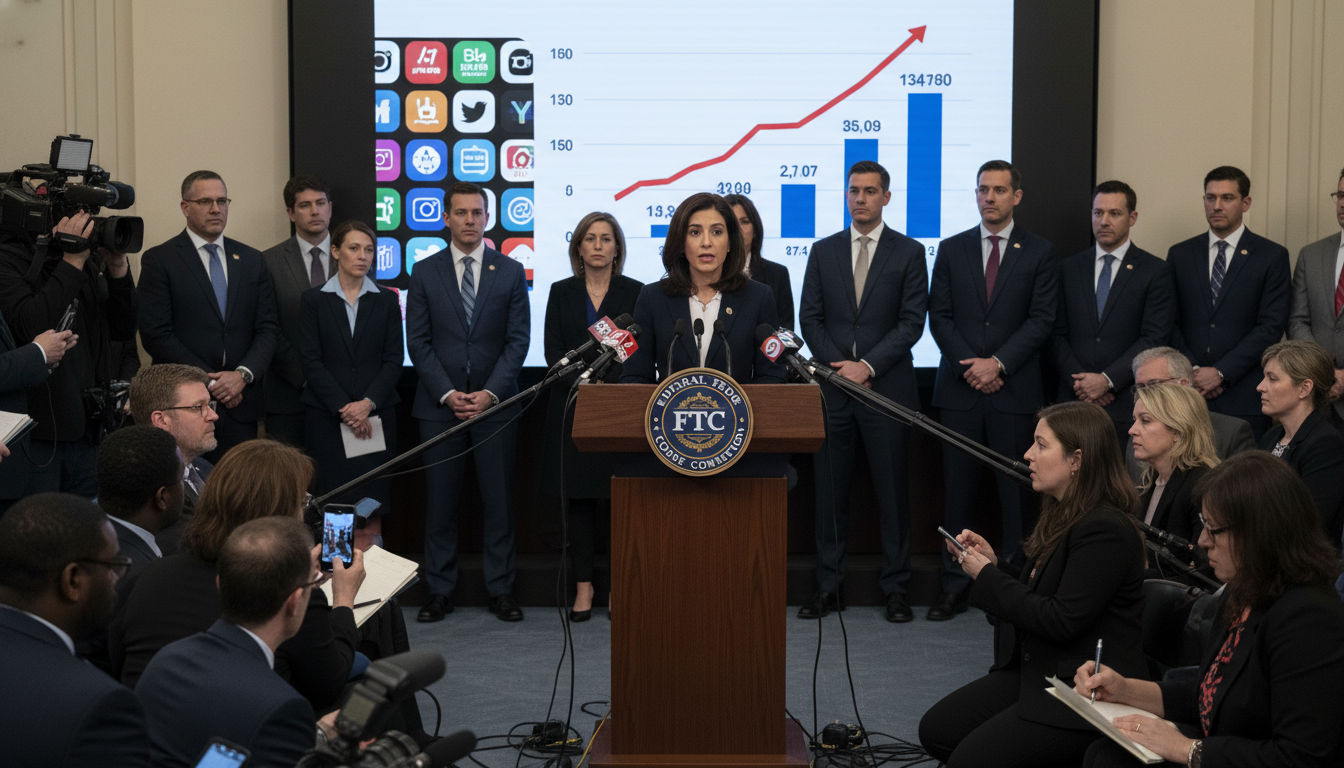
Americans lost an estimated $2.1 billion to social media scams in 2025, the U.S. Federal Trade Commission reported, marking a sharp rise in losses tied to platforms like Facebook, WhatsApp and Instagram. The FTC said incidents that began on social media accounted for a larger share of financial harm than any other contact method, with reported losses rising roughly eightfold compared with prior periods. The surge reflects a widening range of schemes from fake storefronts to investment pitches and relationship fraud that increasingly use social networks to reach victims.
FTC report details scale and surge in losses
The Federal Trade Commission’s data indicate that nearly 30 percent of people who reported losing money to scams in 2025 traced the scheme back to social media. Those reports place social media ahead of traditional vectors such as text messages and email for reported monetary losses. The agency highlighted that the total reported dollar loss tied to social platforms surpassed losses reported for other initial contact methods.
The FTC characterized the trend as both broader and more costly, noting not only more incidents but also higher average losses in several scam categories. The increase underscores how fraudsters have adapted marketing-style techniques and platform features to build trust and entice payments. Regulators said the pattern has important implications for consumer protection and platform moderation.
Facebook identified as primary platform for reported losses
Among platforms named by complainants, Facebook emerged as the location where the most money was lost, with WhatsApp and Instagram following at a distance. Reports show that, on aggregate, Facebook-linked scams produced higher reported losses than text- or email-originated fraud. Investigators said the breadth of Facebook’s reach and the diversity of ad and messaging tools on the service likely help explain its outsized share.
FTC officials emphasized that platform rankings reflect where schemes began according to victims’ reports rather than an assessment of individual platform safety features. The agency also warned that scammers commonly move victims across channels—starting with a public post or ad and shifting to private messaging apps to press for payments or sensitive information.
Shopping ads and fake storefronts drove the largest number of reports
Shopping scams were the most-reported subtype of social media fraud in 2025, the FTC’s figures show, with more than four in ten people who lost money to social media scams saying they had purchased items seen in ads. Buyers described a range of bait, from clothing and cosmetics to car parts and even pets, with many transactions routed to unfamiliar websites. Scammers often used counterfeit storefronts or cloned brand pages to advertise steep discounts, then failed to deliver merchandise or sent inferior goods.
Victims also recounted being redirected to web pages designed to look like legitimate retailers, where checkout and payment details were harvested. In some cases, payment methods made reversing charges difficult, and customer-service contacts proved to be fabrications. Consumer advocates said the persistence of these schemes highlights how well fraudsters can mimic legitimate e-commerce signals on social networks.
Many victims said they had not checked seller histories or searched for complaints before ordering, a gap scammers exploit. Platform advertising tools that target users by interests and past purchases can amplify exposure to fraudulent offers, making it harder for casual shoppers to spot red flags.
Investment pitches and fake advisory groups caused major dollar losses
Investment-related schemes tied to social media accounted for roughly $1.1 billion of the reported losses, according to the FTC. These scams typically began with posts or ads promising training, tips or the chance to join exclusive investment groups. Scammers often cultivated trust with testimonial-style posts and then encouraged victims to deposit funds into fraudulent trading platforms or to follow advice that generated losses.
WhatsApp groups and private messaging were frequently used to create a sense of community and urgency, with coordinators sharing fabricated success stories. The combination of targeted outreach and social proof made it easier for fraudsters to persuade people to move money quickly. Regulators warned that allowing someone met online to direct investment decisions is a consistent way consumers end up losing significant sums.
The FTC also noted that many of the fake investment platforms are designed to appear professional while preventing withdrawals or inventing fees that consume victims’ funds. Financial regulators and consumer groups continue to push for stronger verification and clearer warnings around crypto and high-risk investment offers on social networks.
Romance fraud often began on social platforms and escalated quickly
The report found that nearly 60 percent of people who lost money to romance scams in 2025 said their interactions started on a social media platform. Scammers tailor messages and profiles to match victims’ personal details and interests, then gradually build emotional rapport before inventing an emergency or requesting money. In other cases, fraudsters use the relationship to push investment opportunities that later collapse.
Because social media profiles can mask identity and location, victims often do not realize they are communicating with a fabricated persona. Scammers may also advise victims to move conversations to private channels or payment apps that reduce transparency. Law enforcement and nonprofits that assist victims say early skepticism and verification of identities are critical to preventing these losses.
FTC issues specific steps for consumers to reduce risk
The Federal Trade Commission urged users to limit who can view their posts and contact them on social platforms as a first line of defense. It recommended researching sellers before purchases, including searching a company’s name with terms such as “scam” or “complaint,” and verifying that advertised websites are legitimate. The agency also advised never allowing someone met online to direct investment choices and to be wary of unsolicited investment offers promoted through social channels.
Officials encouraged users to report suspicious ads and accounts to platform providers and to retain records of communications and transactions in case investigators need evidence. Consumer groups additionally recommend using payment methods that offer dispute protections and consulting independent financial professionals before committing funds to unfamiliar investment schemes.
The FTC’s findings make clear that social media scams now account for a substantial portion of consumer monetary harm, and experts say vigilance and basic verification practices remain the most effective defenses. Victims and potential targets are being urged to adopt platform privacy settings, scrutinize offers carefully, and report suspected fraud promptly to reduce the reach of these increasingly sophisticated schemes.
