
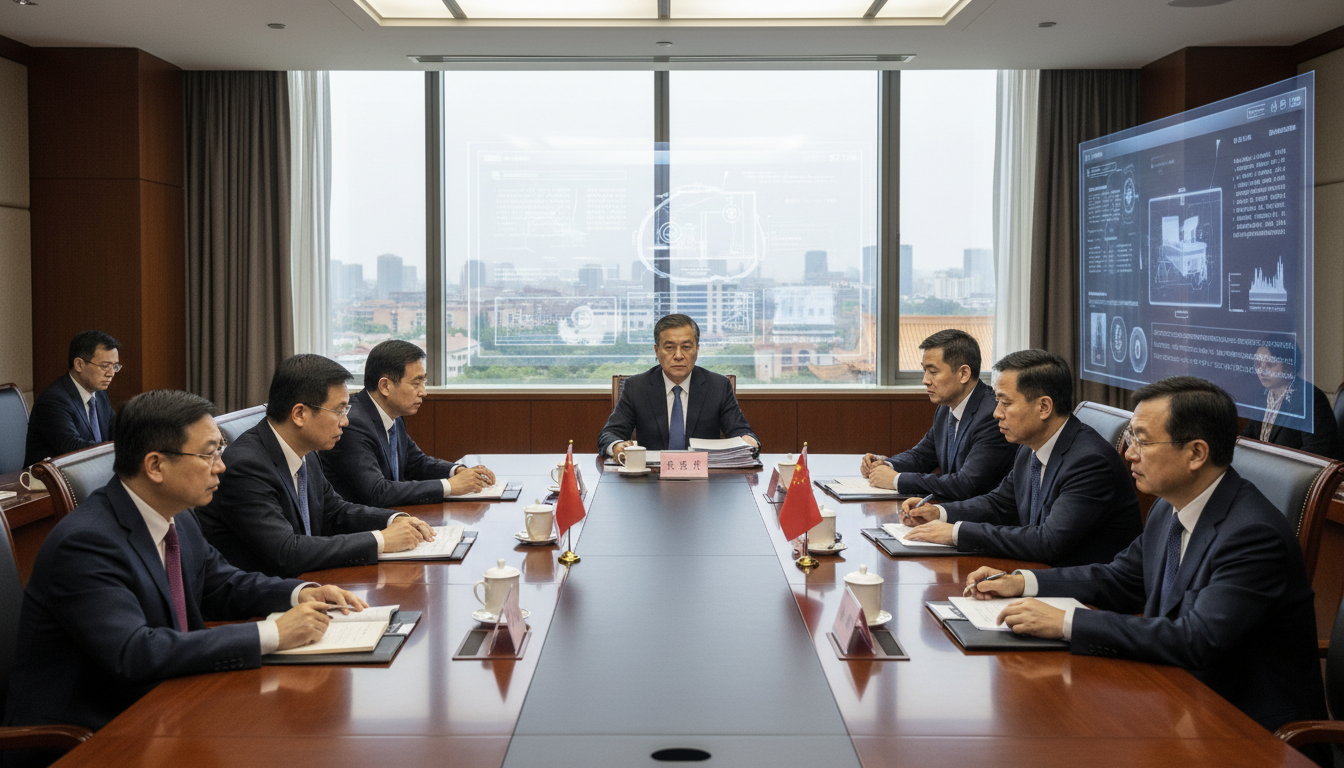
Beijing Tightens Control Over AI Companies After December Takeover Probe
Beijing tightens control over AI companies following a near-completed takeover that prompted a December investigation into outbound investment and technology exports.
Beijing has moved to tighten oversight of key artificial intelligence firms after a near-completed takeover triggered a regulatory probe in December. The action follows concerns raised by authorities about possible illegal outbound investments and the transfer of sensitive technologies. Officials have signaled a broader shift toward more stringent scrutiny of foreign deals involving strategic AI assets.
Beijing Tightens Oversight After Takeover Probe
Regulators intensified controls after the takeover announcement, citing national security and export-control risks tied to advanced AI technologies. The probe, opened shortly after the deal was disclosed in December, focused on whether capital flows and technical transfers complied with domestic rules. Authorities say the measures are aimed at preserving critical capabilities and preventing unintended technology leakage.
Details of the Deal Under Scrutiny
The transaction at the center of the inquiry was described by observers as a near-completed acquisition involving a prominent AI developer. Financial and corporate filings tied to the takeover drew regulator attention because of cross-border ownership elements and possible transfer of research tools. The precise stages of the deal and the identities of all parties involved remain under regulatory review, with official statements limited to public enforcement rationales.
Allegations of Illegal Outbound Investment and Tech Exports
Chinese regulators flagged two main concerns: unauthorized outbound investment and the export of technologies that could have strategic implications. Authorities invoked rules that require prior approval or notification for certain overseas investments, particularly those involving dual-use or high-performance computing technologies. Investigators also examined whether the transfer of algorithms, data sets, or hardware fell afoul of export-control provisions.
How Regulators Are Enforcing New Controls
Enforcement actions have included filing probes, delaying approvals, and tightening review criteria for future transactions in the AI sector. Government bodies have signaled a willingness to use a broader set of administrative tools to scrutinize deals, including expanded definitions of sensitive technology. The regulatory posture appears to prioritize incremental approval hurdles and post-transaction compliance checks to ensure safeguards are in place.
Impact on International AI Investment Flows
The move to tighten control over AI companies is expected to reverberate across international investment markets that target Chinese tech assets. Potential foreign buyers may face longer due diligence timelines and a higher likelihood of blocked or restructured deals. Investment advisers and private equity firms are already reassessing risk models, especially for transactions involving machine learning, robotics, and other frontier technologies.
Industry and Market Reactions
Corporate executives and investors have urged clarity on enforcement standards and timelines to reduce transaction uncertainty. Some AI firms have begun to consider restructuring ownership, data governance, and supply chains to align with evolving regulatory expectations. Market analysts warn that short-term deal flow could slow, while domestic consolidation and state-backed partnerships may accelerate as companies seek compliant pathways.
Global partners and multinational companies watching the situation say the case highlights the growing intersection of national-security policy and commercial AI development. Observers note that similar regulatory tightening in other jurisdictions has already reshaped deal-making, and that Beijing’s measures signal a durable policy stance rather than a one-off intervention.
Companies directly affected by the probe have issued limited public comments, typically acknowledging cooperation with authorities and the need to comply with legal requirements. Regulators have emphasized that enforcement aims to protect both domestic technological advantages and the integrity of international exchanges where sensitive capabilities are concerned.
Long-term, the shift could push more AI research and product development into locally governed ecosystems with stronger oversight of cross-border transfers. That could lead to duplicated efforts and fragmentation in global AI collaboration if formal channels for secure technology exchange are not established.
The unfolding regulatory response underlines how strategic technology governance is becoming central to corporate strategy for AI companies and their investors. As Beijing tightens control over AI companies, stakeholders will be watching for clearer rules and expedited mechanisms that balance security concerns with the commercial need for international partnerships.
