
Thomson Reuters’ CoCounsel Moves From Pilots to Firmwide Legal Use
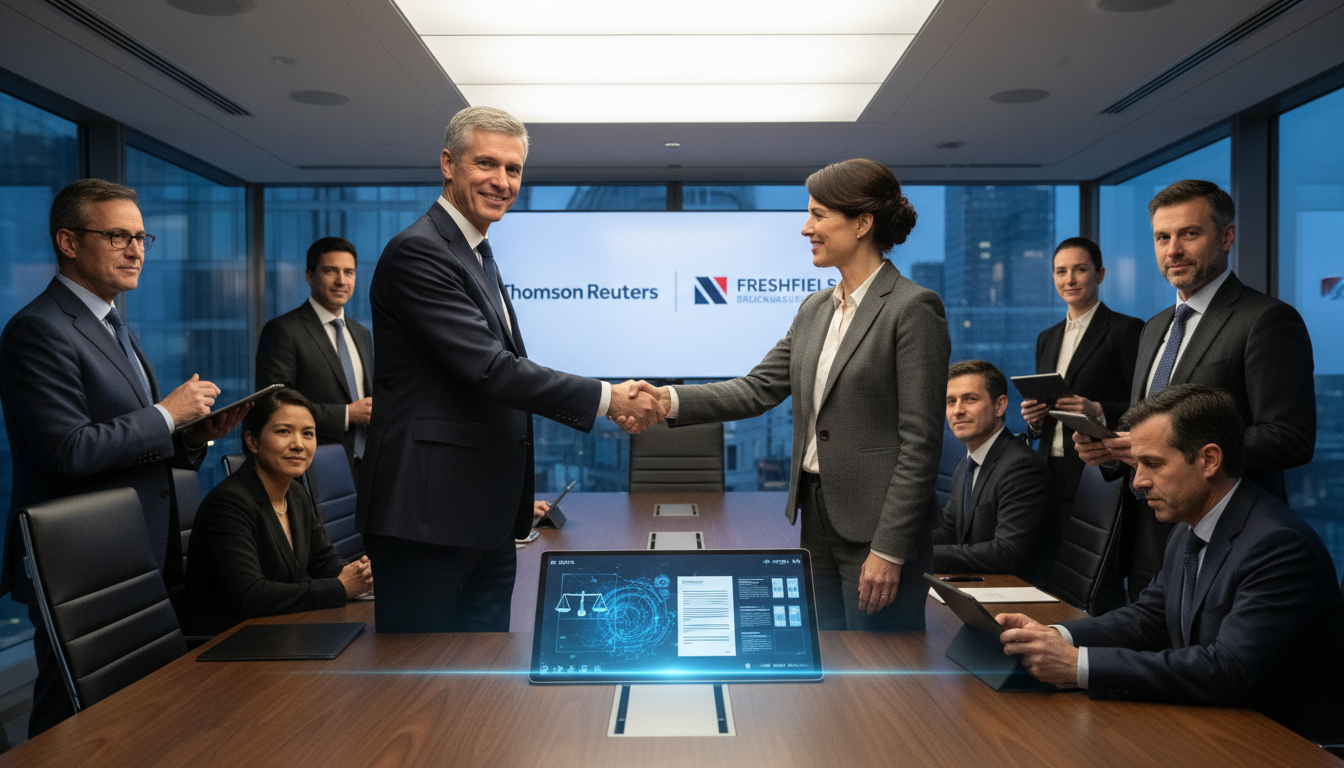
Thomson Reuters’ CoCounsel, powered by Anthropic and partners, moves from pilots to firmwide deployment as Freshfields tests AI integration into legal workflows.
Thomson Reuters positions CoCounsel for wider deployment
Thomson Reuters, the parent of Reuters, has been expanding its suite of legal artificial intelligence tools, centering recent efforts on CoCounsel. The company markets CoCounsel as part of a broader push to embed AI across legal practice areas, leveraging partnerships with providers including Anthropic. Joel Hron, Chief Technology Officer at Thomson Reuters, said the emphasis is now shifting away from isolated experiments toward broad incorporation of AI into day‑to‑day work.
CoCounsel’s placement within Thomson Reuters reflects the firm’s strategy to move from feature tests to operational scale. That ambition aligns with a market trend in which vendors aim to make AI part of standard legal technology stacks rather than niche pilots. Thomson Reuters’ current messaging highlights integration, vendor collaboration and a focus on reliability as prerequisites for wider adoption.
Freshfields confirms role as early adopter and tester
Global law firm Freshfields publicly described itself as an “Early Adopter and Tester” of the latest CoCounsel release, signaling vendor confidence in real‑world validation. Freshfields’ testing role indicates law firms are willing to participate in structured trials while maintaining professional oversight of outputs. The collaboration offers a practical pathway for large firms to evaluate performance, controls and fit before committing firmwide.
For Freshfields, the trial phase is intended to assess how CoCounsel interacts with existing processes and compliance obligations. Early adopter arrangements typically involve feedback loops with vendors, allowing firms to flag accuracy issues, data handling concerns and user experience adjustments. This staged approach reduces rollout risk and informs governance decisions at scale.
How CoCounsel uses Anthropic and partner technologies
CoCounsel incorporates technologies from Anthropic and other AI developers to deliver its capabilities, according to company disclosures. Those partnerships combine proprietary legal data and workflows with third‑party foundational models and safety tooling, aiming to balance domain accuracy with model robustness. Thomson Reuters presents this architecture as a way to accelerate feature development while retaining legal‑specific controls.
The multi‑vendor approach lets Thomson Reuters leverage advances across the AI ecosystem without building every component in house. That design also raises operational questions about model updates, version control and responsibility for errors. Vendors and clients must therefore clarify contractual and technical boundaries when multiple providers contribute to a single product experience.
Impacts on law firm workflows and staffing
Industry observers say the transition from pilot projects to routine use could reshape daily legal tasks, particularly document review, contract analysis and routine research. Firms that integrate CoCounsel into workflows may see time savings on repetitive tasks, enabling lawyers to spend more time on strategy and client counseling. Adoption at scale will require training, updated playbooks and clear escalation paths for human review.
Widespread deployment also prompts reassessment of staffing models and skill sets valued by firms. Technical literacy and oversight capabilities may become more important for mid‑level lawyers and support teams. At the same time, firms will need to manage change carefully to preserve professional standards and client confidentiality while pursuing efficiency gains.
Accuracy, privacy and governance remain central concerns
As use expands, accuracy and data governance are likely to be the most scrutinized aspects of CoCounsel deployments. Law firms operate under strict confidentiality and ethical rules, making robust data handling, audit trails and human validation essential. Industry stakeholders stress that AI outputs must be verifiable and that final responsibility for legal advice remains with qualified professionals.
Regulators and clients are increasingly attentive to how AI is used in legal services, and firms must prepare policies that address model transparency, bias mitigation and incident response. Vendor commitments on model testing, security certifications and support for compliance processes will be key evaluation criteria for future contracts. Continuous monitoring and conservative rollouts can help mitigate reputational and legal risks.
Thomson Reuters’ emphasis on moving from experimentation to broad integration—captured in Joel Hron’s assessment that the focus has shifted “from experimenting with AI to large‑scale integration into daily workflows”—frames the company’s current roadmap. As firms like Freshfields participate in testing, their findings will shape practical guardrails for when and how CoCounsel is used across legal teams.
The coming months are likely to produce more detailed accounts of performance and governance outcomes as trials mature into operational deployments. Law firms and vendors alike will watch those results closely to determine the pace of broader adoption and the standards needed to ensure AI tools enhance rather than undermine legal practice.
