
Alberta dual-practice health-care model draws federal scrutiny over Canada Health Act
Federal health minister warns Alberta that dual-practice model may threaten Canada Health Act integrity, Alberta defends Bill 11; experts lay out risks and options.
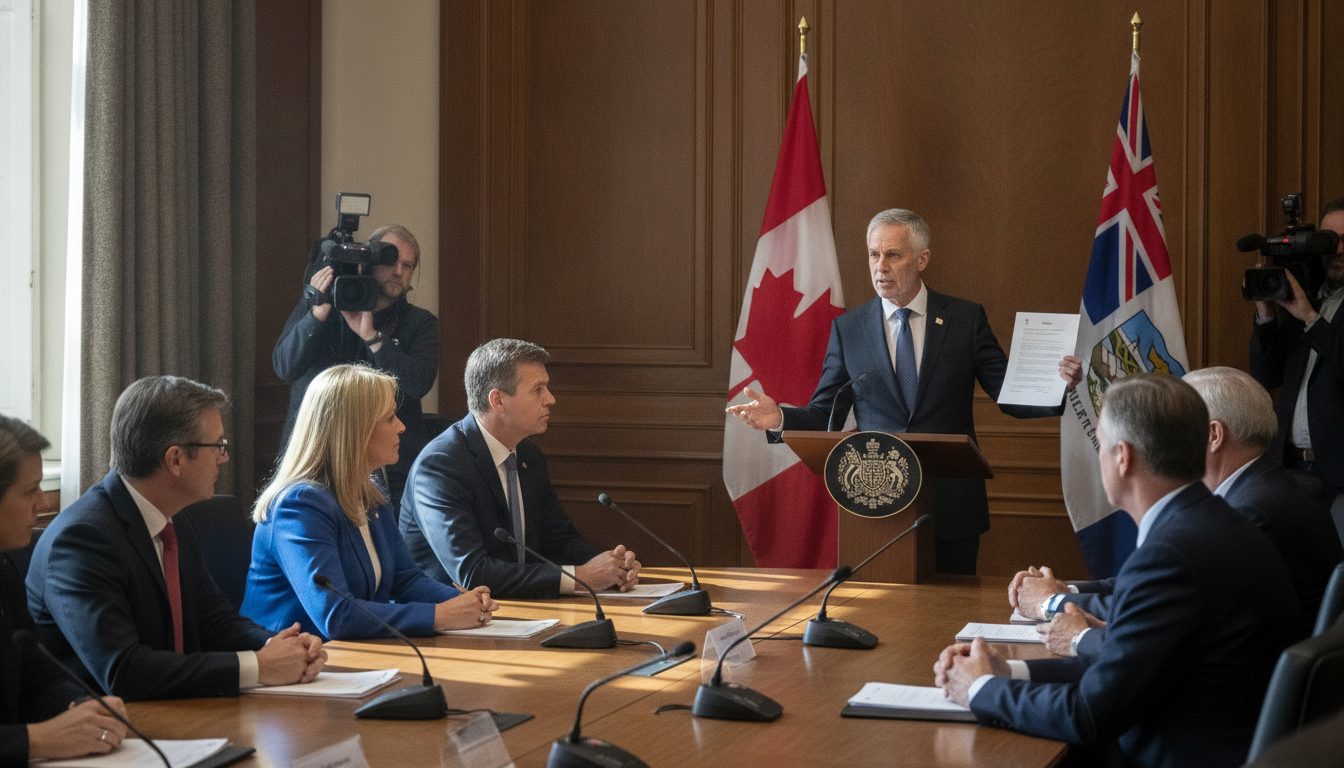
Canada’s federal health minister has formally raised concerns about Alberta’s planned roll‑out of an Alberta dual‑practice health‑care model in September, signaling potential conflict with the Canada Health Act and prompting a public exchange between Ottawa and Edmonton.
Marjorie Michel, the federal minister responsible for safeguarding the national framework for insured health services, sent a letter to Alberta officials on July 24 asking the province to ensure the new approach does not undermine access to publicly insured care.
Alberta passed the Health Statutes Amendment Act, 2025 (No. 2) — commonly referred to as Bill 11 — late last year, and the provincial government argues the measure will expand options for patients and alleviate pressure on public services.
The debate now centers on how the dual‑practice model will operate in practice, what safeguards will be in place, and whether federal enforcement measures, including funding adjustments, could be triggered.
Federal minister warns dual-practice could conflict with Canada Health Act
Marjorie Michel has framed Ottawa’s concern as a duty to protect universal access to medically necessary services, saying federal authorities will monitor whether the province’s changes preserve care based on need rather than ability to pay.
A spokeswoman for the minister confirmed the July 24 letter and said Ottawa will continue close dialogue with Alberta while the province prepares to implement the model.
The federal position highlights the Canada Health Act’s longstanding objective to prevent user charges or extra‑billing that would create a two‑tier system for medically necessary services.
By drawing federal attention, the minister has signalled that Ottawa views this policy change as more than a provincial administrative matter.
Alberta government defends Bill 11 and scope of private care
Alberta officials have maintained that their authority to regulate the delivery of health care falls within provincial jurisdiction and that Bill 11 does not contravene the Canada Health Act.
Adriana LaGrange, the provincial minister responsible for hospital and surgical health services, has said the legislation permits private practice outside the publicly insured system and that Albertans who choose to pay for eligible elective procedures should be able to do so at home.
The provincial government asserts the model will reduce wait times in the public system by enabling eligible physicians to split time between publicly insured work and privately financed care.
Officials have also emphasized safeguards, including requirements that physicians do a minimum number of hours in the public system before engaging in private practice.
How the dual-practice model will be implemented in September
Under the new framework, physicians who meet specific eligibility criteria will be permitted to provide services in both public and private settings, subject to administrative rules set by the province.
One of the centrepiece conditions is a minimum public‑service commitment; doctors must complete a baseline number of hours in the publicly funded system to qualify to practise privately.
The province has said the program will be phased in starting in September and will apply to eligible elective surgeries and other non‑emergency services that are not already privately insurable under federal rules.
Details remain to be finalized about licensing, billing oversight, and where privately paid procedures may be performed, and officials have said they will monitor impacts on public capacity.
Health policy experts flag risks to public access and enforcement gaps
Several academics and policy analysts warn that allowing physicians to divert some practice into private pay settings risks creating incentives that could weaken access for patients who rely entirely on the public system.
Steven Lewis, a Canadian health policy analyst, has argued that reserving portions of care for privately paying patients could siphon resources and attention away from public clinics and hospitals, undermining equitable access.
Observers point to examples such as boutique membership clinics, where private payment models have grown in recent years and enforcement of public billing rules has been uneven.
Those gaps, experts say, make rigorous monitoring essential if the public system is to be shielded from unintended erosion.
Legal and fiscal levers Ottawa could use if violations are found
If federal authorities determine the provincial model contravenes elements of the Canada Health Act, Ottawa has several enforcement mechanisms available, including negotiations, enhanced oversight and, as a last resort, withholding or reducing portioned federal cash transfers.
Legal scholars note that the Canada Health Act is written to discourage extra‑billing and user fees for insured services, and the federal government has precedent for using fiscal leverage to influence provincial health policy.
Lorian Hardcastle, a health law expert at the University of Calgary, has said Ottawa’s involvement is justified because federal funds support provincial delivery and because any policy that affects access to medically necessary services raises national concerns.
At the same time, some analysts caution that political and patient‑care consequences would follow any move to claw back funding, making such steps complex and fraught.
Questions about monitoring, enforcement and patient impact remain
Both provincial and federal officials acknowledge that implementation will require clear rules, data collection and transparent reporting if the dual‑practice experiment is to avoid undermining public care.
Experts say Alberta will need robust monitoring systems to track where physicians spend their time, which procedures are delivered privately, and whether wait lists for public services change as the private option expands.
Stakeholders are calling for clarity on how the province will prevent private clinics from encroaching on publicly insured services and how complaints and disputes will be handled.
Patient advocates add that any policy shift should be accompanied by public reporting on wait times, capacity and outcomes so residents can assess whether the changes improve or worsen access.
Marjorie Michel’s office has underlined that Ottawa’s role is one of guardian of the national principles codified in the Canada Health Act, and that the federal government will continue to press for assurances Alberta will not create a two‑tier system.
Alberta ministers have reiterated that the province’s policy is designed to keep care in province for residents who would otherwise travel for privately paid procedures, and that they will enforce the minimum public service requirements for physicians who opt into the dual pathway.
Some health policy specialists say the policy debate now turns on operational detail rather than principle: the exact reporting requirements, the thresholds for physician participation, and the mechanisms for auditing compliance.
Observers also note that even where formal rules exist, enforcement capacity matters; provinces must be able to audit billing practices and act swiftly where violations occur to prevent systemic drift toward privatization.
Physicians and professional associations will play a critical role in shaping how the model works on the ground, including defining who qualifies, how scheduling balances public and private commitments, and how conflicts of interest are avoided.
Public confidence will rest on transparent information about which services remain publicly available, how quickly public patients can expect care, and whether the presence of private options changes the behaviour of providers in the public system.
For patients, the immediate practical considerations are clear: those who can pay privately may gain more local options for elective procedures, while those relying solely on public insurance will be watching to see whether wait times and access improve, worsen, or stay the same.
Health system researchers warn that any measurable shift in wait‑list dynamics, physician supply to public facilities, or out‑of‑pocket costs should be tracked and made available to inform policy adjustments.
As September approaches, conversations between Ottawa and Edmonton will likely intensify, with federal officials seeking guarantees about oversight and provincial officials defending their jurisdiction and policy choices.
The unfolding exchange underscores broader tensions in Canadian health policy about the balance between provincial innovation and national standards, and it will be closely watched by other provinces considering similar approaches.
