
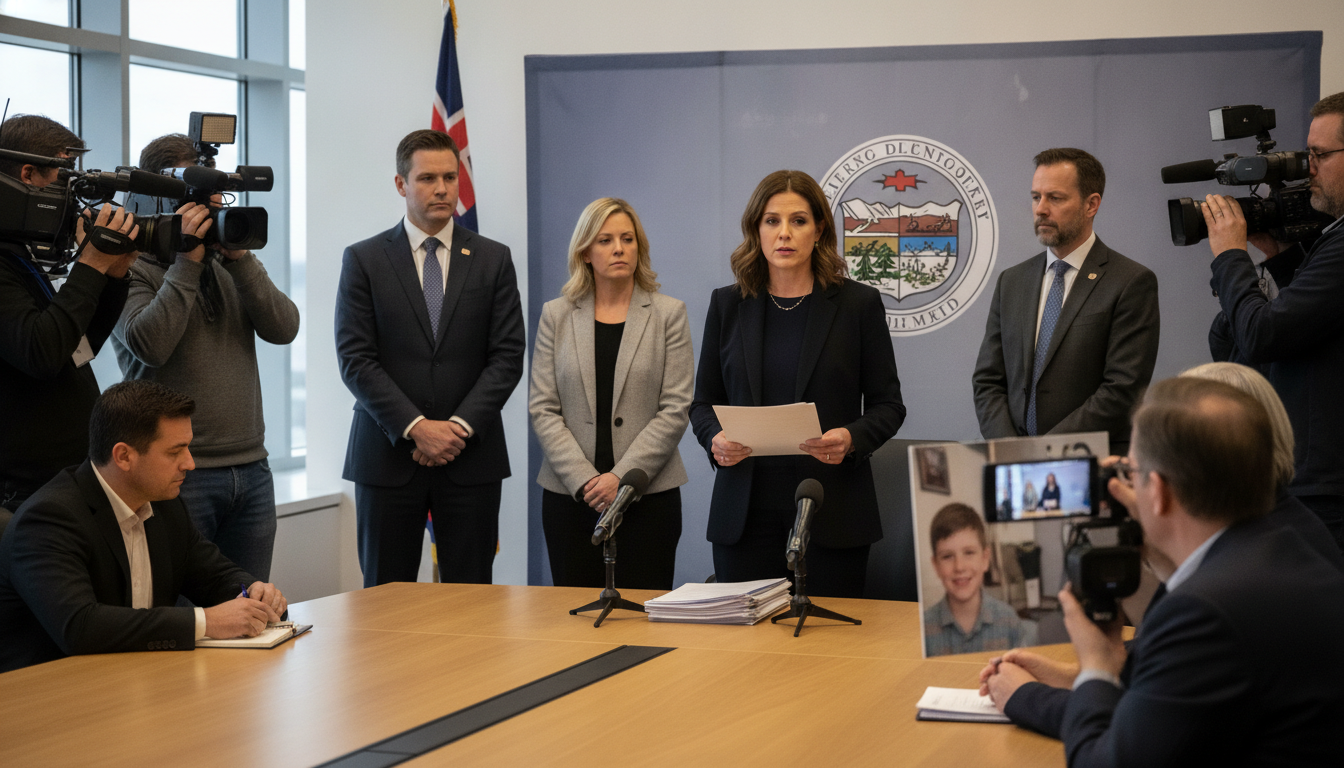
Alberta launches Amber Alert review and probes Calgary day‑home policies after boy’s death
Alberta launches an Amber Alert review and probes Calgary day‑home policies after the death of 11‑year‑old Parker Wells; police, advocates and families will be consulted.
The Alberta government announced an Amber Alert review and a separate examination of day‑home policies after the death of 11‑year‑old Parker Wells, an autistic child who vanished from a northern Calgary day home. The government said it will reassess the criteria for issuing alerts and invite input from police, disability advocates and community organizations as part of that review. Public Safety Minister Mike Ellis described the case as heartbreaking and said officials want to identify lessons to prevent similar tragedies.
Province to review Amber Alert criteria
The provincial review will examine the conditions under which an Amber Alert can be activated and whether existing thresholds adequately reflect the needs of children with disabilities. Officials said the review will consider operational factors such as timing, information sharing, and public notification mechanisms. The goal is to determine whether the system can be adjusted to better protect vulnerable children without undermining the alerting framework.
The government indicated the review will include consultations with law enforcement agencies, disability advocates and community groups to broaden the perspective on how alerts are used. That engagement is intended to surface gaps in practice and policy that may affect response times or public awareness. Analysts and stakeholders will be asked to propose practical recommendations that can be implemented within provincial and municipal frameworks.
Circumstances of Parker Wells’ disappearance and recovery
Parker Wells was reported missing from a day home in northeast Calgary, prompting a large, two‑week search that involved hundreds of officers and volunteers. Searchers drew on community networks and even played familiar music in the hope of attracting the child, while investigators coordinated ground, vehicle and canine searches. Authorities later located Parker’s body inside an underground pipe system beneath a major freeway in Calgary’s north end.
Police confirmed the recovery took place late in July and described the discovery as the culmination of an intensive investigative effort that spanned days. The boy’s disappearance and subsequent death have raised questions about supervision, access to escape routes and the timeliness of public notifications. Municipal and provincial agencies face pressure from grieving residents to explain how such an outcome occurred despite extensive search operations.
Calgary Police to conduct internal review of response
Calgary Police Service announced it will review its investigative and operational response to Parker’s disappearance, focusing on timelines, resource deployment and decision‑making. The internal review will examine how missing‑person protocols were applied and whether response measures could be improved for children with special needs. Police said the process aims to identify lessons that can strengthen future searches and investigations.
Investigators will also assess interagency communication and the role played by community volunteers and external organizations during the search. The review is expected to consider whether different investigative priorities or coordination practices might have led to an earlier discovery. Police cautioned that conclusions will await a complete internal assessment and any potential findings from parallel inquiries.
Day‑home practices and regulatory scrutiny
The provincial announcement included a separate probe of the day‑home where Parker was last seen, with officials signaling a review of licensing, supervision requirements and safety practices. Day homes operate under provincial regulations intended to ensure safe care, and the review will seek to determine whether those rules were followed and whether they remain sufficient. Regulators will examine staffing ratios, door and exit security, and record‑keeping to identify any shortcomings.
Families and advocates have asked for clarity on how day‑home inspections are conducted and whether oversight mechanisms need strengthening. The government said the inquiry into day‑home practices will proceed alongside the Amber Alert review, with findings from both exercises used to inform possible policy and regulatory changes. Any identified breaches of standards could prompt enforcement action or revisions to licensing conditions.
Input from disability advocates and family groups
Government officials underscored that the Amber Alert review will incorporate perspectives from disability advocates and family organizations that represent children with diverse needs. Advocates have long argued that standard alerting criteria may not fully account for the particular vulnerabilities of children with autism or other developmental disabilities. Their input is expected to focus on tailoring response protocols and public messaging to reflect these additional risks.
Parents and community groups said they want improvements that ensure missing‑child responses are both swift and sensitive to individual needs. Advocates recommended training for search teams on interacting with children who may respond differently to standard calls or cues. The government indicated it will actively seek these viewpoints as part of a comprehensive consultation plan.
Calls for changes to emergency alerting and public communication
The case has prompted broader discussion about whether emergency alerting tools and public communications can be adapted to trigger faster or more targeted responses. Some stakeholders argue for a review of whether Amber Alerts should be available under a wider set of circumstances, while others warn that lowering thresholds could produce unnecessary public alarm. Officials said the review will weigh trade‑offs between urgency and accuracy to minimize both missed opportunities and false alarms.
Technology and message delivery will be part of that conversation, with attention to which channels reach the most people quickly and how messages can include critical details for locating vulnerable children. The province will also examine whether clearer guidance is needed for front‑line responders on recommending alerts and engaging media and community networks. The intention is to produce balanced recommendations that enhance protection without compromising the system’s credibility.
Community response and memorial events
Calgary residents and community organizations held vigils and memorials to honour Parker and support his family, drawing broad expressions of grief across the city. Volunteers who participated in the search described a somber atmosphere after the recovery and called for constructive reforms to prevent future losses. Local leaders and faith groups joined families in calling for renewed attention to child safety and supports for caregivers.
Officials said they recognize the community’s pain and the desire for swift action, but cautioned that careful review is required to ensure reforms are effective and legally sound. The province and the city pledged to keep the public informed about the scope and timeline of the inquiries. Community groups asked for opportunities to participate in consultations and for interim measures to improve day‑home oversight.
What the reviews could change for parents and providers
If the Amber Alert criteria are adjusted, parents and caregivers could see faster public mobilization in certain missing‑child cases, particularly involving children with disabilities. Changes might include revised definitions of imminent danger, expanded discretion for police to request alerts, or tailored messaging that acknowledges specific needs. For day‑home operators, the probe could lead to updated licensing rules, more frequent inspections, or new training standards.
Any legislative or regulatory changes would require careful drafting and likely consultation with municipal governments and service providers. The province indicated it aims for practical reforms that improve safety without creating undue administrative burdens for small operators. Officials also said support for families and caregivers will be a priority in subsequent policy discussions.
Next steps and timeline for reporting
The Alberta government said the review will begin immediately and will include meetings with police services, disability organizations and community representatives. No firm deadline was set for the completion of the review, but officials committed to reporting findings and recommendations in a timely manner. Calgary Police Service likewise said its internal review will proceed and that results will be shared when available.
Family members and community leaders have urged transparency throughout both processes, requesting regular updates and clear timelines. Provincial officials said they will outline consultation plans and reporting milestones as the work unfolds. Observers expect the inquiries to generate public recommendations that could be considered during upcoming legislative sessions or regulatory updates.
The loss of Parker Wells has prompted a wide‑ranging response across government, law enforcement and the community in Calgary, with an emphasis on learning from the case to better protect vulnerable children. The Amber Alert review and the day‑home probe are intended to produce concrete steps that reduce risks and improve emergency response. Families, advocates and officials say they will watch the reviews closely and press for changes that are both swift and sustainable.
