
Calgary council directs planning for a 2027 property tax increase as departments seek major budget boosts
Calgary council narrowly voted to guide administration to increase property tax revenue in 2027, signaling a likely Calgary property tax increase as officials balance service demands and capital projects.
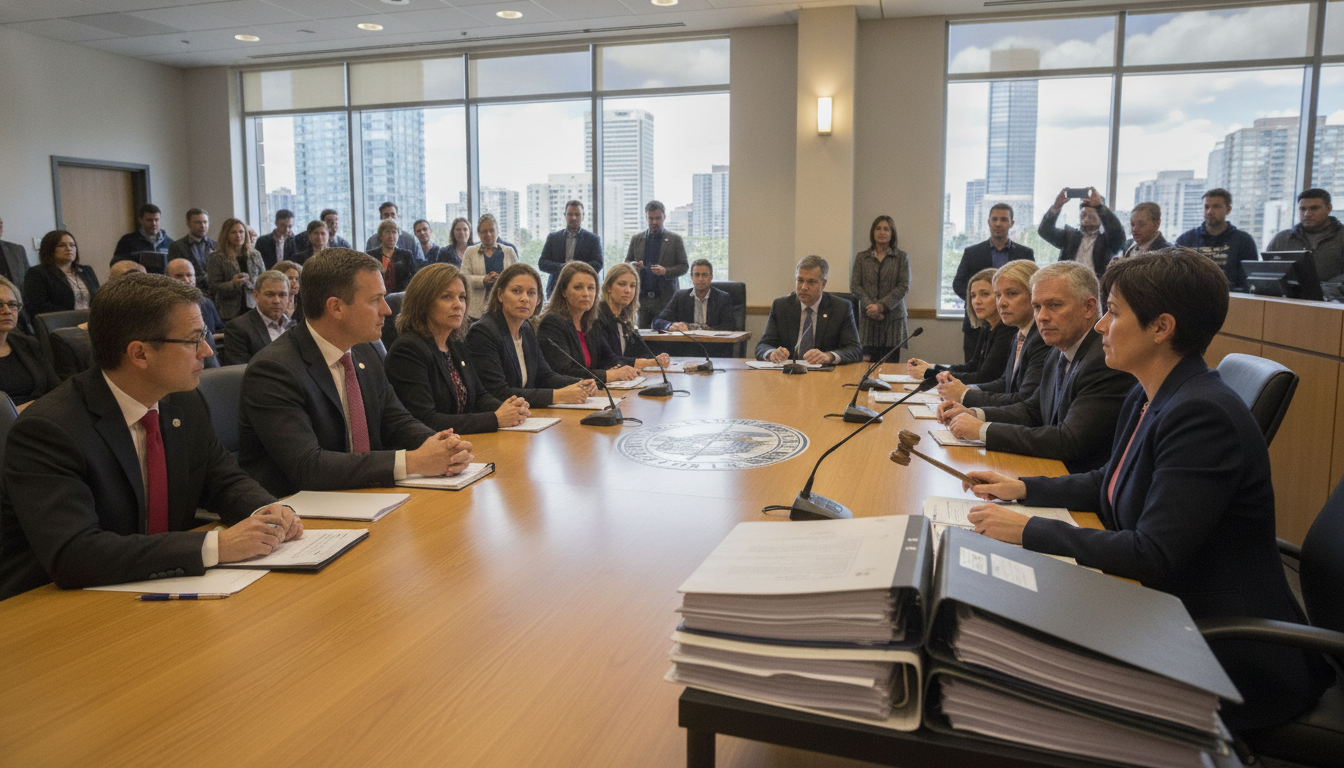
City council spent several hours in a closed session this week debating the framework for the upcoming four-year budget and emerged with a tight 8–7 vote to give administration direction on raising property tax revenue in 2027 as part of planning for the 2027–30 budget cycle.
The move does not set a final rate, but it formally instructs staff to model and prioritize spending with an assumed increase in tax revenue next year.
Mayor Jeromy Farkas told reporters the measure reflects a need to address underfunded services and infrastructure rather than an intent to settle on a specific percentage at this stage.
Council narrowly approves planning direction to raise property tax revenue for 2027
Council’s 8–7 decision followed a closed-door meeting with city administration that stretched for several hours and marked the final council session before the summer recess.
The resolution asks administration to model scenarios that increase property tax revenue in 2027 to help refine, scale and prioritize service and capital spending across the four-year plan.
While the recommendation does not set a tax increase figure, the close vote exposed sharp divisions among councillors over how quickly to rebuild reserves and fund service needs without overburdening households.
Mayor frames increase as ‘catch-up’ on underfunded services and infrastructure
Mayor Farkas framed the move as an attempt to correct years in which previous councils underfunded core services and deferred infrastructure investment.
He said council must play “catch-up” to stabilize long-term service delivery and to address urgent maintenance and system failures that have accumulated over time.
Farkas stopped short of offering a numerical estimate of how a Calgary property tax increase would translate to individual bills, saying only that council will aim to identify the exact spending required to solve the problems before proposing a specific rate.
Public safety and transit departments signal sizable budget requests
Several city departments have already indicated they will seek sizeable increases under the four-year plan, adding pressure to the revenue side of the ledger.
The Calgary Police Service has described its request as substantial, designed to support a multi‑year hiring plan that would add hundreds of officers to the force over the next four years.
Chief Katie McLellan and other service leaders joined council during the closed session to outline needs that include new recruits, training, and operating costs tied to any growth in personnel.
Fire services, transit and facilities also ask for more operating money
Calgary Fire and Calgary Transit have separately signalled they will require higher funding levels in the coming budget cycle to maintain service standards and meet rising demand.
Transit officials point to fleet renewal, service reliability and route expansion needs, while fire officials emphasize recruitment, specialized equipment, and station maintenance.
Those operational pressures compound the demand for capital dollars and contribute to projections that a property tax increase may be one necessary lever to close funding gaps.
Major capital commitments escalate fiscal pressure
Council discussions also reflected a cluster of large capital and one-time commitments that would increase the city’s spending profile over the coming decade.
Among the proposals under consideration are $691 million earmarked for prioritized recreation projects through the GamePLAN strategy and an estimated $190 million targeted to upgrade aging playgrounds across the city.
Separately, the Werklund Centre modernization saw its city contribution recommended to nearly double from $63 million to $125 million, further tightening available capital capacity.
Administration projects $49 billion in infrastructure needs over next decade
City staff have told councillors that addressing Calgary’s growing infrastructure gap will require substantial investment, with administration estimating roughly $49 billion of work over the next ten years.
That figure includes renewals for roads, pipes and facilities, as well as expansion needs to keep pace with population and economic growth.
Business groups and civic stakeholders called the budget cycle a generational opportunity to invest in housing, infrastructure and cultural assets while warning that actions must avoid imposing an unsustainable long‑term financial burden.
Councillors divided over affordability and spending priorities
The close council vote reflected an ideological split among members about the pace and scale of new spending and how much to pass to taxpayers.
Ward 13 Councillor Dan McLean voted against the planning direction, saying the projected tax impacts under discussion would be intolerable for many Calgarians and that council should scrutinize requests line by line.
Ward 10 Councillor Andre Chabot warned that some “nice‑to‑have” projects may need to be deferred while the city addresses essential infrastructure deficits and core services.
Balancing one-time projects with ongoing operating costs
Councillors and analysts cautioned that committing to major capital projects without corresponding operating budgets can create future fiscal strain.
Operational costs for new facilities, increased frontline staffing, and lifecycle maintenance must be factored into any long-term budget models to avoid placing unanticipated demands on future tax years.
Several members urged the administration to produce transparent scenarios showing the operating impacts of capital commitments alongside tax rate projections.
Timeline: draft budget in fall, public deliberations begin in November
Council expects a draft of the four-year budget to be released publicly in the fall, with formal deliberations scheduled to begin in November.
The draft will present proposed spending levels, revenue assumptions and tax scenarios that councillors will debate in open council sessions and public hearings.
Residents should expect a period of public consultation and line‑by‑line reviews as council weighs competing priorities against affordability concerns.
Potential impact on homeowners and next steps for rate-setting
Although the planning direction opens the door to a Calgary property tax increase in 2027, the final rate will be determined through a sequence of staff modelling, council amendments and public input.
City staff will be asked to produce detailed tax and service scenarios that show how different revenue paths affect households, businesses and service levels across the city.
Council members who oppose large near-term increases signalled they will press for tighter expenditure controls, while proponents say modest, phased tax adjustments are necessary to prevent deeper infrastructure failure and higher costs later.
Calls for provincial and federal support to blunt municipal burden
Mayor Farkas and other civic leaders said municipal tax changes alone will not bridge the funding shortfall and that significant leveraged funding from provincial and federal governments will be required.
Infrastructure failures such as the recent rupture of the Bearspaw feeder main — the second such break in under two years — have intensified calls for higher‑level government partnerships on critical systems.
Business organizations and community groups urged intergovernmental collaboration to maximize the impact of public funds and to protect local taxpayers from bearing the full cost.
Stakeholders urge measured approach to maximize long‑term value
Voices from the business community emphasized the need to use the budget cycle to make strategic decisions that yield durable benefits for quality of life and economic competitiveness.
Ruhee Ismail‑Teja of the Calgary Chamber of Commerce encouraged council to view the coming plan as a generational opportunity to invest in housing, arts and infrastructure while avoiding measures that could cripple the city’s finances over time.
That view underlines a common theme from the closed session: councillors must balance urgent repairs and service needs with careful fiscal stewardship.
What residents can expect during the consultation period
As the draft budget is prepared for public release, residents can anticipate a series of briefings, reports and consultation opportunities laid out by the city.
Staff will present the assumptions behind cost pressures and revenue options, and council will host meetings to hear from neighbourhoods, sector stakeholders and ratepayer groups.
Those sessions will be the primary venue for community members to influence priorities ahead of council’s final decisions on the 2027–30 budget.
Calgarians will see the first public picture of choices and trade-offs this fall when the draft budget appears, but specific details on how a Calgary property tax increase would affect individual households will only be available after staff complete detailed modelling and council advances a final package.
