
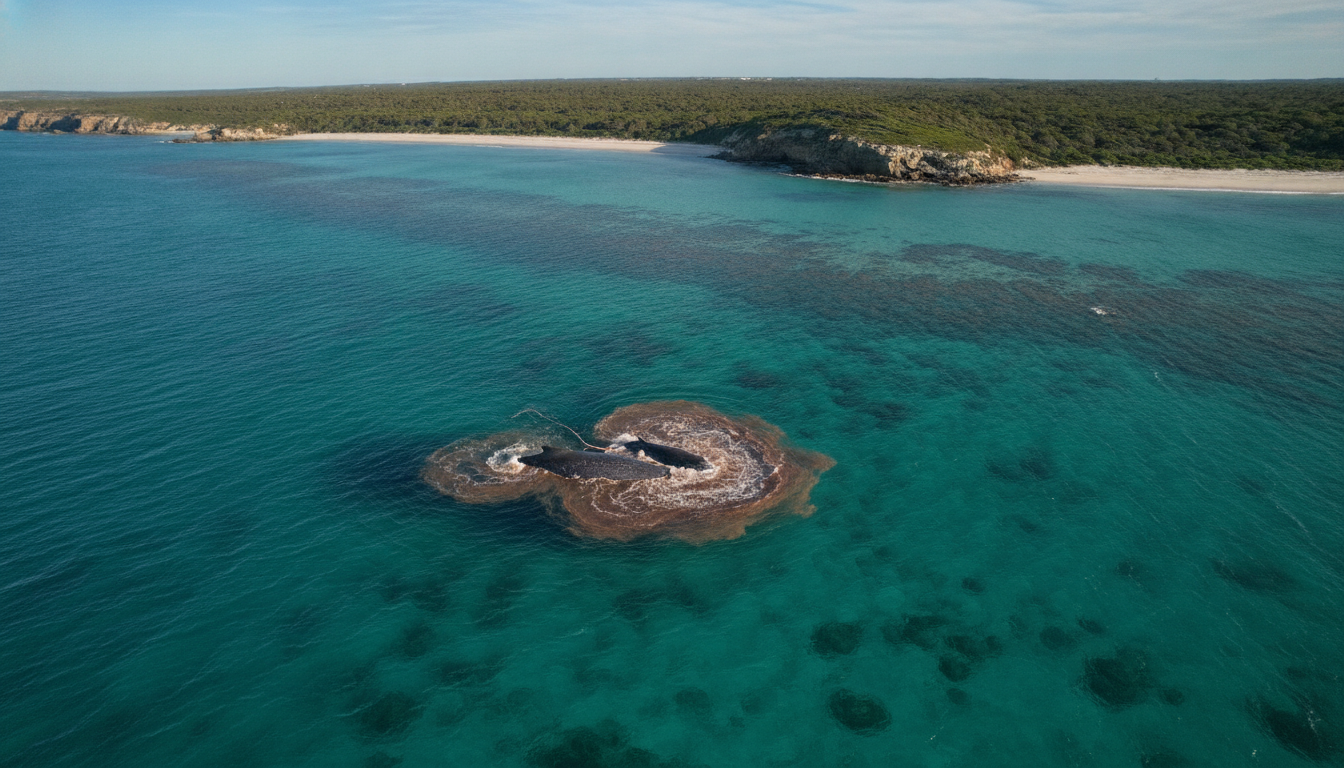
Drone Captures Rare Humpback Whale Birth Off Australia’s East Coast
Drone footage filmed July 28, 2026, shows a humpback whale birth off Australia’s east coast, drawing global attention to marine calving behavior and drone safety near wildlife.
A drone recorded a humpback whale giving birth in nearshore waters on July 28, 2026, and the footage was shared publicly on July 31, 2026. The clip shows a newborn calf surfacing amid water stained with blood, a dramatic but normal indicator of live birth in large whales. The footage has prompted scientists, conservationists and regulators to discuss calving patterns and the risks posed by unmanned aerial vehicles near marine mammals.
Drone Footage Captures Birth at Sea
The video, shot from a small unmanned aerial vehicle, documents the final stages of parturition and the calf’s first breaths at the surface. Observers can see the adult and newborn remain close together as the mother guides the calf upward through the water. The clarity of the images offers an uncommon real-time view of a humpback whale birth, a behavior rarely captured in the wild.
Visual Details and Onsite Observations
Witnesses reported that the water around the animals took on a reddish tint as the birth progressed, which is consistent with bleeding associated with whale labor. The newborn appears to surface repeatedly while the mother positions herself to protect and support the calf. Local observers described a tense but brief interval before the pair began to move steadily away, suggesting the calf was taking its first coordinated swims.
Scientists Explain Humpback Calving Behavior
Marine biologists say blood in the water during delivery is not unusual and can be a sign of a successful birth rather than injury. Humpback mothers often deliver in shallower coastal waters where the young can more easily reach the surface for air and remain under maternal protection. Researchers caution that while the footage is valuable for study, individual births vary and scientists need more systematic observation to draw wider conclusions about calving locations and timing.
Concerns Raised Over Drone Proximity and Wildlife Disturbance
The presence of the drone has reignited debate over how close unmanned aircraft should approach marine mammals during sensitive behaviors. Conservation advocates warn that excessive noise or persistent aerial presence can stress whales and interfere with critical moments like nursing and bonding. Regulators and wildlife managers are reiterating that drones should maintain ample distance and that operators must follow local guidelines to avoid disturbing protected species.
Calls for Clearer Guidelines and Enforcement
Following the release of the footage, environmental groups urged authorities to review and tighten rules governing drone activity near wildlife hotspots. Some countries already restrict drone flights within specified distances of marine mammals, but enforcement remains inconsistent, particularly along busy coastlines. Observers argued that improved signage, community outreach and targeted patrols could reduce inadvertent disturbances by recreational drone pilots.
Conservation Context and Humpback Recovery
Humpback whale populations have shown notable recovery in many regions since commercial whaling declines, but calves remain vulnerable to threats such as ship strikes, entanglement and habitat disturbance. Calving success is a vital indicator of population health, and footage that documents births can help researchers estimate survival rates and better understand migration and breeding grounds. Experts stressed that responsible observation—whether by boats, drones or shore-based viewers—can support conservation if it’s paired with strict non-interference practices.
The footage also highlights the value of modern technology for marine science; high-resolution drones can deliver detailed behavioral data without placing researchers at sea. At the same time, scientists insist that any observational gain must be balanced against the potential for human-caused stress to animals during critical life stages.
Local authorities and marine agencies said they are reviewing the incident to determine whether any regulations were breached and to identify steps that can prevent disturbance at future calving sites. Meanwhile, the wider community of researchers and conservationists is urging patience and restraint from the public when unusual wildlife events are observed near shore.
The rare recording of a humpback whale birth has prompted renewed attention to how humans observe and interact with marine life, underscoring both the scientific value of well-managed monitoring and the need for clear rules that protect vulnerable animals during delicate moments.
