
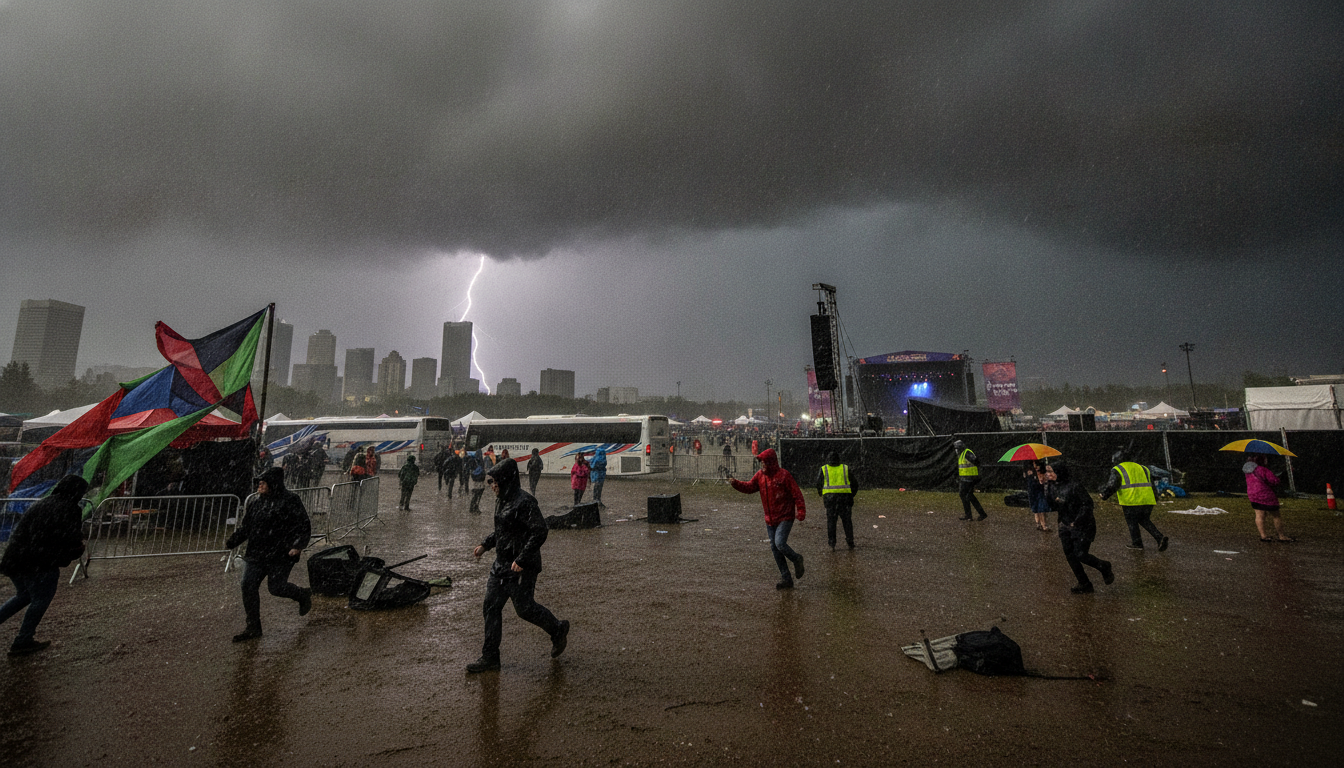
Edmonton festivals face a summer of extreme weather as organizers adapt safety, insurance and operations
Edmonton festivals are contending with an unusually stormy summer that has forced evacuations, cancellations and a rethink of safety and insurance at several major events across the city and region.
This week’s spate of storms has put festival planning under intense scrutiny, prompting organizers from Big Valley Jamboree to Taste of Edmonton to KDays to change on-the-ground procedures and public messaging as they manage large crowds and unpredictable conditions.
Summer lineup and which events were affected
Several headline events scheduled through late July and early August continued with altered programming as weather systems moved through central Alberta. Big Valley Jamboree in Camrose, Taste of Edmonton downtown, KDays, Neon Skies and multiple smaller festivals all reported weather-related disruptions during the peak festival period.
Organizers say the run of intense storms and record summer rainfall has been unprecedented in scale for parts of the region, forcing a mix of evacuations, cancellations and rapid operational pivots across open-air stages, midways and public plazas. Attendance figures have varied: some events recorded higher turnout despite the weather, while others lost significant portions of planned programming.
Big Valley Jamboree enhances on-site meteorology and communications
Big Valley Jamboree, held July 30 to August 2 in Camrose, has mobilized continuous weather monitoring and expanded fan notifications as part of its event-day protocols. Organizers said they maintain an on-site meteorologist during operations and have multiple communication streams — text alerts, social media updates and PA announcements — ready to push changes to attendees.
The festival, which has previously experienced severe storm impacts including a 2009 stage collapse and a storm cancellation affecting headliners in 2024, emphasized a layered approach to risk mitigation. Behind the scenes, crews are rehearsing evacuation flows and contingency stage plans to minimize confusion and maintain safety if storms develop.
Taste of Edmonton activated emergency plans and evacuated crowds
Taste of Edmonton, the city’s 11-day downtown culinary festival, activated its emergency response plan twice after two sizable storms swept through Churchill Square during its July run. Organizers moved people off the grounds both on an opening Saturday and at the event’s closing weekend, citing public safety and on-the-ground advisories from police and emergency partners.
Festival leadership said lessons learned from the first evacuation made the second operation more coordinated, and that the decision to clear grounds was made quickly given the scale of the crowds. Despite the interruptions, Taste of Edmonton reported overall attendance increases compared with prior years, a fact organizers attributed to strong programming and high walk-up interest despite the weather.
KDays and the new calculus around rain insurance for fairs
KDays, Edmonton’s large annual fair, experienced nights of intense weather that led to the cancellation of two music headliners and to groups sheltering indoors until systems passed. Organizers reported that many patrons were able to relocate to indoor venues or shelter in place at fairground buildings, limiting harm but interrupting scheduled entertainment.
This year marked a shift in risk-transfer strategy for KDays, which purchased rain insurance for the first time. Officials said that, given recent extreme-weather experiences, cancellation and weather insurance are becoming essential considerations for festival budgets and will likely shape future contracts and planning decisions.
Smaller festivals and Beaumont Music Festival face sharper consequences
Not all events were able to absorb the impact. The Beaumont Music Festival cancelled its second day due to extreme weather and related financial pressures, placing the event’s future in doubt. Organizers acknowledged that recovering from a weather-related cancellation compounded existing operational and fiscal challenges, making a multi-day outdoor festival less likely next season.
The Works Art & Design Festival also experienced heavy downpours during a prolonged rainfall event, while other pop-up and neighborhood festivals reported infrastructure damage, lost vendor revenue and logistical headaches. These smaller-scale events generally have thinner financial cushions and fewer contractual protections than larger festivals, increasing vulnerability to weather shocks.
Citywide costs, cleanup and the impact on suppliers and contractors
City officials and industry sources estimated significant cleanup and repair costs in the wake of summer storms, with municipal tree removal, park repairs and public infrastructure restoration adding to festival-related expenses. The cumulative cost to venues, vendors and municipal services has prompted stakeholders to tally direct losses and plan for longer-term remediation of affected sites.
Local suppliers, from stage builders to food vendors, reported increased outlays for repairs, replacement of damaged equipment and lost revenue from cancelled performances. Event insurance providers are now being closely consulted to assess coverage options, clarify exclusions and determine how best to structure future policies to account for escalating weather volatility.
Organizers change planning, emergency protocols and fan guidance
Festival producers are adopting more rigorous risk-assessment routines, including hiring meteorologists, conducting live weather monitoring and rehearsing evacuation and sheltering procedures. Event playbooks are being updated to include specific trigger points for cancellation, delay or evacuation, and to document communication sequences for staff, vendors and public-safety partners.
Organizers are also advising attendees on practical steps: sign up for event text alerts, follow official social channels, identify nearest shelter locations on arrival and come prepared with layered clothing and waterproof gear. Promoters stressed that while festivals aim to proceed as scheduled, safety decisions will prioritize attendee and staff welfare over programming continuity.
Economic and cultural stakes for Edmonton’s festival season
Festivals contribute substantial cultural energy and economic activity to Edmonton and surrounding communities, supporting artists, hospitality, tourism and local businesses during the summer months. Weather-driven interruptions that force cancellations or scale-backs affect not only headline performers but also vendor livelihoods, seasonal employees and the broader local supply chain.
City tourism officials and festival networks are weighing strategies to protect the sector’s resilience, including pooled insurance options, municipal support for rapid-response cleanup and efforts to diversify event formats so that portions can migrate indoors or shift to hybrid delivery models when required.
Public safety partners and the role of emergency services
Police, fire and emergency medical services played a prominent role in the recent event responses, coordinating evacuations and advising organizers on imminent threats. Edmonton police officers and city emergency teams liaised with festival managers to trigger closures and to direct crowd flows when forecasts indicated escalating storm severity.
Emergency services emphasize that rapid information sharing and pre-established lines of communication between police, event staff and municipal weather services are critical in keeping large, dense crowds safe. Officials say investment in joint planning exercises and clearer public messaging will help reduce confusion and speed protective actions when weather rapidly deteriorates.
What this summer suggests for future festival planning
The recurring theme across events this season is the need to normalize a higher degree of weather-related contingency planning in festival budgets and operational playbooks. Organizers are likely to incorporate more conservative safety margins, secure flexible artist contracts with weather clauses and pursue insurance models that reflect heightened risks.
At the same time, festival teams are exploring infrastructure investments — from more robust temporary structures to modular indoor fallback venues — that provide program flexibility without eroding the visitor experience. The challenge will be balancing cost, accessibility and the open-air atmosphere that defines many Edmonton festivals.
Local cultural leaders say continued collaboration across events could reduce costs and improve responses, whether through shared meteorology services, pooled insurance arrangements or cross-promotional sheltering options. Such cooperative measures may offer a pathway to maintain Edmonton’s vibrant summer calendar in the face of increasingly volatile weather.
For attendees, the practical takeaway is to stay informed and prepared. Sign up for organizer alerts, carry basic rain protection, know where to seek shelter and plan travel contingencies if storms are forecasted.
Organizers stress that the festival experience remains a priority, but safety is the overriding consideration. Fans and performers alike can expect organizers to take early and decisive action when severe weather threatens.
This season’s weather disruptions have prompted a rapid evolution in how Edmonton festivals plan for, respond to and insure against extreme weather, reshaping expectations for organizers and audiences alike.
