
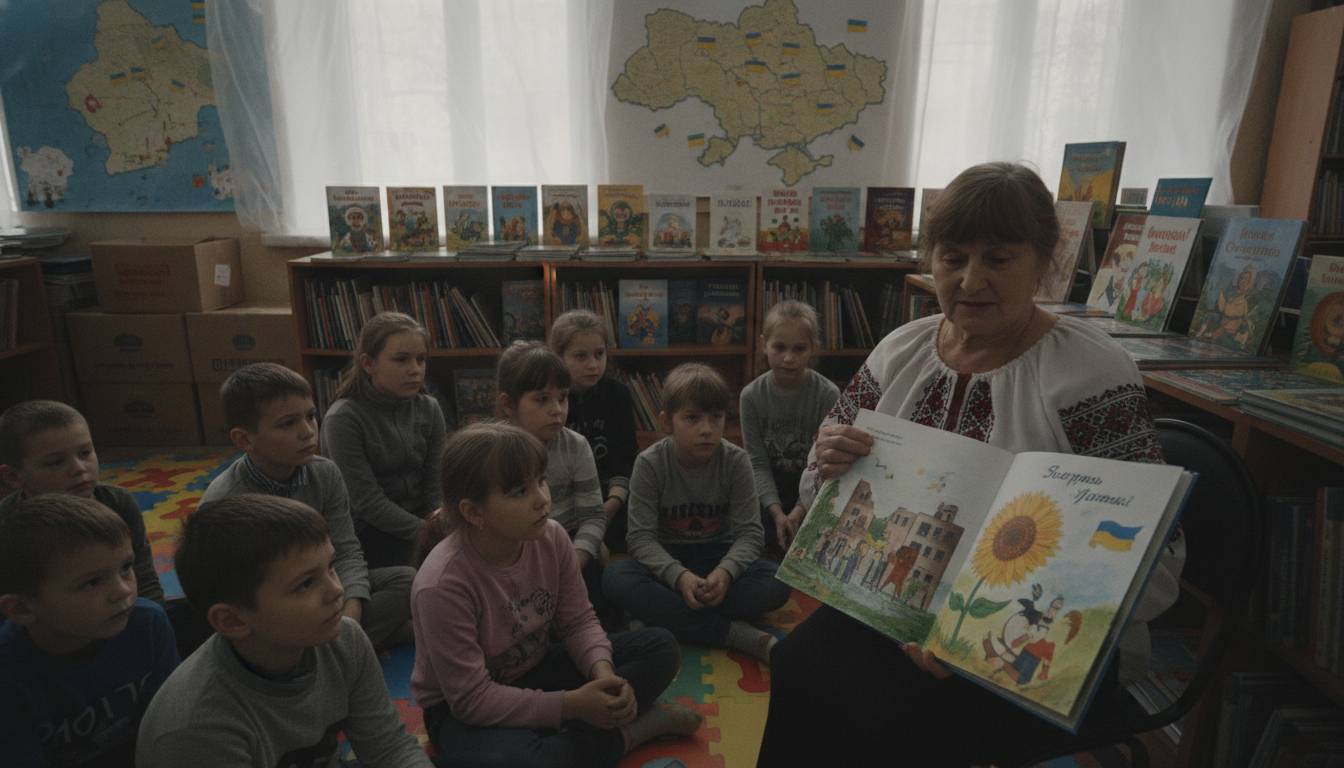
Ukrainian children’s books about the war offer parents tools to explain death, displacement and defense
Ukrainian children’s books about the war are rising, confronting loss, bombardment and military life and offering parents simple language to help children cope.
Surge in publishing for young readers
Since Russia launched its full-scale invasion in February 2022, Ukrainian children’s books about the war have proliferated across bookstores, schoolrooms and library shelves. Publishers and independent authors alike have produced dozens of titles that range from picture books using animals to more explicit accounts of evacuation, loss and service. Scholars and booksellers say the output is unprecedented in scale for a single conflict in modern Ukrainian publishing.
The trend reflects a deliberate effort by parents, teachers and mental health professionals to create materials that let children name and process what they see and hear. Many of the new volumes are short, illustrated and written in a tone intended to be accessible to very young readers while offering adults a script for difficult conversations.
Stories that teach grief and resilience
Authors are tackling topics that once might have been avoided in children’s literature, including funerals, missing fathers and the terror of bombardment. Several recent books follow a child’s perspective as they confront the absence of a parent or the destruction of familiar places, providing concrete language to discuss death and separation. Illustrations often soften the narratives, but the emotional arc is plain: recognition of loss, gradual acceptance and the memory work that follows.
Psychologists and educators involved in the projects say the books function as a guided entrance into trauma processing. By framing traumatic events in age-appropriate scenes — for instance, showing a child watching planes overhead or a small household coping with damage — authors give caregivers tools to respond to questions children will ask.
Parents and schools using books as conversation starters
Across Kyiv and other regions, parents report turning to these titles at home after nights of sirens or following major attacks. Some mothers and fathers say they choose stories that reflect their immediate experience — displacement, broken infrastructure, missing family members — and then use the pages to explain what their children have witnessed. School directors and librarians have staged theatrical readings and classroom discussions that encourage children to speak about their feelings instead of suppressing them.
Educators note that the books also help normalize children’s fear. In many stories characters are frightened, yet supported by adults or community figures, which teachers say models healthy responses to stress. For displaced families, books addressing exile and new communities provide a vocabulary for change and loss without framing it as shameful or unspeakable.
Authors channeling personal loss into narratives
Several writers creating these books draw directly on their own experiences, including those who lost family members in the fighting. One psychologist-turned-author began writing a simple story to explain to her toddler why his father no longer returned home; after the father was killed, she expanded that work into a follow-up that addresses grief more explicitly. That book, like others by family members of combatants, balances honest depictions of death with consoling imagery and the reassurance that love endures.
Authors and illustrators emphasize clarity over sentimentality. Their stated aim is not to politicize children but to equip them with truthful yet manageable explanations that caregivers can use to guide emotional recovery.
Military life, new vocabulary and patriotism in children’s pages
Beyond grief, many recent titles introduce elements of military life and national defense in child-friendly terms. Encyclopedic picture books explain service roles, vehicles and even air-defense systems, while narrative texts personify weapons or pilots to create archetypal defenders. Parents who read such books with their children say they help demystify reports from the front and give youngsters a framework to understand why neighbors go off to fight.
This inclusion of defense-related content has also contributed to a broader cultural shift: terms like “veteran,” “paratrooper” and names of equipment have entered everyday conversations and the lexicon of classroom learning. For some families, these books are part of a conscious effort to cultivate civic identity and resilience in the face of ongoing hostilities.
Therapeutic aims and a change in cultural memory
Scholars tracking the phenomenon describe it as part of a deliberate break with older cultural patterns that discouraged open discussion of suffering. One researcher counted nearly two hundred new children’s titles addressing the conflict, and called the output “without historical precedent” for Ukraine. Those working in child development say this visibility of trauma is protective: children who can name and narrate an experience are better able to integrate it into their lives than those who hide it away.
Libraries, schools and mental-health practitioners are incorporating these books into programs for displaced children and those living near active fronts. The combination of story, illustration and adult facilitation appears to be shaping not only immediate coping strategies but also long-term cultural memory about the war.
Children’s books about the war in Ukraine, then, serve multiple roles: as practical guides for conversations adults dread, as tools for schools to encourage expression, and as artifacts of a society attempting to teach a new generation about conflict, sacrifice and survival in ways that are honest but humane.
The publishing surge shows no sign of waning; authors, caregivers and educators continue to produce and use these materials as the nation adjusts to a conflict that has become an enduring part of daily life for many Ukrainian families.
