
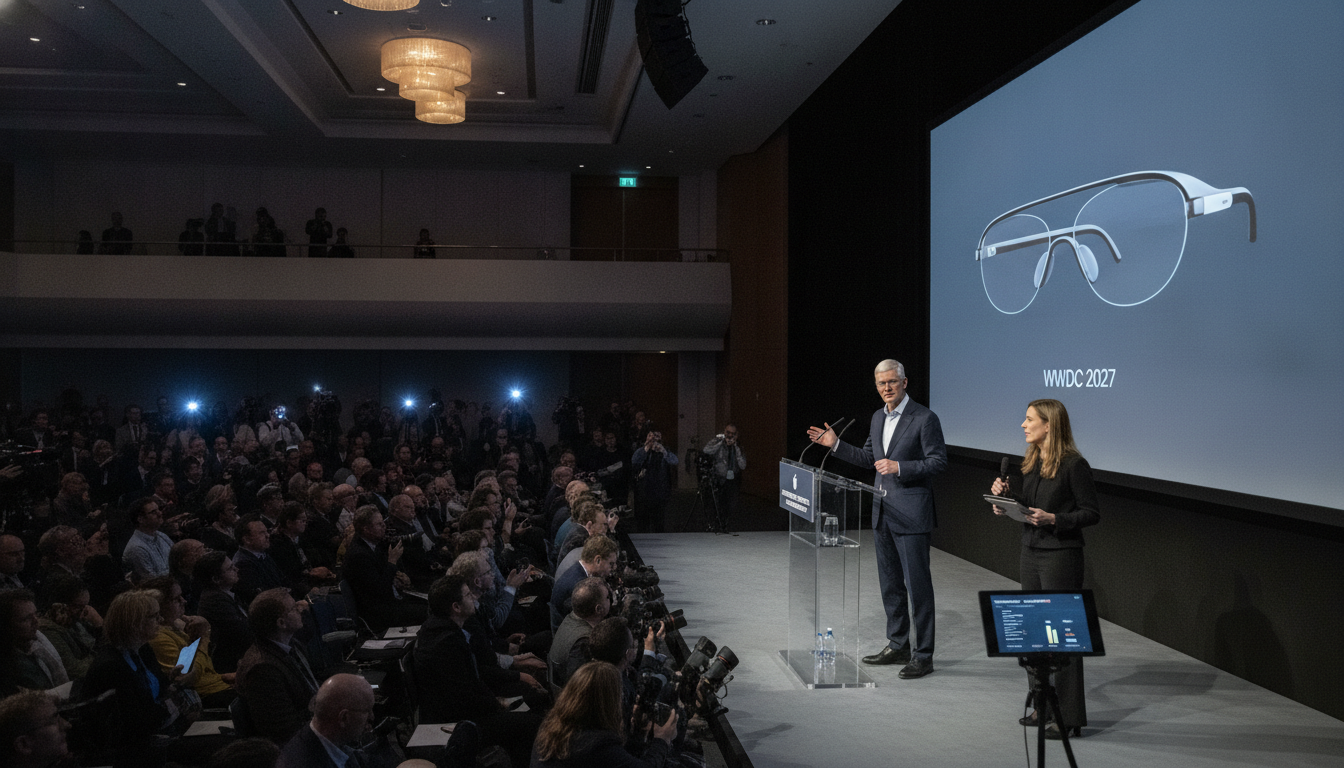
Apple smart glasses delayed to WWDC 2027 as Apple doubles down on privacy
Apple delays launch of Apple smart glasses to WWDC 2027, prioritizing privacy with on-device processing and no facial recognition ahead of a year-end release.
Apple schedules WWDC 2027 unveiling for its smart glasses
Apple has pushed the debut of its Apple smart glasses to the Worldwide Developers Conference in June 2027, according to reporting from Bloomberg’s Mark Gurman. The company now plans to make the device available to consumers by the end of 2027, a shift from earlier targets that aimed for an earlier release in the year. The delay gives Apple additional time to refine both the hardware and the privacy messaging that will accompany the product.
Company cites product refinement and communication needs
Sources familiar with the plans say Apple is using the extra months to address technical issues and to shape how it will explain privacy safeguards to customers. Engineers are reportedly tuning sensors, battery life and on-device processing so routine tasks can run without sending data to external servers. Apple’s move reflects a broader recognition that wearables with cameras and microphones require clear, consumer-facing privacy controls.
Privacy architecture to emphasize on-device processing and limits
Reports indicate Apple intends to emphasize on-device processing for sensor data as a central privacy feature of the Apple smart glasses. The company is also expected to avoid storing or using customer recordings to train large AI models, and it will not deploy facial-recognition features that automatically identify people in footage. Those technical choices are likely aimed at reducing avenues for misuse and easing regulatory scrutiny.
Apple distances product from Meta controversies
The decision to prioritize privacy follows public backlash against competing devices that have been criticized for enabling non-consensual recordings. Critics have labeled some earlier smart eyewear as facilitating invasions of privacy, and Apple appears intent on differentiating its product from that narrative. Executives are reportedly wary of replaying controversies that have dogged other manufacturers and are shaping features and public messaging to underscore protections for bystanders and users.
Operational practices to avoid contractor-led footage review
Another reported design choice for the Apple smart glasses is a reluctance to rely on human reviewers sifting through customer recordings, a practice that has drawn criticism for privacy and safety reasons. Apple is expected to limit any external review of user-captured content and to perform as much analysis as possible locally on the device. That approach would reduce third-party exposure to sensitive material and align with Apple’s longstanding public emphasis on minimizing data sharing.
Regulatory and market implications for wearable AR devices
The postponement also buys Apple time to assess evolving legal and regulatory expectations around camera-equipped wearables. Legislators and consumer advocates in multiple jurisdictions have signaled concern about devices that can record in public and private spaces, and Apple’s privacy-forward architecture could influence policymaker perceptions. Market observers say a successful privacy positioning could give Apple a competitive advantage by offering consumers a clear reason to trust a new product category.
Developer outreach and ecosystem timing
With a WWDC reveal, Apple is positioning developers to begin building compatible apps and experiences well before consumer availability. The extra months will let Apple supply software development kits and guidance that reflect final privacy constraints and permissions. That staged approach should give both Apple and third-party developers a chance to adapt features that respect user consent and local laws.
The revised timeline shifts the spotlight onto Apple’s ability to marry advanced wearable technology with credible privacy safeguards, a balance that will shape both public reception and regulatory responses as the company rolls the product out later in 2027.
