
Calgary affordable housing plan could require more than $500M a year, city briefing shows
Calgary affordable housing faces a potential need for more than $500 million annually to meet the Home is Here targets, with three funding scenarios outlined for the upcoming four‑year budget.
City officials told councillors this month that meeting the Home is Here non‑market housing targets in the next four‑year budget cycle would likely require a significant increase in municipal investment, possibly exceeding half a billion dollars each year.
A briefing note prepared for council sets out three distinct funding scenarios that vary in ambition and cost, from maintaining current delivery levels to fully meeting the city’s target of 3,000 new non‑market units a year.
The report frames the choices as trade‑offs between modestly sustaining present outputs, scaling up to gain ground, or committing the resources needed to deliver the full strategy approved by council.
Briefing outlines three funding scenarios and projected outcomes
City administration presented councillors with three labeled options designed to guide budget deliberations this fall and winter.
The first option, described as keeping the lights on, would require an annual municipal contribution of about $93 million and is intended to preserve current service levels.
Under that approach the city estimates it could build roughly 400 new non‑market units, acquire six development sites and house about 1,040 Calgarians each year.
The second option, gaining footing, raises the municipal investment to approximately $214 million per year.
That level of funding would aim to produce about 1,050 new non‑market units annually, allow acquisition of 15 sites for future projects and provide homes to an estimated 2,730 residents.
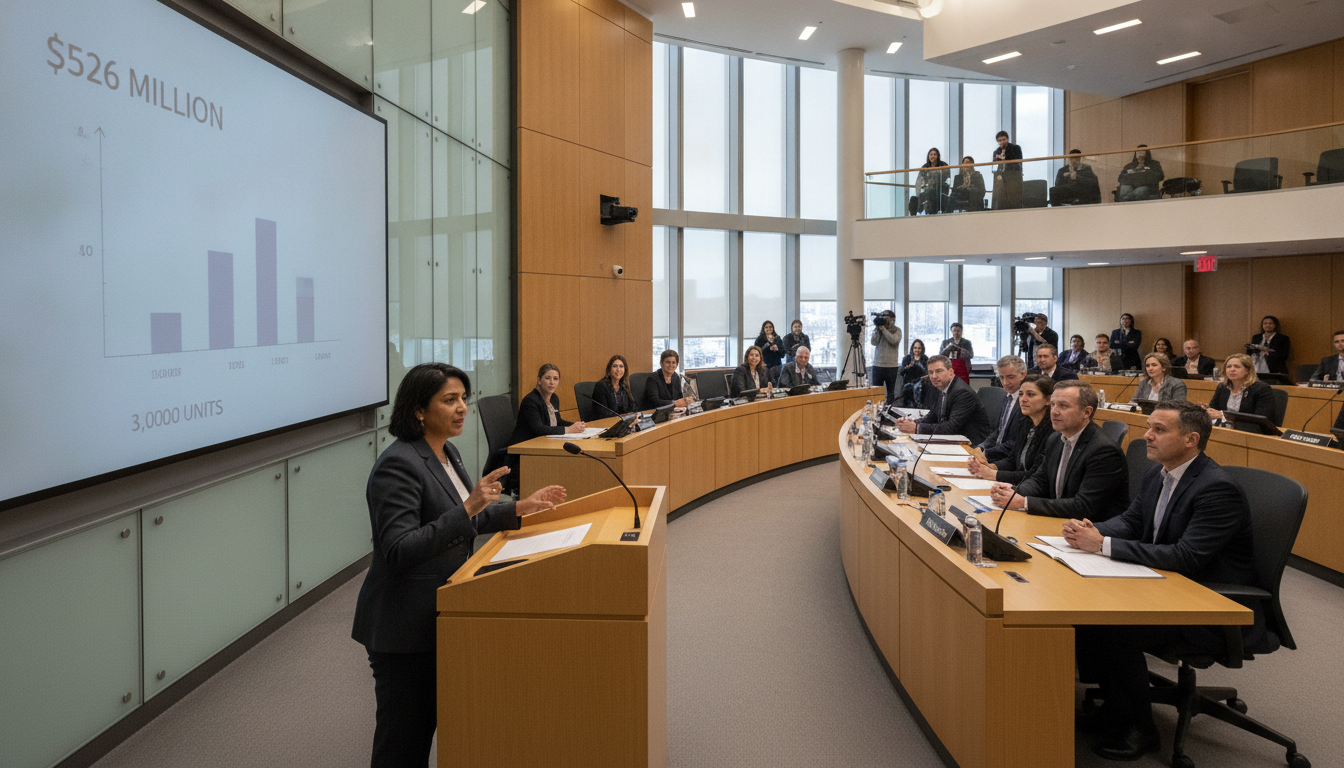
The third and most ambitious option, called building momentum, would match the Home is Here strategy’s target of 3,000 non‑market units per year and carries an annual price tag of about $526 million.
Under the building momentum plan the city would seek to acquire 30 development sites and house some 7,800 Calgarians yearly, according to the briefing note.
Council members debate municipal role, taxpayer impact and priorities
The funding options have already prompted debate among councillors over whether and how much the municipality should invest directly in non‑market housing.
Some councillors raised concerns about the potential tax implications of higher municipal contributions and questioned whether housing finance falls within the city’s primary responsibilities.
One councillor framed the decision in stark terms, asking how much residents would be willing to see property taxes rise to support taxpayer‑subsidized housing while other municipal priorities compete for funding.
Other members stressed that municipal investment often unlocks funding from provincial and federal programs and from non‑profit and private partners, making local commitments a catalyst for larger projects.
City officials noted that amounts invested by external partners are difficult to predict and that varying external contributions mean the ultimate impact on Calgary taxpayers will depend in part on funding secured from other orders of government.
Current investments and delivery to date underscore the gap
Council received a reminder in the briefing note about recent municipal investment levels and the output they generated.
Over the past four years the city has invested about $75 million annually in non‑market housing, which enabled the delivery of roughly 1,100 non‑market units per year on average.
That historical baseline sits between the first and second options presented, and it illustrates how substantially larger investments would be required to reach the Home is Here target.
Officials cautioned that rising costs have reduced the number of homes that can be delivered for each dollar spent compared with earlier projects.
Factors cited for the increase in per‑unit costs include higher land prices and the fact that earlier projects were often at more advanced development stages when they received municipal funding.
Administration says consistent municipal funding unlocks other sources
City housing officials argued that stable, predictable municipal commitments play an essential role in attracting provincial, federal and private investment.
Calgary’s chief housing officer emphasized that the non‑market housing sector does not self‑fund; it requires coordinated inputs from multiple levels of government and from non‑profit and private partners.
Officials told councillors that other orders of government typically invest where there is a clear municipal commitment, making local funding a lever to multiply investment and increase total housing delivery.
Representatives from the sector endorsed that view, arguing municipal investment produces returns in other public budgets by reducing homelessness and lowering health and justice system costs.
A non‑profit housing CEO said that without substantial city investment provincial and federal funding is unlikely to materialize at scale, which would prolong the city’s affordability challenges.
Financial constraints and rising ‘per door’ costs complicate planning
The briefing note warns that increasing per‑door costs mean fewer homes will be delivered for each dollar than in previous years, adding urgency to decisions about long‑term funding levels.
Rising land values and higher construction costs were highlighted as primary drivers of the change, and administration said these trends limit what smaller annual investments can accomplish.
Municipal staff also noted that earlier projects often benefitted from being at more advanced development stages, which can lower the incremental costs when funding is applied.
That dynamic complicates budgeting because predictable, multi‑year commitments are more likely to attract partners and reduce overall costs than one‑off or inconsistent funding streams.
City staff urged council to consider how program design, site acquisition strategies and timing can mitigate price pressures and maximize the number of homes delivered per dollar.
Political consequences and service trade‑offs ahead of November budget talks
The briefing sets the stage for potentially contentious council deliberations when the four‑year budget is debated, beginning in November.
Councillors will need to weigh the housing investment options against other capital and operating priorities such as roads, public safety and water infrastructure, all of which compete for limited municipal resources.
Some members signaled they will press for greater contributions from the province and federal government in lieu of increased municipal spending, reflecting broader tensions about downloading of social service costs to cities.
Others emphasized the social and economic returns of investing more heavily in affordable housing, noting that adequate non‑market supply can reduce pressures across emergency shelters, hospitals and justice services.
The choices councillors make this fall will determine not only how many units are funded but also whether Calgary can sustain the pace of development necessary to meet demand and preserve its comparative affordability.
Next steps for sites, partnerships and budget decisions
Administration’s briefing recommends that council align any funding decision with a clear acquisition strategy and partnership framework to leverage outside capital.
The city’s three options assume differing levels of site acquisition — six, 15 or 30 sites annually — and officials stressed that obtaining developable land is a gating factor for scaling up construction.
Municipal leaders will also be asked to weigh program design details that influence per‑unit costs, such as the mix of new builds versus acquisitions and the balance between capital grants and operating subsidies.
City staff said more detailed cost estimates and funding scenarios will be provided during the formal budget deliberation process so council can evaluate trade‑offs with other city priorities.
That process will also be the forum for discussing whether targeted revenue tools, reallocations or incremental tax adjustments are warranted to support larger housing commitments.
The budget timetable anticipates public and council review beginning in November, with administration returning to council with implementation details and options through the standard deliberation channels.
Calgary’s decisions this fall will shape the city’s capacity to deliver the Home is Here strategy over the next four years and influence whether the municipal share of funding can attract the additional provincial, federal and private investment needed.
As council prepares for extended budget discussions, stakeholders across government, the non‑profit sector and the development community will be watching to see whether Calgary commits to the scale of spending that administration says is necessary to meet council‑approved targets.
The debate combines technical fiscal analysis with values‑based choices about how the city balances immediate infrastructure needs against long‑term investments in housing stability and affordability.
City officials maintain that predictable municipal funding remains crucial to unlocking broader funding and to delivering the scale of non‑market housing Calgary’s strategy requires.
Council members and community groups alike have signaled they will press for transparent estimates of tax impacts, the anticipated leverage from external partners, and clear timelines for site acquisitions if larger funding levels are approved.
The outcome of the November budget deliberations will determine whether Calgary keeps delivering at current rates, accelerates progress with moderate additional funding, or commits to the higher annual investment that officials say is required to reach 3,000 non‑market units per year.
Calgary faces a policy and financial choice that will reverberate through municipal budgets, community services and the lives of thousands of residents seeking stable, affordable housing.
