
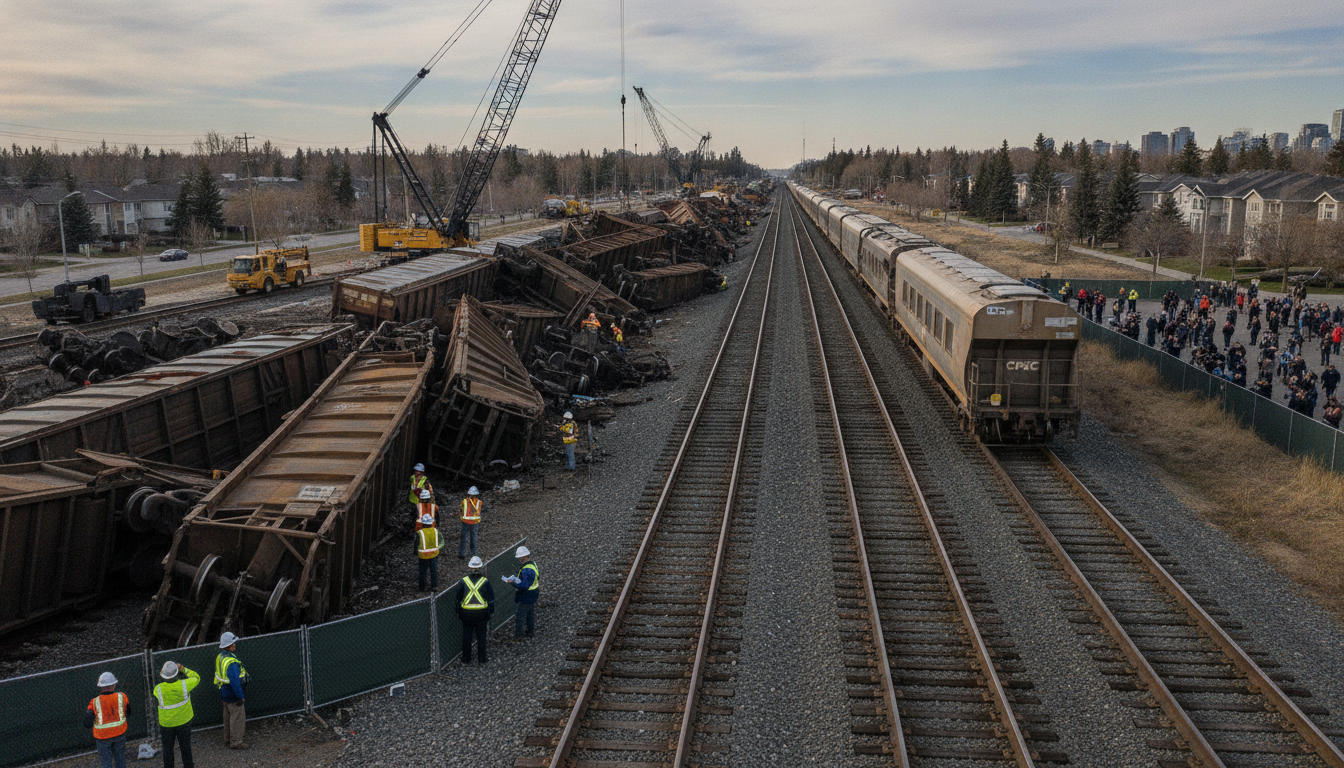
Calgary train derailment leaves 13 cars partially submerged in Priddis Slough
Rail cars sank in Priddis Slough after a Calgary train derailment. CPKC reports no injuries or leaks; TSB launches independent investigation. Cleanup planned.
Southwest Calgary derailment left multiple railcars in Priddis Slough
A freight train derailed Monday morning in southwest Calgary, leaving 13 railcars partially submerged in a nearby pond known as Priddis Slough. The Calgary train derailment involved cars loaded with construction materials including lumber, plywood, propane and argon. Emergency responders and rail crews arrived on scene promptly and worked through the day to assess the situation.
Local authorities and the railway confirmed that the incident did not result in any injuries, and initial assessments found no hazardous leaks from the affected cars. Residents in the immediate area were notified by emergency services while crews established safety perimeters. The rail corridor disruption prompted targeted traffic and operational restrictions until repairs were completed.
Canadian Pacific Kansas City crews repositioned cars and cleared tracks overnight
Canadian Pacific Kansas City crews worked through the night to reposition the derailed railcars and stabilize the site, company officials said in an emailed statement. Those efforts allowed track repairs and safety inspections to be carried out, enabling the corridor to be reopened Tuesday morning. The work included resetting track components and clearing debris from the right-of-way to restore normal rail operations.
Railway technicians also carried out structural checks on adjacent track segments to confirm they met safety standards before trains resumed service. CPKC said the affected cars will be unloaded and removed from the site during the week following the incident. Company representatives emphasized that rail movement was managed to limit disruption to customers and local traffic.
Barrier installed in Priddis Slough to contain debris and protect water
Responders placed a containment barrier in Priddis Slough to restrict debris movement and protect the pond’s water from any potential contamination. The barrier was installed as a precautionary measure while crews assessed the condition of submerged cars and retrieved floating material. Environmental monitors were deployed to observe the area and collect samples as needed.
Officials reported no detectable leaks from the railcars, including those carrying propane and argon, which reduced the immediate environmental risk. The barrier and on-site monitoring are part of coordinated steps to ensure water quality and habitat are not adversely affected. Local conservation and environmental teams were notified and kept informed of the containment and monitoring activities.
Cargo inventory identified construction materials and pressurized gases
Responders, including railway personnel and emergency crews, confirmed the derailed cars were carrying construction-related goods and pressurized gases. Cargo manifests and on-site inspections identified loads of lumber, plywood, propane and argon among the 13 cars. The presence of pressurized gas containers required specific handling protocols and additional safety measures at the scene.
Teams followed industry best practices for securing and isolating gas cylinders while planning the unloading process. Specialized equipment and personnel prepared to offload volatile materials to prevent risk during removal. CPKC and local responders coordinated to ensure safe handling and transport of those hazardous goods once they were transferred off-site.
Transportation Safety Board opens independent investigation
The Transportation Safety Board of Canada has launched an independent investigation into the Calgary derailment to determine causes and contributing factors. The TSB typically collects on-site evidence, interviews witnesses and examines rail equipment and track conditions as part of its fact-finding process. The agency’s mandate is to identify safety deficiencies and recommend measures to prevent similar occurrences.
Investigators will work alongside railway and local officials but operate independently to analyze technical and operational elements of the derailment. The TSB has not yet released preliminary findings; such reports are generally issued once investigators complete initial fieldwork and laboratory analyses. The agency’s final report may take months to complete depending on the complexity of the evidence and testing required.
Public safety assurances and community communication
Railway officials and emergency responders stressed that there was no risk to public safety following the derailment, citing the absence of leaks and injuries. Public information officers maintained communication with nearby residents and local authorities to address concerns and explain ongoing work. The rail corridor reopening on Tuesday morning allowed some return to normalcy, though removal of the affected cars will continue this week.
Local emergency services remained available to respond to any changing conditions while environmental sampling and monitoring continued. Neighbours and community groups were encouraged to report unusual smells or observations to authorities to support situational awareness. Officials also noted that routine rail traffic resumed under controlled conditions following safety clearance.
Next steps: unloading, removal and continued monitoring
The affected railcars are scheduled to be unloaded at the site and removed over the coming days, according to company statements. Unloading will prioritize safe transfer of propane and argon cylinders using trained personnel and appropriate containment. Once offloaded, the cars themselves will be transported away for repair or disposition in line with regulatory requirements.
Environmental monitoring and water-quality sampling will continue until officials are satisfied that no residual contamination remains in the slough or surrounding soils. Regulatory bodies and the railway will document the removal and remediation work to ensure compliance with provincial and federal standards. The TSB investigation’s findings will inform any longer-term corrective actions recommended for rail operations in the region.
The incident underscores the coordinated response between the railway, emergency services and federal investigators when rail operations intersect populated or environmentally sensitive areas. Authorities said they will provide updates as unloading and removal proceed and as the TSB releases investigative milestones. Residents with questions about safety or traffic impacts were directed to contact local municipal information lines for the latest advisories.
