
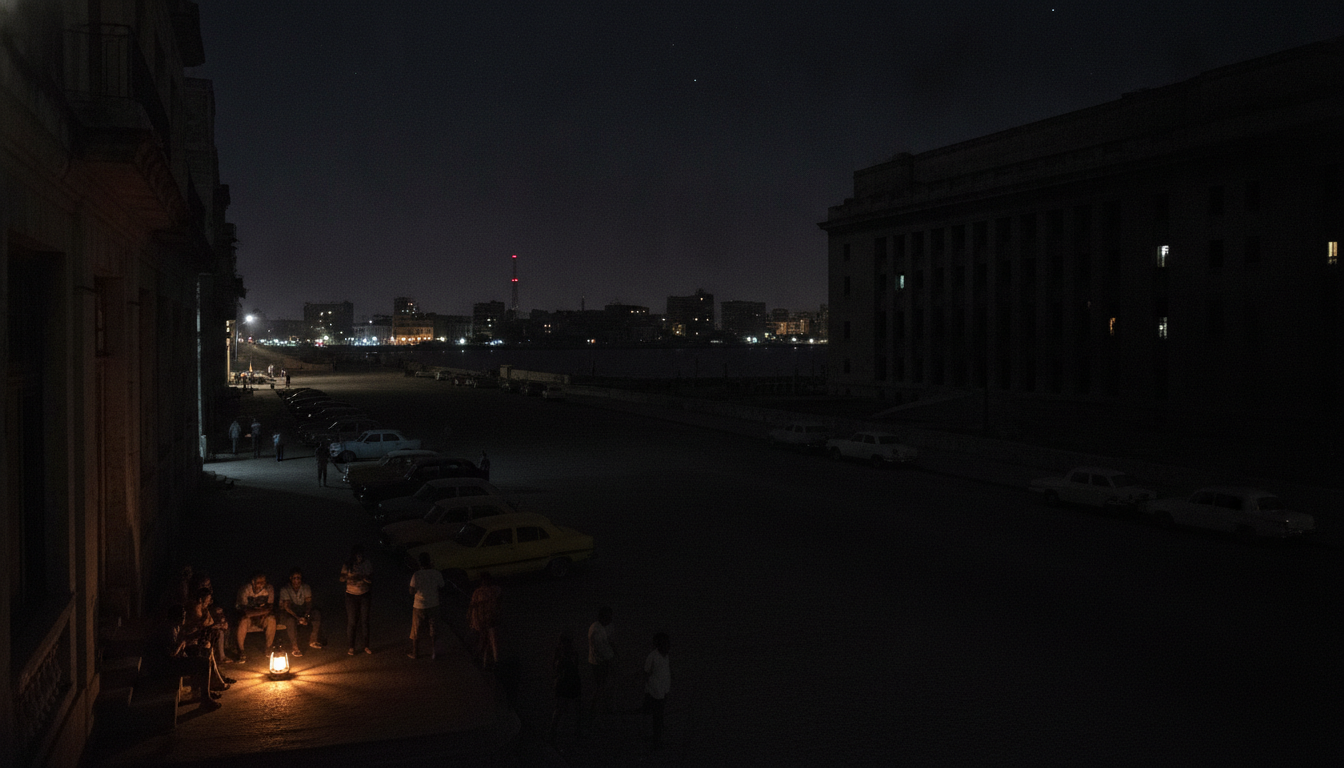
Cuba nationwide blackout plunges island into darkness amid fuel blockade
Cuba nationwide blackout on July 14, 2026, left roughly 10 million people without power as authorities blamed an island-wide grid collapse amid an ongoing U.S. oil blockade.
Cuba’s national power grid collapsed on Tuesday, July 14, 2026, knocking out electricity across the island in what state agencies described as a total disconnection. The Cuba nationwide blackout began at about 11 a.m. local time (15:00 GMT), according to the state-run utility UNE, and cut service to an estimated 10 million residents.
Nationwide grid collapse
The outage was announced by the Ministry of Energy and Mines, which said the country’s electrical system experienced a full disconnection affecting transmission and distribution networks. UNE, the state electricity company, reported that the collapse occurred suddenly and left major population centres, hospitals and public services without power.
Restoration teams were mobilized immediately, but officials warned that repairs could take many hours or longer because of cascading failures in an ageing grid. Cuban authorities have previously linked similar systemic failures to a combination of equipment failures and insufficient fuel to run backup generating capacity.
Timeline and restoration efforts
The blackout began at roughly 11 a.m. and quickly encompassed the island, leaving little regional variation in the initial impact. Emergency crews prioritized critical facilities, with reports indicating that some hospitals shifted to limited operations on emergency generators where fuel and functional equipment were available.
In past multi-day outages, it took more than 24 hours to restore power to the majority of users, and authorities said they would follow similar staged re-energization plans. Officials did not immediately provide a firm timeline for full restoration, citing the complexity of synchronizing transmission lines and the need to inspect key substations.
Fuel shortages and U.S. blockade
Cuban officials and state media linked the blackout to an intensifying fuel shortage they say is the consequence of an oil blockade imposed by the United States. The government has argued that disruptions in fuel deliveries have prevented the operation and maintenance of thermal plants and backup generators that support peak and contingency demand.
Washington says its measures are meant to pressure Cuba’s government over governance and human rights concerns, and the U.S. administration has defended restrictions on fuel flows to the island. Cuba’s reliance on imported fuel has been longstanding; international data cited by Cuban officials estimate domestic oil production covers only a fraction of the island’s needs, leaving it heavily dependent on foreign shipments.
Public reaction and social strain
The blackout prompted immediate public frustration, with residents in Havana and other cities reporting disruptions to daily life and basic services. Last week’s protests — in which citizens banged pots and pans and called for the lights to be turned back on — set a tense backdrop, and the repetition of island-wide outages has heightened public anger and fatigue.
Communities faced shortages of refrigeration, lighting and communications, and many small businesses suspended operations as digital payment systems and point-of-sale networks failed. Health care providers and elder-care facilities expressed concern about sustaining operations if fuel for generators remains scarce.
Political rhetoric and international responses
The power crisis has sharpened rhetoric between Havana and Washington, with Cuban leaders blaming the U.S. blockade and the U.S. accusing Cuba’s authorities of mismanagement and failing to maintain infrastructure. At a recent U.N. General Assembly debate on sanctions, U.S. representatives urged Cuba to change its domestic policies, saying the government bears responsibility for the failures.
Regional governments and international organizations have expressed concern about the humanitarian implications of repeated island-wide outages, while calls for dialogue and technical assistance have emerged from some foreign capitals. Cuba has received fuel and emergency aid in the past from allied governments, but recent diplomatic pressure has complicated those arrangements.
Cuban officials say they are working to stabilize the grid while appealing for diplomatic relief to ease fuel constraints, and they warned that without a reliable supply of imported fuel the island’s power system will remain at risk. The unfolding blackout underscores both the fragility of Cuba’s electrical infrastructure and the broader political and economic pressures shaping access to energy across the island.
