
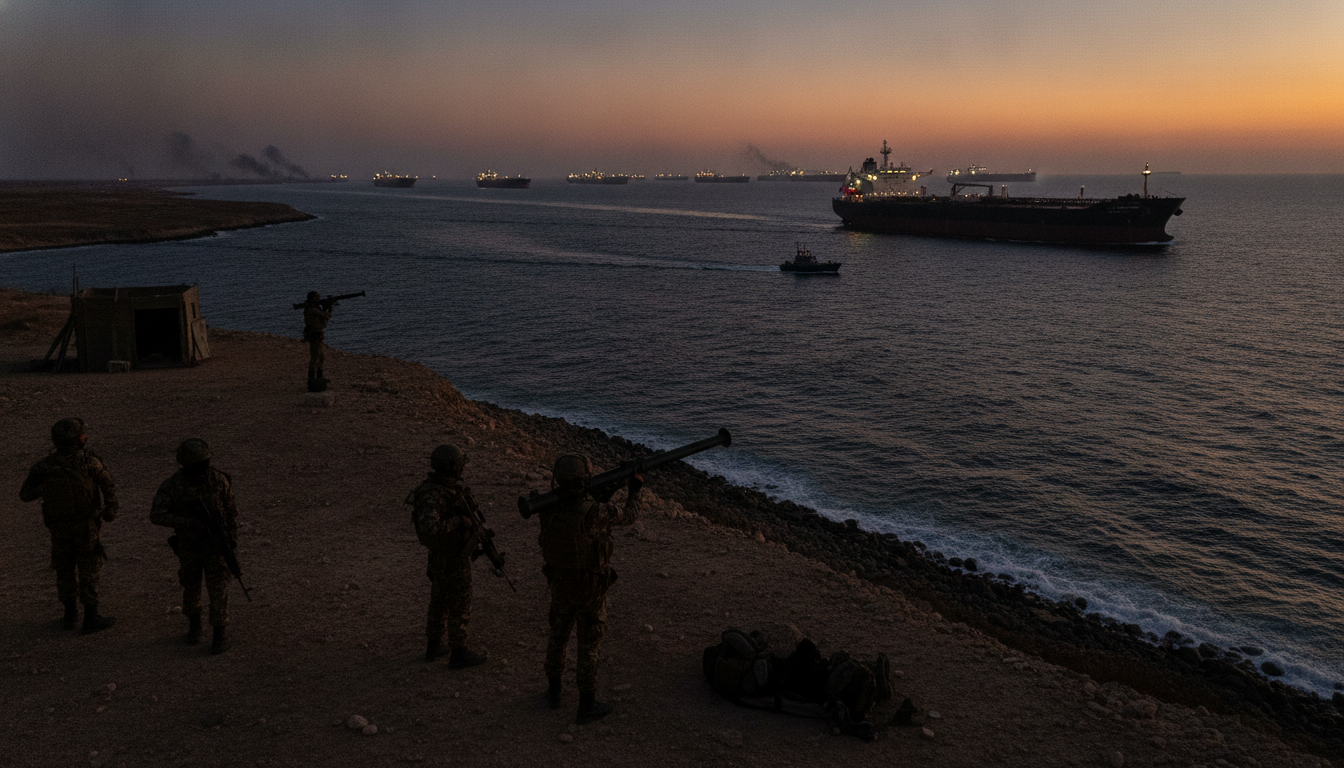
Yemen airport strike escalates conflict and threatens the Bab al-Mandeb Strait
Sanaa airport strike reignites Yemen conflict, risking closure of the Bab al-Mandeb Strait and threatening global shipping, energy flows and markets worldwide.
The sudden bombing of Sanaa’s runway has shattered a fragile truce in Yemen and raised immediate concerns over the security of the Bab al-Mandeb Strait, a critical Red Sea chokepoint. The attack and the Houthi missile response mark a sharp deterioration in relations with Saudi Arabia and risk widening the conflict into maritime routes used by global trade and energy shipments. Analysts warn that if hostilities spread to the strait, the economic and strategic consequences could be severe and prolonged.
Sanaa airport strike sparks fresh military exchange
The Yemeni government struck Sanaa International Airport to prevent an Iranian-linked aircraft from landing, saying the plane carried military equipment and personnel. Houthi forces denied those claims, saying the flight carried hundreds of medical patients and a delegation, and diverted the aircraft before launching missile strikes toward southern Saudi Arabia in retaliation.
Saudi air defenses and coalition partners reported intercepting incoming missiles, while each side blamed the other for escalating a situation that had been relatively contained for years. The rapid sequence of strikes and counterstrikes has effectively ended an informal period of de-escalation between the Houthis and Riyadh.
Houthi rhetoric and the risk to maritime transit
Houthi leaders framed their response as a defensive measure and announced the end of de-escalation with Saudi Arabia. Their statements referenced wider Iranian-backed strategy and suggested a willingness to project force beyond Yemen’s borders if they deem it necessary. Military analysts say that rhetoric, combined with recent operational steps, increases the chance of attacks on shipping routes entering and exiting the Red Sea.
Observers note that attacks by Yemen-based forces have previously targeted vessels and coastal infrastructure, and any intensification near the Bab al-Mandeb Strait would put commercial and energy shipping directly at risk. The proximity of Houthi-held territory to the strait gives them the geographic ability to threaten passage if they choose to do so.
Why the Bab al-Mandeb Strait matters to global trade
The Bab al-Mandeb Strait is a narrow 29-kilometre corridor linking the Red Sea to the Gulf of Aden and the Indian Ocean, historically nicknamed the “Gate of Tears” because of its navigational hazards. Approximately 12 percent of global maritime trade transits the strait, making it a vital artery for container shipping between Asia and Europe as well as for energy exports bound for Western markets.
In 2024, flows through the corridor included roughly four million barrels per day of oil, underscoring the strait’s outsized role in global energy logistics. Any sustained disruption would force ships onto the much longer Cape of Good Hope route, adding days to voyages and dramatically increasing costs for shipping and insurance.
Strategic calculations by regional powers
Regional analysts say Iran and its allied networks view the Red Sea as a strategic alternative to pressure points in the Gulf of Hormuz. Tehran has signalled an interest in creating a contiguous zone of influence that would link the Hormuz and Bab al-Mandeb corridors, complicating coalition responses and stretching maritime security resources across two theatres.
For Iran, encouraging proxies to contest the Red Sea would offer leverage against Western naval operations in the Persian Gulf. Conversely, Saudi Arabia and its partners see control of access to the Red Sea as essential to their export resilience, and they are likely to respond to any threat to shipping with diplomatic and military measures designed to keep lanes open.
Economic fallout if the strait is closed
A simultaneous closure of the Bab al-Mandeb Strait and the Strait of Hormuz would be catastrophic for global energy markets, blocking a sizable share of world oil and gas supplies. Analysts estimate that such a dual disruption could force rerouting of vessels around southern Africa, extending transit times by 10 to 14 days and sending freight and insurance costs sharply higher.
The immediate market impact would include spikes in crude and refined product prices, disruptions to supply chains, and the risk of secondary economic shocks as manufacturers and utilities face higher fuel and transport bills. Shipping companies would also face heightened piracy and insurance risks while insurers reassess coverage in a newly volatile corridor.
Saudi bypass at risk despite pipeline resilience
Saudi Arabia has mitigated some Gulf transit risks through its East–West Pipeline, a 1,200-kilometre conduit linking eastern fields to the Red Sea port of Yanbu and capable of moving millions of barrels daily. Restored to high capacity after earlier attacks, the pipeline gives Riyadh an alternative to Gulf export terminals and has been a strategic hedge against closures in the Strait of Hormuz.
However, that bypass depends on the Bab al-Mandeb remaining open. If the strait were sealed by hostile action, exports from Yanbu would be curtailed and Saudi advantage would diminish, leaving much of regional oil output similarly constrained and deepening the global supply shock.
The coming days will be decisive for determining whether the current exchange remains a localized escalation or becomes the opening salvo of a broader maritime campaign that endangers one of the world’s most important shipping corridors.
