
Medetomidine Found in Calgary Fentanyl Supply Raises Overdose Fears After Chumir Site Closure
Medetomidine in Calgary’s fentanyl supply raises overdose and naloxone concerns after the June 30, 2026 Chumir supervised consumption site closure, citywide.
The discovery of medetomidine, a powerful animal tranquilizer, in Calgary’s fentanyl supply has prompted fresh alarm among health professionals and frontline workers. Researchers monitoring wastewater and drug samples say the sedative, known to intensify opioid effects, has become more common in Calgary since October and may complicate overdose response. Medical and outreach sources warn the development arrives as the Sheldon M. Chumir Health Centre’s supervised consumption component closed on June 30, 2026, reducing supervised spaces for people who use drugs.
Medetomidine detected in Calgary monitoring
Wastewater surveillance and targeted drug sampling in Calgary have detected medetomidine alongside fentanyl, according to University of Calgary researchers. The drug is used as a veterinary sedative and is a potent central nervous system depressant that can deepen respiratory and cardiovascular depression when mixed with opioids.
Researchers reported that medetomidine’s appearance in the local illicit supply became noticeable in the fall of 2025 and has grown in prevalence since then. Public-health specialists caution that the variability of the unregulated drug market means new combinations can appear rapidly and unpredictably.
Clinical concerns and naloxone limitations
Clinicians say medetomidine can blunt or complicate the usual reversal of opioid overdoses with naloxone, because naloxone targets opioid receptors while medetomidine’s sedative effects persist. Emergency physicians and addiction specialists have described cases where naloxone restored some respiratory drive but patients remained profoundly sedated due to the non-opioid tranquilizer.
Researchers also describe withdrawal and rebound phenomena tied to medetomidine exposure, including severe hypertension and agitation as the sedative wears off. Those clinical dynamics increase the complexity of care and may demand extended monitoring or different supportive measures in emergency settings.
Impact of the June 30, 2026 Chumir closure
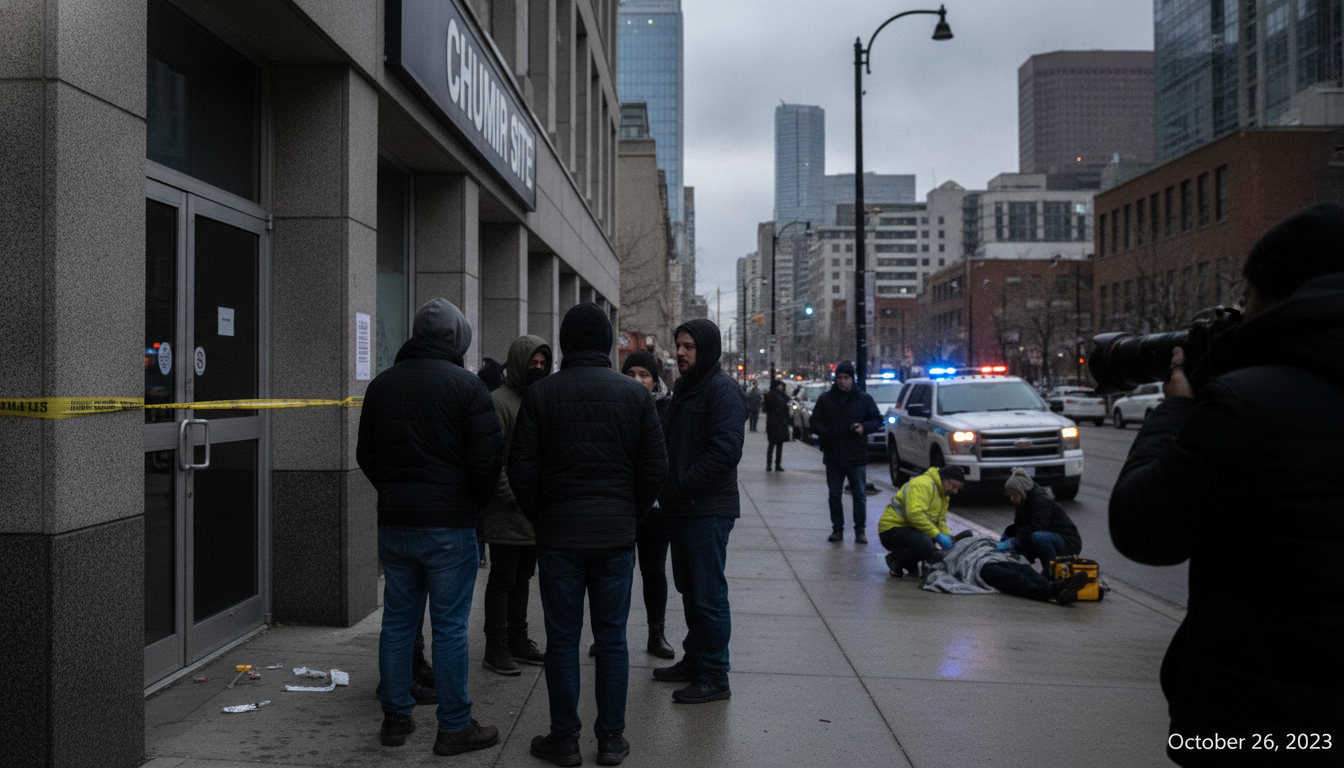
The supervised consumption services at the Chumir Health Centre, which had operated for nearly a decade, closed its consumption component on June 30, 2026. Officials and some service providers say the closure reduced immediate options for people wishing to consume drugs in a monitored, hygienic environment.
Public-health researchers noted that while the site’s removal eased some disturbances around the facility, consumption activity has shifted into public spaces downtown, increasing risks of unsupervised use. Critics of the decision argue that with a more volatile and contaminated supply—now including medetomidine—removing a supervised site eliminates an important layer of overdose prevention.
Frontline workers report more harms and shifting behaviours
Outreach workers and community groups report an uptick in public drug use in alleys and parks since the Chumir site closed. Frontline staff describe people improvising pipes and needles, raising concerns about infectious disease transmission and wound-related complications.
Groups that distribute supplies and conduct street outreach say the contaminated supply is making their work more urgent and unpredictable. They report that patients and clients are experiencing stronger, atypical withdrawal patterns and that trust and service pathways built around supervised consumption need alternative supports to prevent harm.
Provincial statistics, response and policy debate
Provincial officials point to a broader strategy focused on treatment and recovery and highlight declines in deaths since the peak of the crisis in 2023. Provincial data show that Alberta recorded 1,145 illicit-drug deaths in 2025, a modest decrease from the previous year, with Edmonton accounting for a disproportionate share of fatalities driven largely by carfentanil. Calgary’s reported opioid deaths in 2025 were lower than Edmonton’s, but experts warn that local shifts in the supply could change that trajectory.
The provincial government has maintained opposition to a provincially regulated drug supply and has emphasized rapid access to addiction medications, nursing assessment, and peer-support models. Officials also acknowledge awareness of medetomidine detections but say no deaths have been definitively attributed to the tranquilizer itself to date.
Calls for targeted harm-reduction and monitoring
Health researchers and community advocates are urging stepped-up drug-supply monitoring, expanded access to supervised or low-barrier consumption services, and clearer clinical guidance for treating non-opioid sedative exposures. They say rapid testing, expanded distribution of naloxone alongside education about its limits, and onsite medical oversight remain critical as the unregulated market changes.
Recovery-focused teams operating from the Chumir site now offer 24/7 withdrawal management and recovery supports, but frontline groups say those services do not fully replace the supervised consumption function. Advocates are pressing for a layered response that combines treatment options with robust harm-reduction measures to address the evolving toxicity of the street supply.
The emergence of medetomidine in Calgary’s drug supply, coupled with the recent closure of supervised consumption services at Chumir on June 30, 2026, has intensified debate over the balance between treatment-centred policy and harm-reduction interventions. Health officials, researchers and community agencies say coordinated monitoring, clinical preparedness and accessible services are essential to reduce preventable deaths as the illicit supply continues to shift.
