
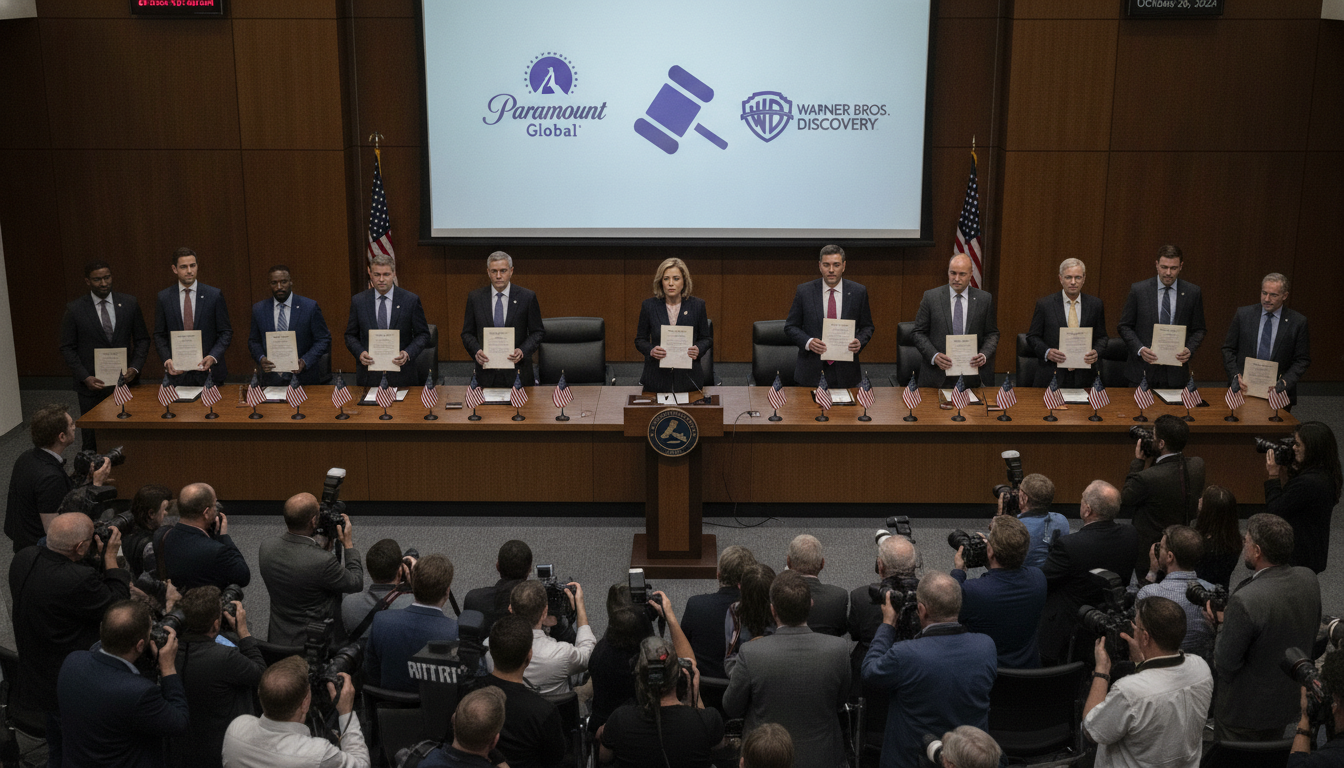
12 States File Suit to Block Paramount Skydance Takeover of Warner Bros Discovery
12 U.S. states sue to block Paramount Skydance’s takeover of Warner Bros Discovery, saying the deal will hurt competition, raise prices and cut content.
The lawsuit filed Monday in a federal court in Northern California challenges the proposed Paramount Skydance takeover of Warner Bros Discovery, arguing the consolidation of two of the country’s largest film distributors would harm consumers. California Attorney General Rob Bonta, who is leading the multistate action, said the transaction would result in higher prices, diminished quality and fewer entertainment choices for the public. The complaint invokes the Clayton Act, asserting the merger has the potential to substantially lessen competition across film distribution and streaming markets.
Twelve states file suit in Northern California
The plaintiffs in the case are all governed by Democratic attorneys general and include California, Arizona, Colorado, Connecticut, Massachusetts, Minnesota, Nevada, New Jersey, New Mexico, New York, Oregon and Washington. The coordinated filing seeks to block the transaction through federal litigation, setting up a legal contest against the companies’ plan to combine operations. The suit frames the merger as an anticompetitive deal that would concentrate market power at the top of the U.S. film and television distribution chain.
The complaint was lodged after months of regulatory review and follows the Justice Department’s decision not to oppose the deal, creating a split between federal enforcement and state officials. By choosing state-led litigation, the attorneys general are pursuing an alternative enforcement pathway that could result in a trial to determine whether the merger violates U.S. antitrust law.
California attorney general warns of higher prices and less content
In a public statement accompanying the filing, Rob Bonta said the lawsuit aims to preserve “free and fair” markets for consumers, emphasizing that no company should be above the law. Bonta warned that combining two of the five largest film distributors would give the merged firm leverage to raise licensing fees and reduce the variety of content available on streaming and in theatres. State officials argue those shifts would ultimately translate into higher costs and fewer viewing options for American audiences.
The suit alleges the transaction would not only affect ticket prices and streaming subscriptions but could also harm independent producers and reduce bargaining power for distributors seeking content. The plaintiffs say those outcomes would run counter to the Clayton Act’s prohibition on mergers that may substantially lessen competition.
Justice Department previously cleared the merger after eight-month probe
In mid-June, the U.S. Department of Justice’s antitrust division concluded an eight-month investigation and declined to challenge the merger, determining it was unlikely to harm competition in streaming, television or theatrical distribution. The DOJ reached its decision without demanding divestitures or imposing behavioural remedies, and said the combination could increase competition across the media ecosystem. That assessment places the federal agency at odds with the states’ legal theory and sets up a contrasting factual record for the court to weigh.
DOJ officials indicated their review examined potential impacts on consumers and workers and concluded that the merged company might spur greater rivalry in content creation and distribution. The multistate suit, however, contends the department’s analysis understates the transaction’s potential to reduce competition and consumer choice.
European Commission and UK regulators weigh remedies
Outside the United States, regulators are still reviewing the transaction. Paramount offered corrective measures in early July intended to address concerns raised by the European Commission, which has set a July 22 deadline to decide whether to approve the deal under the remedies offered. Brussels’ decision will be watched closely by industry participants, as European conditions or demands could shape how the merger proceeds globally.
Meanwhile, the United Kingdom has signalled it may undertake a more intensive review to ensure media plurality is preserved. British regulators have the authority to open a more involved phase of investigation, and that review could require additional concessions or impose limits intended to protect domestic media diversity.
Deal value and potential ripple effects across the industry
The proposed combination, which includes debt, is valued at roughly US$111 billion, or about C$157 billion, placing it among the largest media mergers in recent history. Industry analysts say such a scale would create a dominant player with extensive film libraries, streaming platforms and distribution networks. Critics fear the merged company could use that scale to tilt licensing deals, reduce the number of competing platforms, and dampen incentives for diverse content production.
Supporters of the transaction, including a Paramount spokesperson, have argued the deal will strengthen competition by pooling resources to invest in content and innovation, and that remedies offered to international regulators address competitive concerns. Still, the multistate suit underscores deep disagreement among policymakers about how to measure and mitigate the merger’s competitive effects.
The litigation now moves to the federal courts in Northern California, while regulatory clocks continue to tick in Europe and the U.K. The outcome will determine whether regulators and courts see the transaction as a step toward greater efficiency and consumer benefit or as a consolidation that endangers competition and choice.
